


Tomoko Shibahara
A global vision for the unique live entertainment of Gekidan☆Shinkansen
Photo: Maiko Fukui
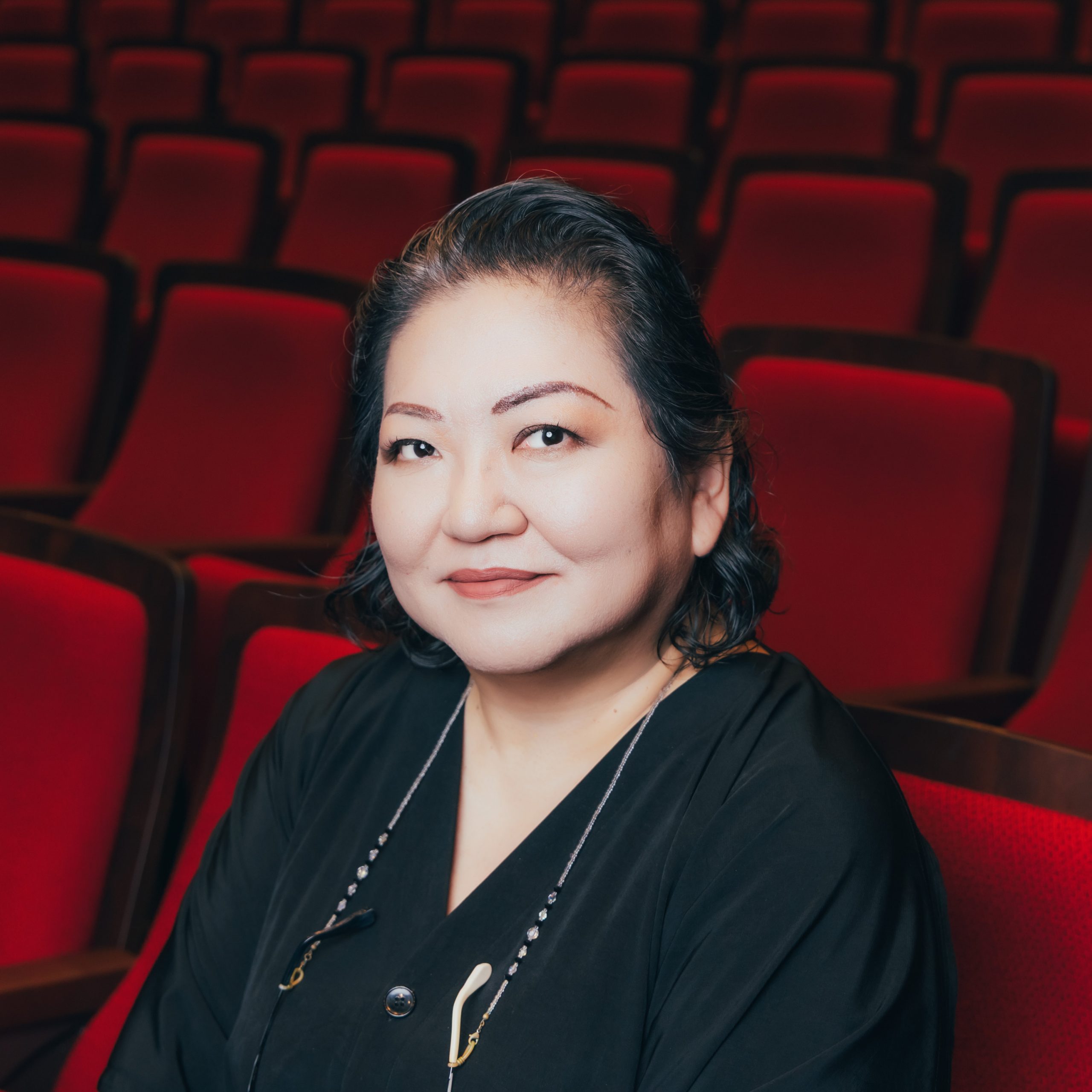
Photo: Maiko Fukui
Tomoko Shibahara
Born in Osaka prefecture, Tomoko Shibahara is a theater producer and the president and chief executive officer of Village Inc. She joined Gekidan☆Shinkansen in 1988 as a costume attendant. Beginning with her involvement in the production of the Terebi Modoki [Imitation television] comedy series (1991–1992, Kansai Television Co. Ltd.) written by Shinkansen founder Hidenori Inoue, she joined the Village production company that managed Gekidan☆Shinkansen’s performances. After two years working as both a producer and costume attendant, she transferred over to full-time producing. She became Village’s president and chief executive officer in 2013.
Gekidan☆Shinkansen has established its own unique theatrical world through highly entertaining performances that incorporate action, comedy, and music. Tomoko Shibahara’s journey—spanning her days as a student supporting the theater company as a costume attendant, to her current role as a producer responsible for broadcasting its appeal both at home and abroad—perfectly mirrors that of Gekidan☆Shinkansen: one with its origins in Osaka student theater, ascending to new heights as a major live entertainment powerhouse, and pursuing global expansion. How did the Gekidan☆Shinkansen genre come to be, and how has it evolved into the pillar of Japanese commercial theater that it is today? Here, we invite Shibahara to reflect on the company’s trajectory along with her own journey.
Interview: Natsume Date Text: Akiko Kaneda
English Translation: Hibiki Mizuno, Keith Spencer (Art Translators Collective)
-
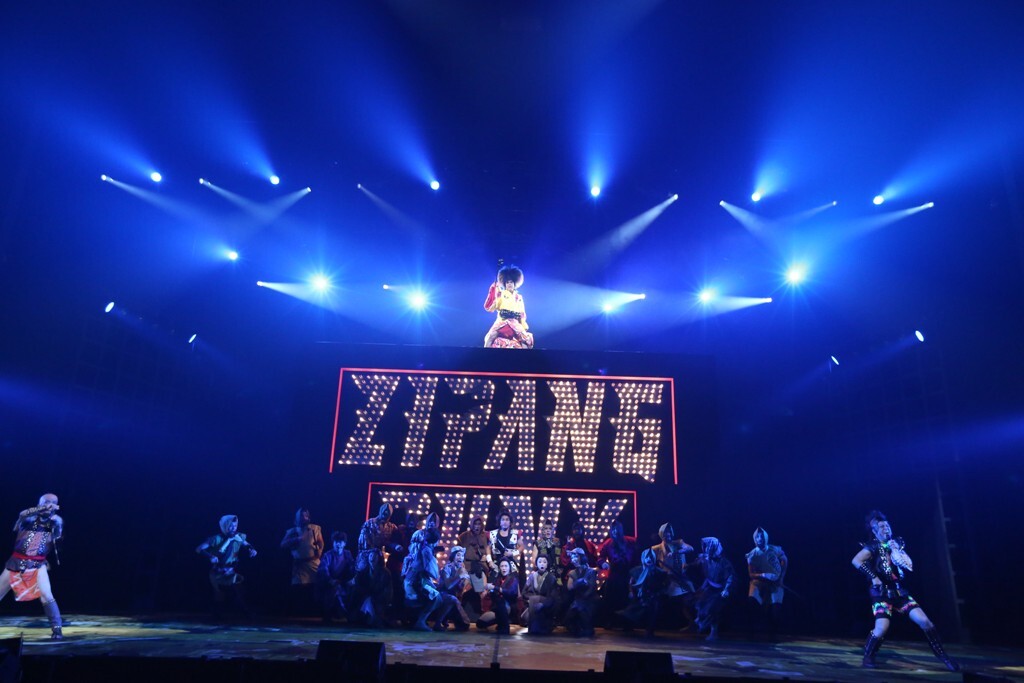
Gekidan☆Shinkansen, ZIPANG PUNK ~ Goemon Rock 3, 2012
Gekidan☆Shinkansen
This theater company was founded in November 1980 by a core group of fourth-year students, including Hidenori Inoue, in the Theatrical Arts Department at Osaka University of the Arts with their performance of Kohei Tsuka’s The Atami Murder Case. They gained popularity as a company that reenacted Tsuka’s works, and became a central fixture of the Kansai student theater boom.
Beginning with Space Defense Force HIDEMARO (1984), the company began to develop its own unique works set to hard rock and heavy metal. Shortly thereafter, Kazuki Nakashima joined the company with A SUPER DANCER FABLE (1985). In the following years, Nakashima assumed the role of playwright and was responsible for writing many of the company’s signature works, including BLOOD GETS IN YOUR EYES (Premiere: 1987), SUSANOH : The Legend of Yggdrasil Sword (Premiere: 1989), and Seven Souls in the Skull Castle (Premiere: 1990).
Under founder Hidenori Inoue’s leadership, the company’s vibrant, flamboyant performances, unrivaled in the independent-theater scene, have attracted significant attention through their use of concert-level lighting and sound production to bring a manga-esque world to life on stage.
The company’s repertoire includes several distinct series: INOUE KABUKI, stylized period action-dramas based on mythological and historical motifs; R Series, energetic musical-like performances that make use of numerous songs and feature original music performed by live bands during the show; and Comedy Series, productions that focus on comedic gags to explore the world of humor.
The unique characteristics of Inoue’s directing are as follows:
1. Inventive costumes, hair, and makeup—both flashy and functional—that enhance the world-building of the production while accommodating intense sword fighting sequences.
2. Armor as an essential element of INOUE KABUKI period action-dramas, and Comedy Series works characterized by outlandish costumes and headgear.
3. Swords made from lightweight materials with an emphasis on durability and safety, and props designed to elicit laughter.
4. Music composed by Tsukasa Okazaki that richly conveys the atmosphere of each performance, ranging from exhilarating hard rock and heavy metal to majestic melodies akin to film scores.
5. Immersive sound effects that utilize a sampler to match dramatic poses and action sequences, ranging from the metallic sound of clashing swords to Kabuki-style tsuke (wooden percussion).
6. Stylish, dynamic lighting that incorporates moving lights for a concert-like experience (depending on the performance, the number of lighting cues can surpass 1,000)
Their distinctive approach to production is known as “shinkansen quality,” and its legacy can be seen in the next generation of theater production.
And lastly:
7. Lavish casting where theater company members form the foundation of the production and support guest appearances from stars and popular, acclaimed actors
In addition to Nakashima, the company’s resident writer, in recent years Gekidan☆Shinkansen has expanded the range of its theatrical style by bringing in writers whose work complements Inoue’s directing, such as Go Aoki, Kankuro Kudo, Yutaka Kuramochi, and Mitsunori Fukuhara.
-
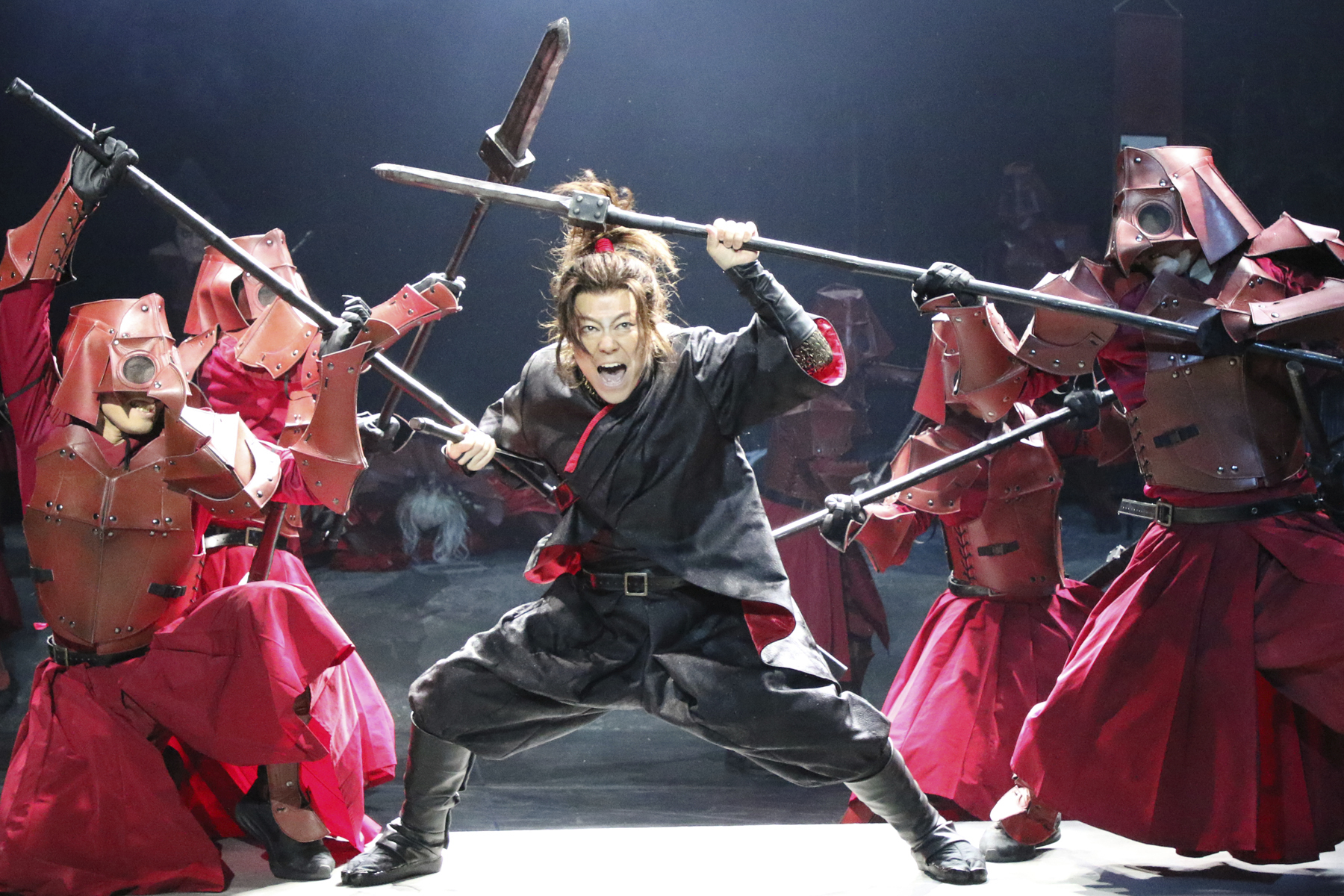
INOUE KABUKI SEVEN SOULS IN THE SKULL CASTLE Season Bird, 2017 Photo: TBS/ Village
-
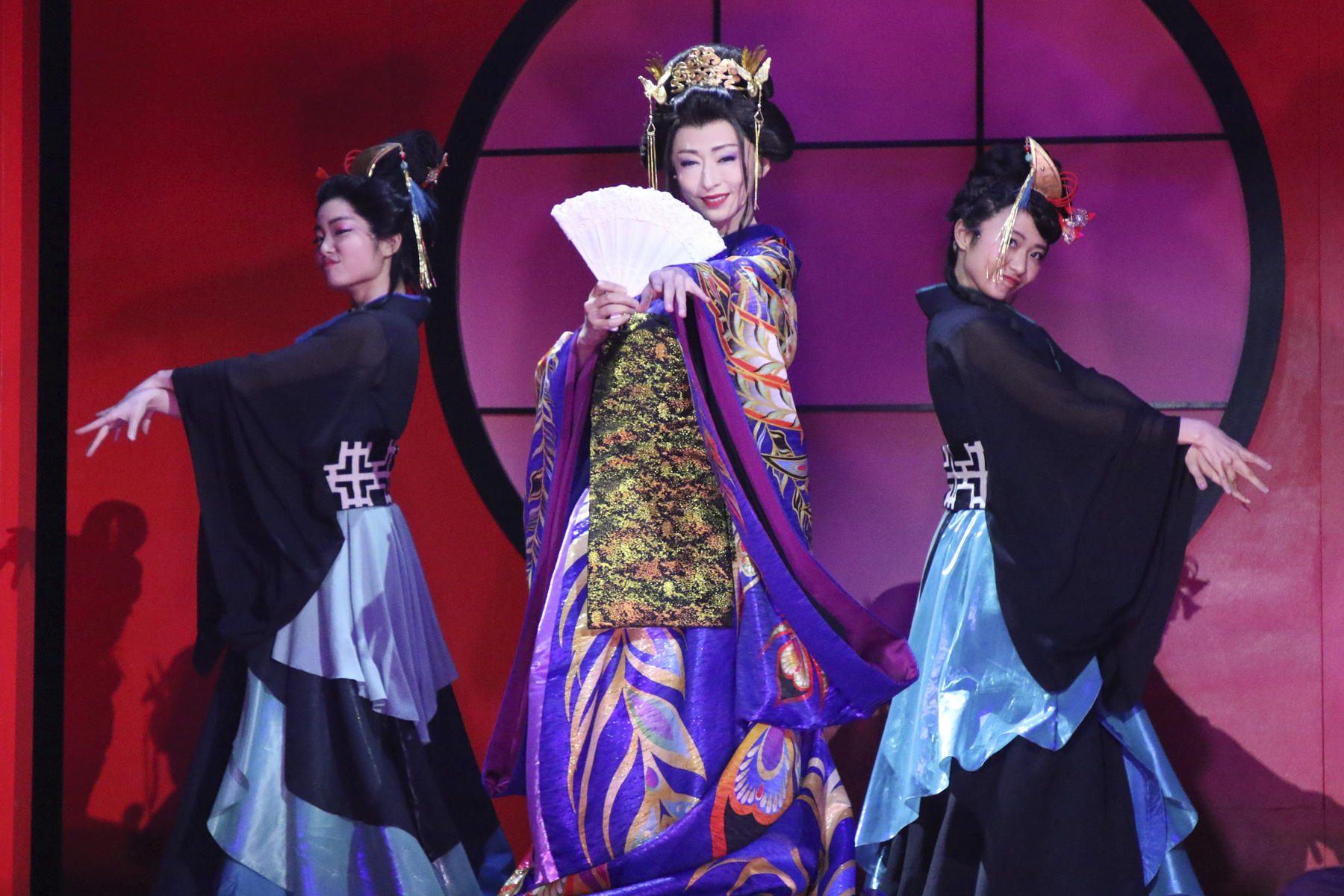
INOUE KABUKI SEVEN SOULS IN THE SKULL CASTLE Season Bird, 2017 Photo: TBS/ Village
-
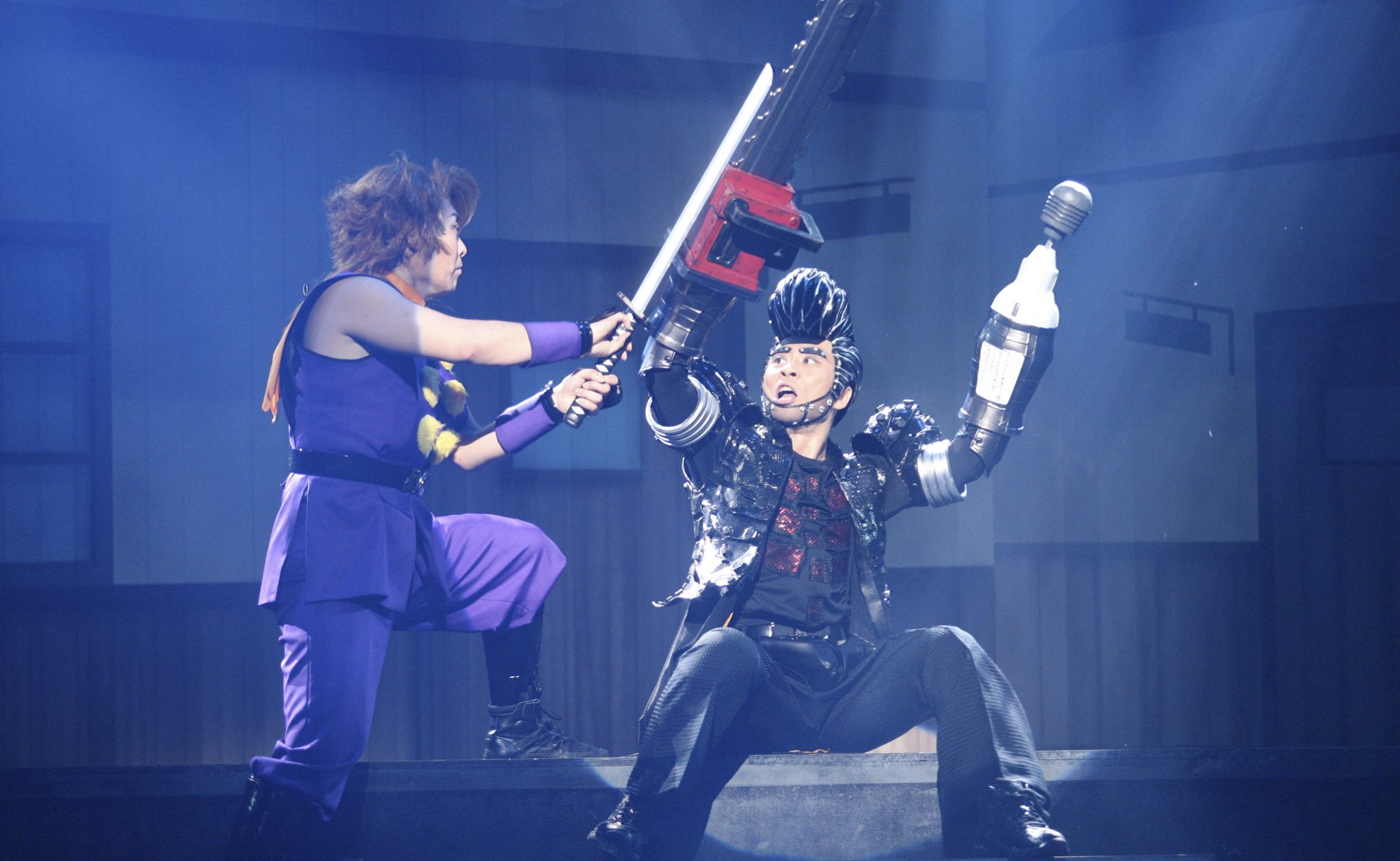
Comedy Series 『鋼鉄番長』, 2010
-
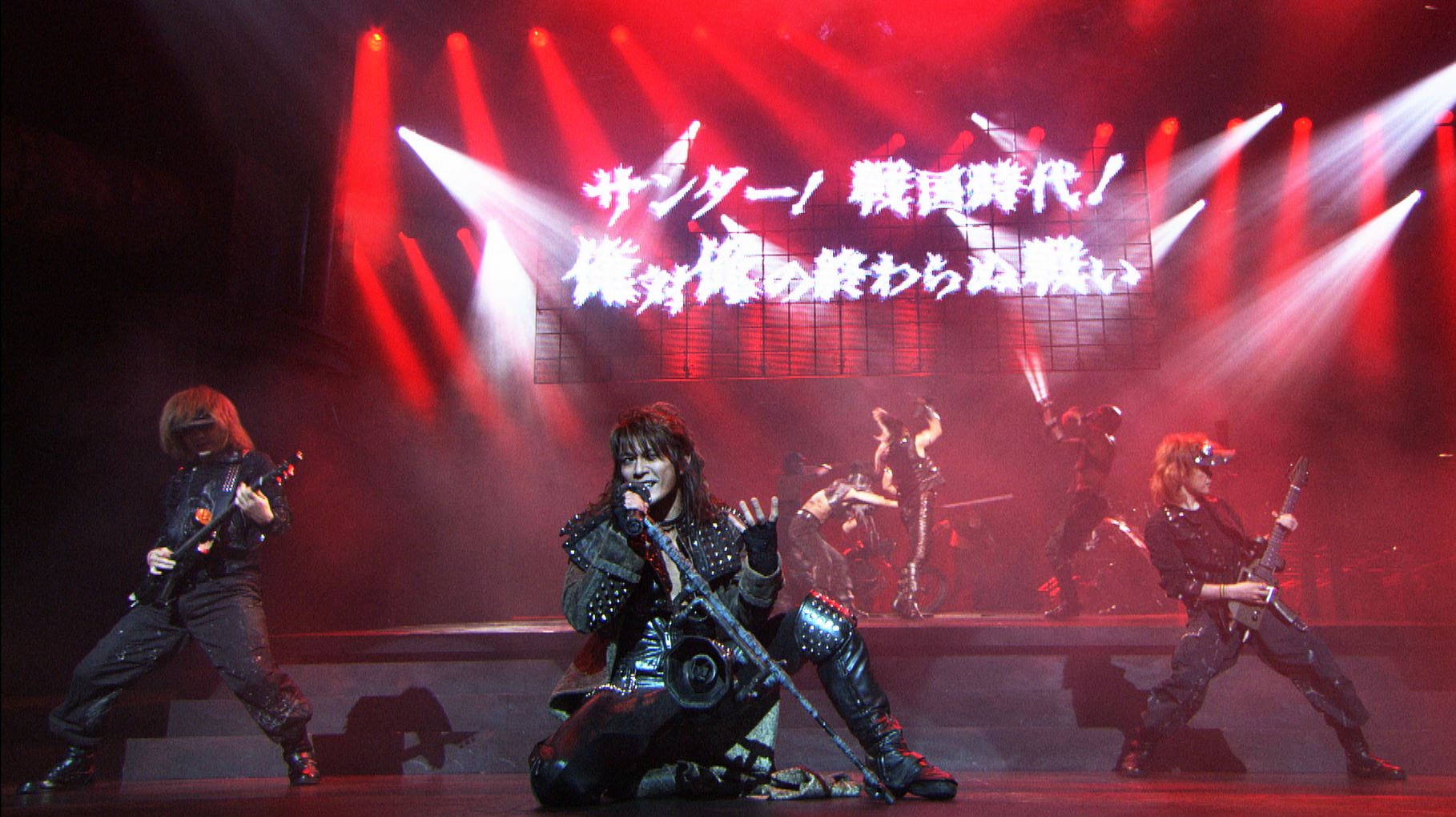
R Series METAL MACBETH, 2006
-
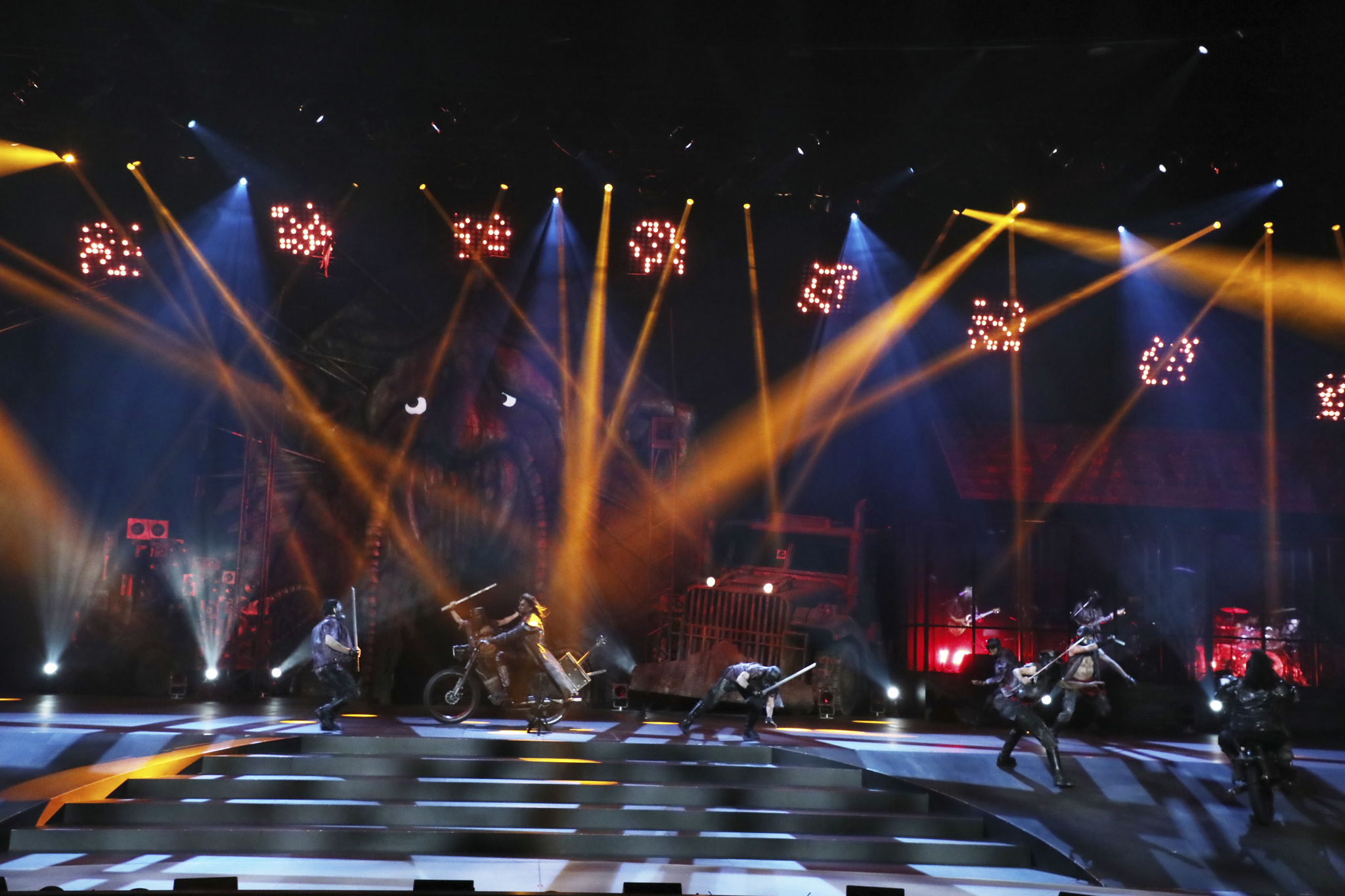
Concert-style lighting featuring moving lights in METAL MACBETH, disc1 ,2018 Photo: TBS/Village
This was the second piece in INOUE KABUKI, which would eventually become Shinkansen’s signature series. Even though it was a period action-drama with a lot of fighting sequences, it was packed with jokes, and I was completely spellbound by the actors effortlessly running amok. The attention to detail in terms of the hair, makeup, and costumes was also amazing, from the actors’ long, flamboyant hair paired with a kimono, down to their Western-style pants complete with boots and high heels. I was totally fascinated, and instantly knew that I wanted to create these kinds of costumes. When I told my instructor, Professor Teruyoshi Yoshida, who specializes in dyeing, he encouraged me to approach them right away, saying that they would let me help them out since independent theater companies never had enough money or people [laughs]. That’s how I came to visit Shinkansen’s rehearsal space in Ogimachi Museum Square1.
I was told that there was an audition for cast and crew in three days, so I scrambled to prepare a portfolio and ended up working with the costume team for Space Defense Force HIDEMARO 3 : Killfer Rising (1988). I think there were about ten applicants for the crew and maybe about 40 to 50 for the cast, since the independent theater scene in Kansai at the time was booming.
-
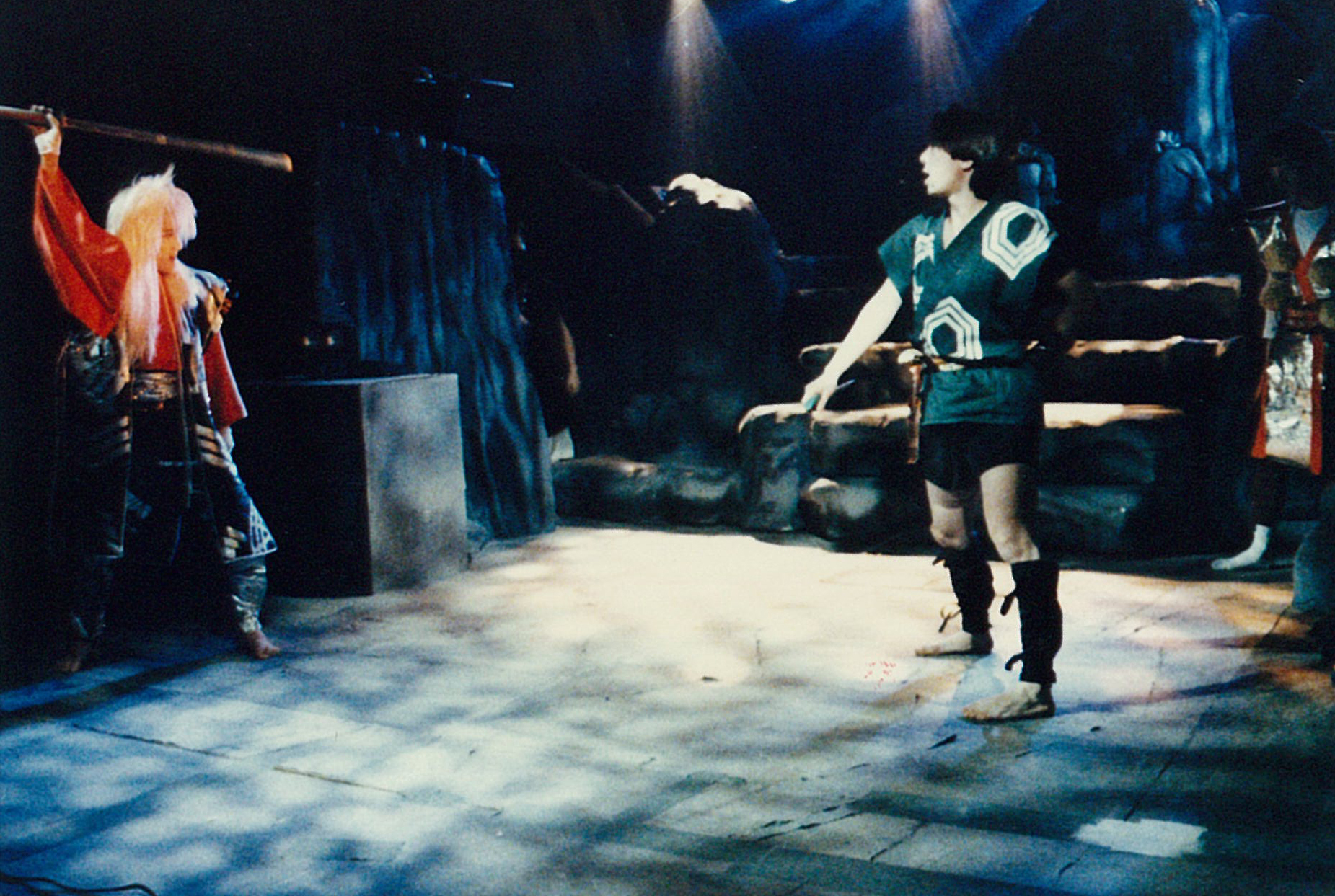
Gekidan☆Shinkansen, Strange Star Child : The Age of Turmoil, 1988
I was assigned the task of coming up with costume designs starting with INDOANA JONGE, which premiered as the inaugural performance at Ai Hall (Itami City Theater Hall). Sometimes I would split the work with company member and prop designer Dango Takeda. Takeda would be in charge of Shinkansen’s unique hard costumes, such as the armor and headgear seen in the premiere of our seminal Seven Souls in the Skull Castle (1990), and I would oversee all of the other costumes.
Back in those days, we were putting on three different works in a year and going through rehearsals and performances without any breaks, so we never had enough time, and given the small scale, never had a big enough budget. I was always bitterly crying on the day of the premiere because I was unable to finish the costumes as planned, but back then we received lots of support from company members who would help us with things like making the sets and the props, and everything from the needlework to the coordination for the costumes as well. Although now Shinkansen runs on a much larger scale, its foundation lies in independent theater. Its approach to creating work with the entire company, one without distinction between cast and crew, where everyone shares the same meals, hasn’t changed to this day.
-
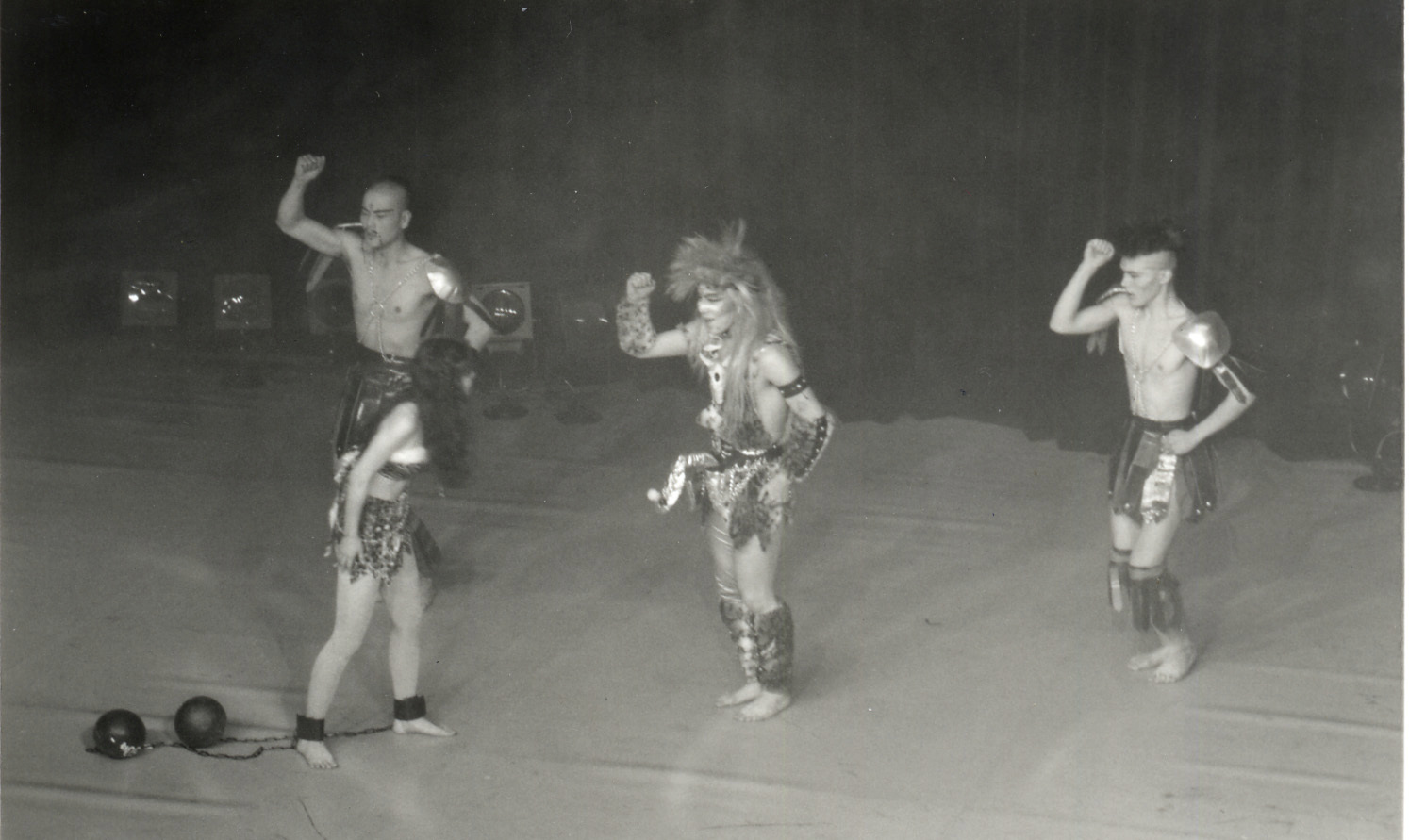
Gekidan☆Shinkansen, INDOANA JONGE, 1988
At the time, Shinkansen was putting on regular performances in Tokyo and gaining more popularity, as well as increasing its audience, but it wasn’t all smooth sailing. We saw an increase in audience members when we put on the more classic INOUE KABUKI shows with cool, period action-drama sword fights and action sequences, but would see a decrease when we did the more parodic and joke-filled Comedy Series. The audience seemed to be telling us that they weren’t interested in seeing something so ridiculously silly [laughs bitterly]. Basically, the Comedy Series had more gimmicks and required more work than INOUE KABUKI, which would exhaust the cast and crew, and also decrease attendance. However, founder Hidenori Inoue and the other company members all had a strong desire to continue the series, saying that there was no way Shinkansen would discontinue it just because of the numbers. The operational side of things didn’t go smoothly though, so after rehearsals, we would get into heated debates and sometimes even fights with company members, since we were all young back then [laughs].
When we presented SUSANOH : The Legend of Yggdrasil Sword in 1989 at Aoyama Round Theatre4, which has 376 seats, Inoue was inspired by Andrew Lloyd Webber’s spectacular musical Starlight Express (premiered in 1984), and had huge men dressed in extravagant costumes (like the hard rock band KISS), wearing rollerblades and speeding down the narrow aisles. Inoue doesn’t think in terms of a realistic scale or budget; he always prioritizes the “image” that he wants to show to the audience. His stance hasn’t changed since the days when we were putting on shows at independent theaters, and I feel that this is why he is able to direct these same performances at large theaters as well.
-
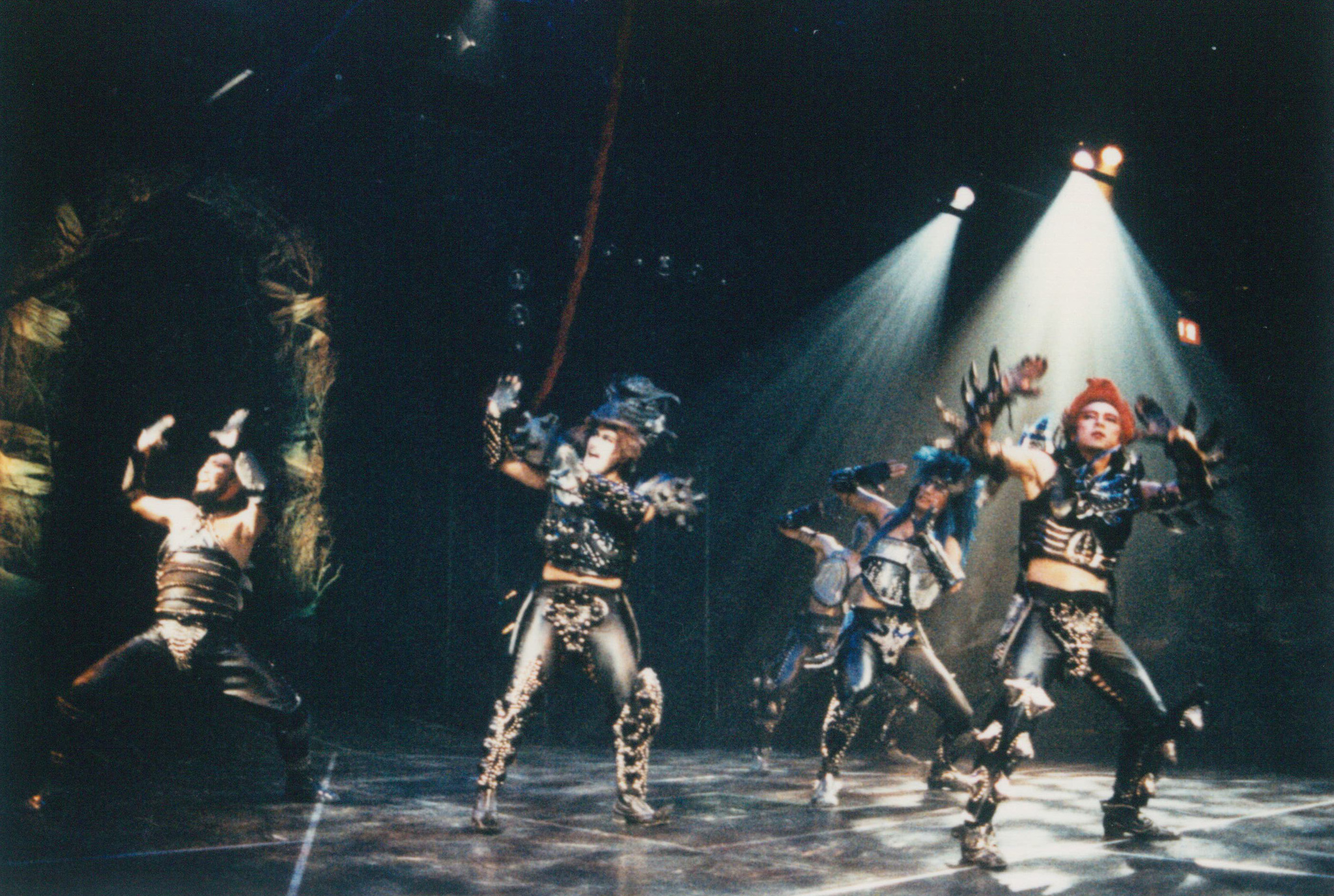
Gekidan☆Shinkansen, SUSANOH : The Legend of Yggdrasil Sword, 1989
A major turning point for Shinkansen was the following year, 2000, with《INOUE KABUKI Shochiku-Mix》BLOOD GETS IN YOUR EYES at Shinbashi Enbujo Theatre. This performance led to many audience members and industry professionals getting to know Gekidan☆Shinkansen, and paved the way for the company’s subsequent expansion toward large theaters.
-
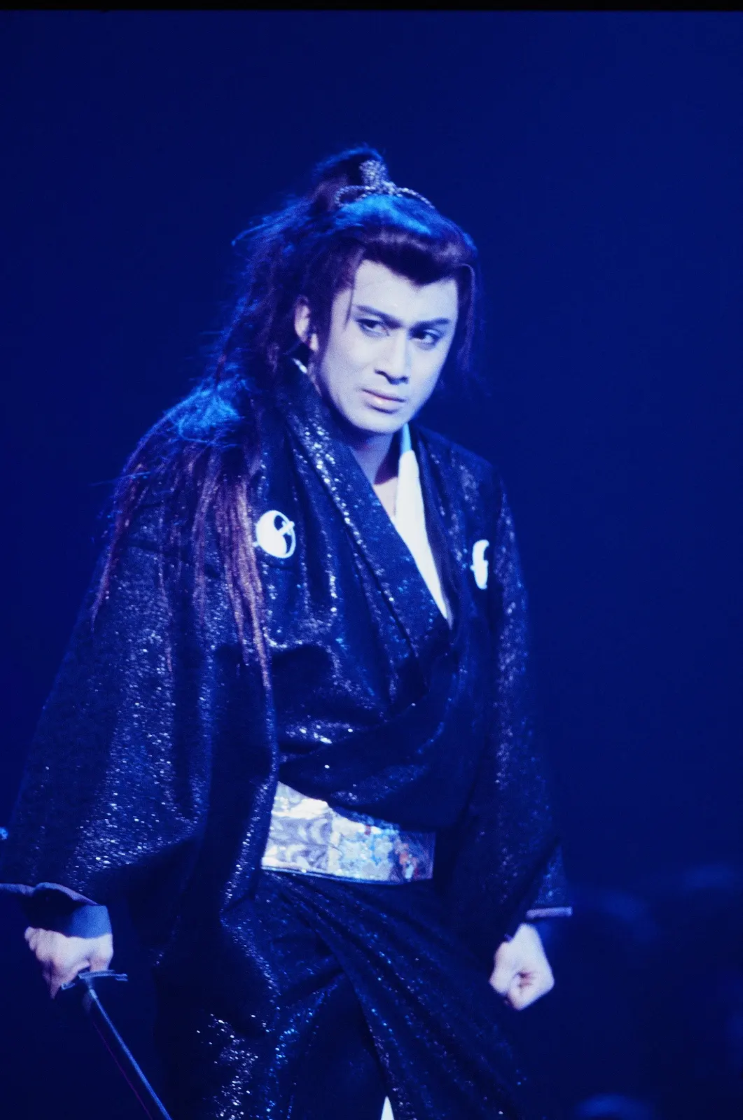
BLOOD GETS IN YOUR EYES, 2000 Photo: Shochiku / Village
-
Ogimachi Museum Square
A cultural facility that opened in Ogimachi, Osaka in March 1985 with a small theater, mini theater, select goods store, cafe/restaurant, and gallery. It was also used by Gekidan☆Shinkansen and Minamikawachi Banzai Ichiza as a rehearsal space. “Forum,” the small theater with around 200 seats, served as a base for theater companies from the Kansai region as well as Tokyo, and helped lead the Kansai independent theater boom. The facility closed in 2003 due to the deteriorated condition of the building.
-
Village
Village was established by Tokio Oishi, a high school and college classmate of Gekidan☆Shinkansen’s founder Hidenori Inoue, who had been working at an advertising agency. It began in 1985 as a theater and dance production planning company that handled local production support for Tokyo theater companies performing in Osaka, and also handled management and stage production for Gekidan☆Shinkansen. Village became a corporate entity in 1988, and engages in production and planning for theatrical performances, adapting these performances into video for distribution, artist management, and manages an e-commerce site and a news site dedicated to theater and stage-related videos.
-
Orange Room
Orange Room opened in 1979 as a multi-purpose hall within the Hankyu Five (Umeda Hankyukaikan) commercial complex (now known as HEP FIVE) in, Umeda, Osaka. As a home base for theater companies such as Gekidan☆Shinkansen, Sotobakomachi, and Minamikawachi Banzai Ichiza, it helped lead the Kansai student theater boom. The venue closed in 1998 due to reconstruction of the building, and reopened the same year under the name HEP HALL.
-
Aoyama Round Theatre
This theater opened its doors in November 1985 alongside the Aoyama Theatre within the National Children’s Castle, a comprehensive facility for children. With its fully circular stage, it contributed to the revitalization of performing arts such as theater, music, and dance, but closed in March 2015.
-
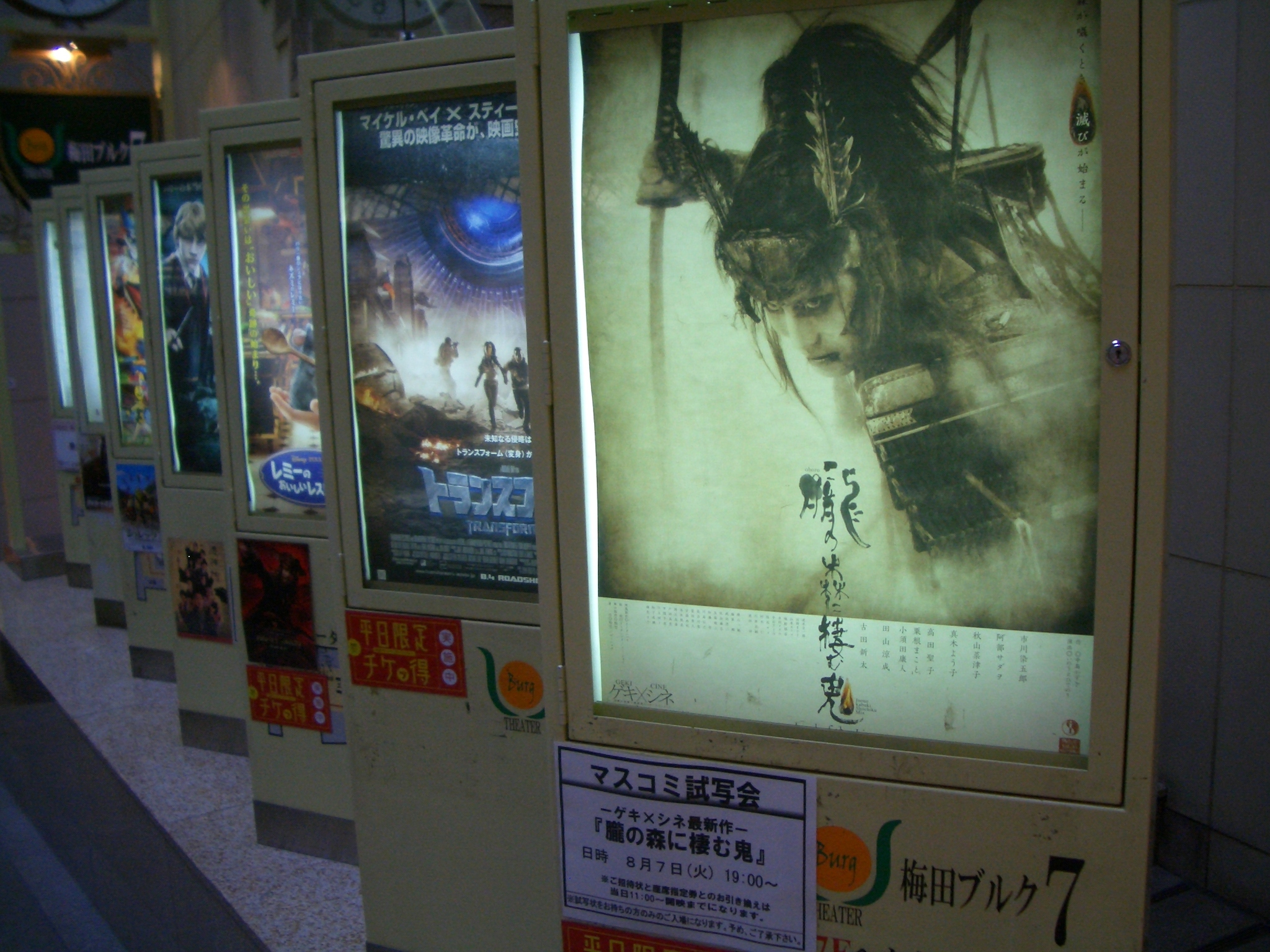
A cinema screening for GEKI×CINE OBORO : Lord of The Lies
It wasn’t until a 2025 screening of the INOUE KABUKI performance of Shaman Star that we once again felt that our work resonated with an international audience. The audience members at the Sitges Film Festival were surprisingly expressive in their reactions. People were standing up and getting excited during the comedic scenes, booing the villain’s underhanded trickery, and loudly applauding when the hero entered the scene. I realized that the audience members were reacting to the show in this way based on a proper understanding of the story and the characters, which made me really happy. We also received an invitation to feature Shaman Star at Manga Barcelona 2025, so in addition to the screening itself, we also organized an exhibition of the costumes and posters, and held a meet-and-greet event with Nakashima, our resident writer. Having worked on popular anime scripts like Gurren Lagann and Kill la Kill, Nakashima has a strong anime fanbase overseas as well, to the point that people were calling him sensei, and elated fans at every stop across Europe would cry out, “God has arrived!” A young fan who had come all the way from Africa told him, with tears in his eyes, how watching Gurren Lagann helped get him through a physically and mentally challenging time in his life. Seeing these reactions firsthand made me acutely aware of how connected the world is, and motivated me even more to push ourselves one step further in order to reach a wider audience.
-
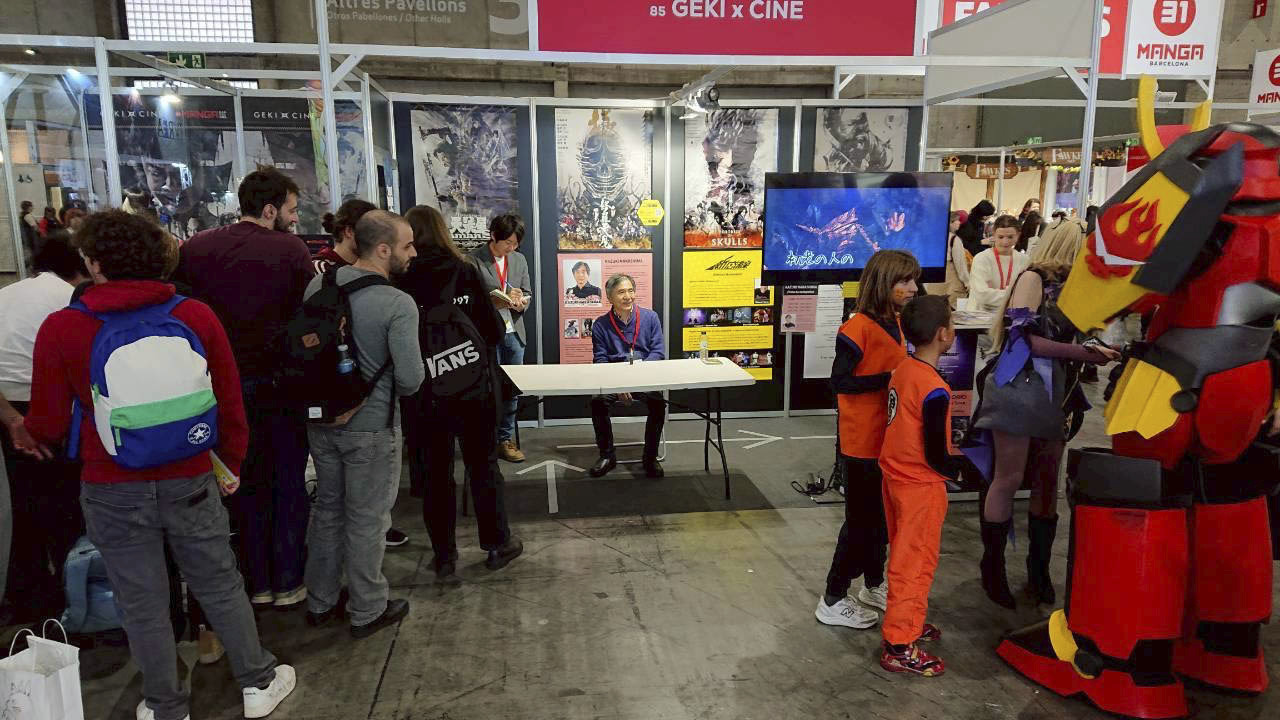
Kazuki Nakashima at an autograph session
Because of the increase in tourists visiting Japan right now, I feel like our focus should be to develop ways to engage with these overseas audiences in Japan before we look to stage performances abroad. The first thing we need to do is find a way to help the overseas audience members that come to the theater to comprehensively understand the work, so that they can enjoy the story and the characters to the utmost the way the audiences at Sitges Film Festival did. Since releasing OBORO : Lord of The Lies in 2008, all of our DVD/Blu-ray discs feature English subtitles, with some works featuring Korean subtitles as well, but we’re also working on a new system that allows audience members to use their personal devices to display English subtitles during the show, which we’re hoping to release soon.
One of our other initiatives is related to helping people see the work in the theater, in other words, how we sell tickets. We’re looking into ways for travelers to be able to go to a theater box office the way they do on Broadway or the West End and easily purchase tickets, as well as options for buying them online while they’re still overseas. All of these initiatives are ones that Kabuki and Bunraku have already taken the lead on, so we also want to move forward with a sense of urgency.
As a producer, I intend to continue doing whatever I can to help Inoue realize his vision. I started this work not so much because I like theater itself, but rather because I was completely mesmerized by the performances that Hidenori Inoue is able to create as a director. I believe that what he wants to do is what I want to do, and this sense of shared fate has kept us together over these years. Moving forward, I’m aiming even higher by uniting Village staff members and everyone involved in our productions. I want to develop GEKIxCINE so that even more people, whether they’re from Japan or overseas, have the opportunity to experience the delight of a Shinkansen production, and one day I want to take our live performances onto a global stage. I’m looking forward to the day when people from overseas ask, “Shinkansen? You mean the Japanese bullet train, or the theater company?”
【Performance Information】
Gekidan☆Shinkansen, Inoue Kabuki Seven Souls in the Skull Castle: LAST STAND
Written by Kazuki Nakashima / Directed by Hidenori Inoue
Cast: Taichi Saotome, Akihisa Shiono / Maito Fujioka (double cast), Yuki Saotome, Rei Yuzuka, Sennosuke Kataoka, Hinako Sakurai, Shori Kondo, Masato Kono, Ryo Kimura, Bunichi Hamanaka, Makoto Awane, Makiya Yamaguchi, and others
Tokyo: November 14–December 25, 2026, Shinbashi Enbujo Theatre
Nagano: January 21–24, 2027, Hokuto Culture Hall
Kanazawa: February 8–14, 2027, Kanazawa Theatre
Osaka: February 25–March 11, 2027, Festival Hall
-
Photo: Maiko Fukui Cooperation: EX THEATER ARIAKE