

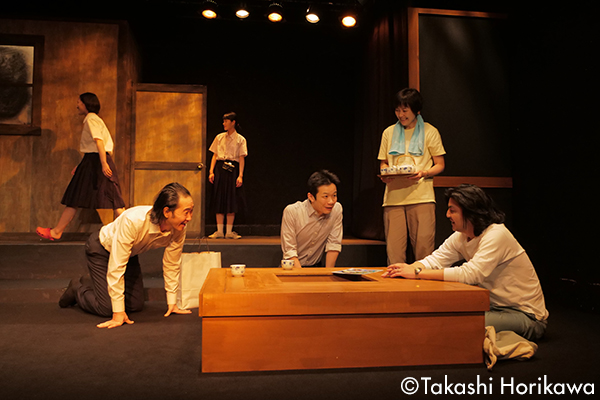
iaku+Komatsudai-Higashi
Megashira wo Osaeta
(Jan. 30 – Feb. 4, 2018 at Sun-Mall Studio, Shinjuku) Photo: Takashi Horikawa
Data
:
Premiere: 2012Length:
Acts/Scenes:
Cast:
Megashira wo Osaeta
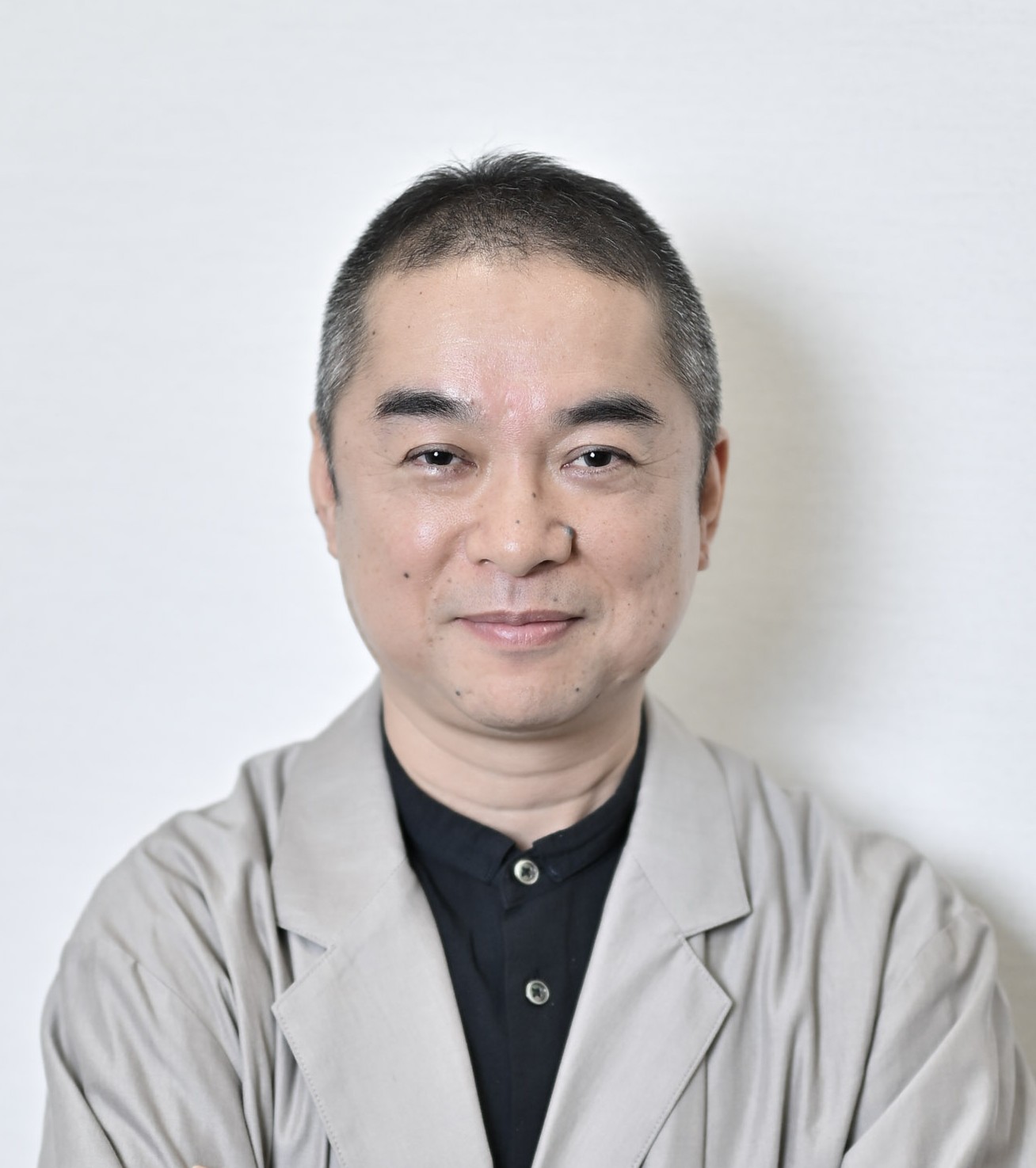
Photo: Akihito Abe
Born in 1977 in Osaka Prefecture, Takuya Yokoyama is a playwright and director, and the head of theater unit iaku. While studying at Osaka University of Arts, he founded the theater company Urikomitai Beam with his classmates in 1996. Garnering attention as a promising young talent, he served as playwright and director for the company until his departure in 2011. In March 2012, he founded the theater unit iaku, creating works both in Osaka and Tokyo. He has presented dialogue-driven plays characterized by meticulously crafted conversations that build upon each layer like an ascending spiral staircase, bringing the audience into the characters’ struggles before they even notice. Grounded in sharp observations and thorough research, he strives to write plays that capture people and subjects through a multifaceted lens. His works are highly regarded for their entertaining and humorous dialogue while addressing social issues of everyday life. As an advocate for “durable theater” he actively restages his works over time. iaku’s first work and three-hander Hito no Ki mo Shiranaide (premiered in 2012 and awarded the Grand Prize at the 1st Sendai Short Play Prize) and Edaniku (premiered in 2009 and awarded the 15th Japan Playwrights Association’s New Playwright’s Award) have both been widely produced by other companies as well. In 2024, Momonba’s Tie Trap received the 27th Tsuruya Namboku Text Award. In 2025, Yokoyama was awarded the 59th Kinokuniya Theatre Award (Individual category) for writing and directing Nagarenna and for writing Watashitachi wa Monogatari. (Updated in April 2026)


iaku+Komatsudai-Higashi
Megashira wo Osaeta
(Jan. 30 – Feb. 4, 2018 at Sun-Mall Studio, Shinjuku) Photo: Takashi Horikawa
Data
:
Premiere: 2012Length:
Acts/Scenes:
Cast:
Depopulation is draining life from the mountain village of Hitomimura. Kaoru Sugiyama, a funeral director, lost his wife Suzu several years before, and for the sake of his only daughter, Ryo, he moved to his former wife’s hometown of Hitomimura, where Ryo’s cousin’s family live. Suzu’s older brother, Gen Nakatani, works at the local forestry union and has taken on the mission of preserving the village’s traditional funeral rights. He lives with his wife Fumiko, daughter Shuko and son in the fourth grade, Ippei. Kaoru and Gen are at odds with each other because of their differing views about how funerals should be directed, but their two daughters, both seniors in high school, get along like sisters.
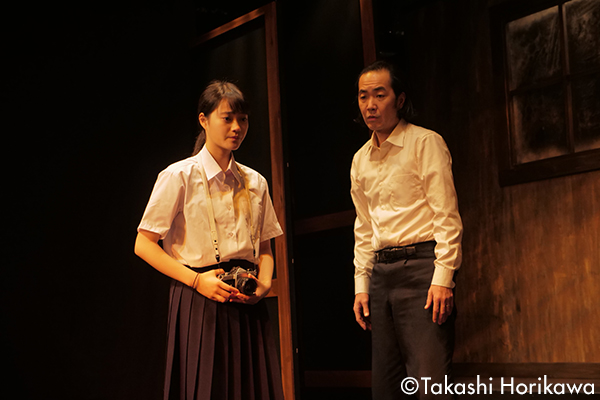
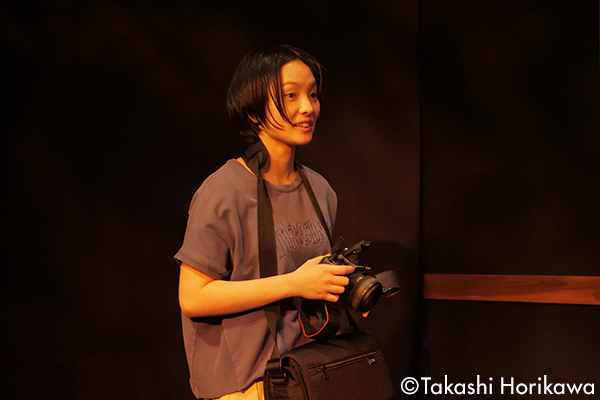
It is early July. Ryo is active in the school’s photography club taught by the teacher Sakamoto. Using an analog (film) camera that had belonged to her mother, Ryo is taking pictures of people in the village posed like the photographs of the deceased used in funerals, and one photograph she took with her cousin Shuko as her model has won the grand prize in the high school category of a nationwide photography contest.
With the school’s darkroom now close for the summer, Shuko suggests that they make a darkroom in the “
moya
” funeral building. Since the Edo Period (1603 – 1868) forestry was the dominant industry of this region, and it was the men who did the dangerous job of trimming off branches high up in the cedar trees to make them good for lumber who were given a monopoly on the right to conduct funeral rites as
nengyoji
. Since the Sugiyama family had served as
nengyoji
for generations, the “
moya
” funeral building that is used for keeping the bodies of the deceased for the wake and then the funeral rites stands on the grounds of the Sugiyama home.
When her father Gen came home, light-heartedly Shuko asked him for permission to make a darkroom in the funeral building. Originally, the only people permitted to enter the
moya
were the deceased and their successors, but since the request has come from his niece Ryo, who is usually so shy and withdrawn, he reluctantly gives his consent.
Gen has been planning to make his son Ippei his successor by showing him the branch trimmer’s profession while he is still working in the forestry union and also to have Ippei succeed him as the
nengyoji
funeral director. When a branch trimmer fall to his death, the shock is so great that the eyeballs may be pushed out of the sockets, and the rite of putting the eyeballs back in the sockets before dressing the body for the funeral is called
megashira wo osaeru
, and it is traditionally the job of the successor to the
nengyoji
funeral director to perform this rite. But with the changing times, the traditions of the local funeral rites have not been practiced for years.
It is early August. Shuko and Ryo are having trouble deciding what to do after high school. It had been an unspoken understanding that they would both be going to the nearby junior college, but now Ryo has decided that she want to go to an art university in Tokyo to study photography. Ryo admires a private tutor named Fujiki who has come to the village from Tokyo, and Ryo’s sudden decision has been a shock to Shuko. Ryo’s father Kaoru is against her going to Tokyo, but Gen and his wife Fumiko have told him that since she has shown her talent with photography, why not give her the chance. When Shuko learns of her parents’ thoughts, she becomes upset and jealous of Ryo.
It has been decided that Ryo will have an exhibition of her photographs at the community center. The photography club teacher Sakamoto has been very supportive of his student Ryo. For Shuko, who had a secret longing for Sakamoto, this makes the crevice that has grown between her and Ryo even deeper. Increasingly opposed to Ryo’s going to Tokyo, Kaoru lets out his anger at Gen, accusing him of trying to drive her out of the town and in the process deprive him not only of his daughter but also his job and his place in the house.
One night, the increasingly worried Ryo talks in private with Sakamoto at the
moya
to seek his advice. By chance, Shuko sees the two alone, and in her distress she unwittingly takes a photo of them. This photo gets around and starts scandalous rumors in the village, threatening the planned exhibition. Ryo is no longer allowed to use the
moya
as a darkroom, and the distance between Shuko and Ryo becomes worsen.
It is then that tragedy strikes. While training to learn the branch trimming job, Gen falls to his death. Standing in front of the body of Gen, Kaoru announces that he will perform the Hitomi[mura] funeral rites, and he drags Gen’s crying son Ippei to the
moya
. From inside is heard the voices of Kaoru and Ippei saying “
megashira wo osaete
” (hold the eyes).
It is the end of March and the day Ryo is to leave for Tokyo. Shuko calls her and says she wants to meet, and they come together for the first time in months in front of the
moya
. Shuko is humble and apologizes for what she did with the photo, and Ryo forgives her, saying she no longer minds. From inside the house, they hear Fumiko’s voice and then they see Ippei, suddenly and almost unrecognizably mature in his actions as he takes the offering of food for his father’s soul to the small Buddhist shrine in the parlor. The last thing we hear is the ring of the ceremonial bell Ippei rings to announce the offering.
Related Tags