


Kei Ando
Playwrights’ Guide to their Own Works Vol. 5 — Kei Ando on Earthly Bones
Photo: Mayuko Yamaguchi
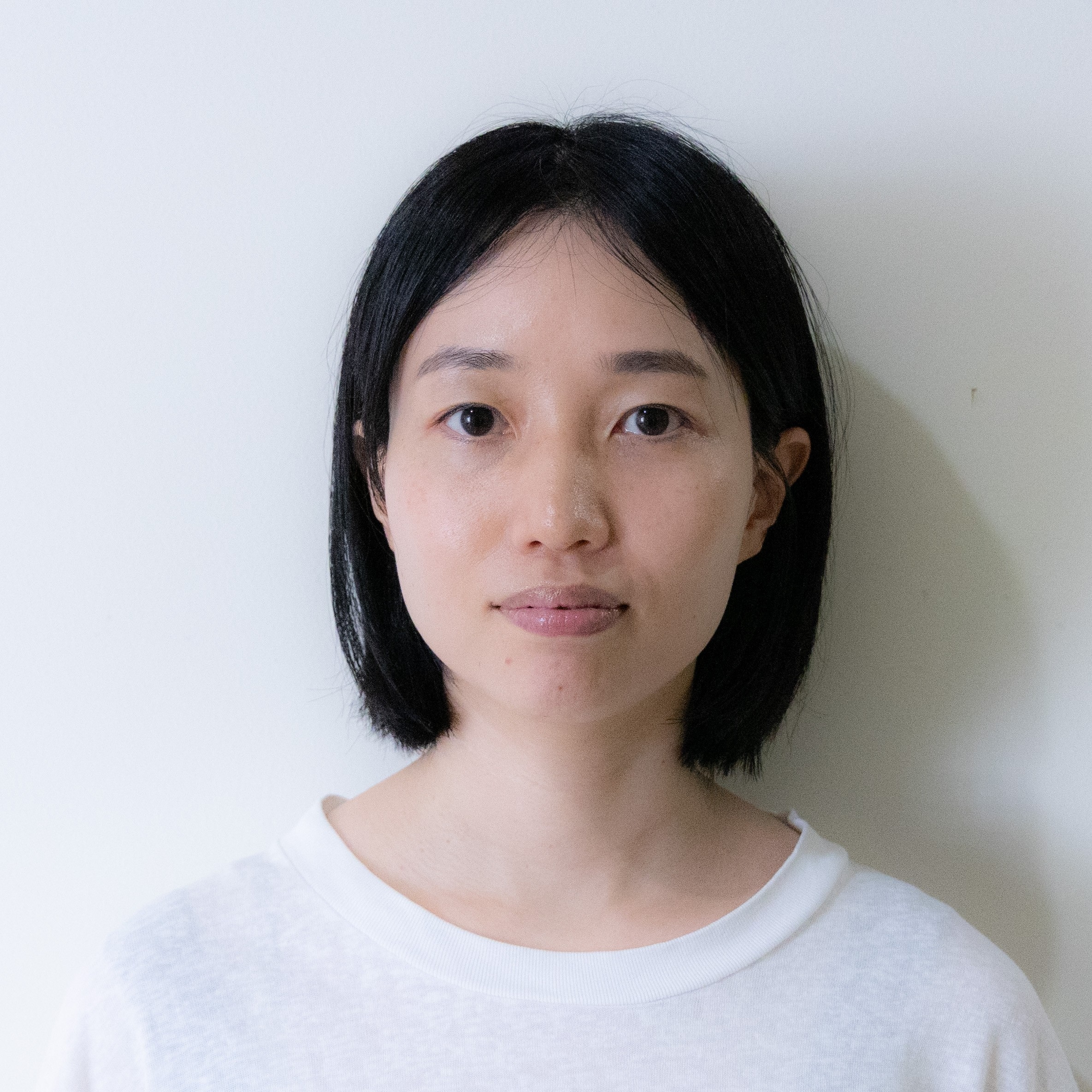
Photo: Mayuko Yamaguchi
Kei Ando
Playwright, director, actor, and head of Gekidan Ampersand, Kei Ando was born on December 13, 1992, and comes from Oita Prefecture. She founded Gekidan Ampersand in 2016, and has written and directed all of the theater company’s productions. She has come to be known for a characteristic style whereby familiar everyday settings such as offices or living rooms gradually shift and develop in wildly unexpected ways. Earthly Bones (2023) was a finalist for the 68th Kishida Kunio Drama Award, with Arukanakutemo bō ni ataru [Even if you don’t walk, you’ll hit a stick] (2024) winning the 69th edition of that award. Ando is also prolific in a wide range of fields outside of the theater, including scriptwriting for television dramas, writing and directing comedy sketch shows, and penning essays.
For the fifth installment of this series in which we ask playwrights to talk about their own work, we take a closer look at Earthly Bones by Kei Ando (Gekidan Ampersand). Humorously and energetically depicting the shockingly rapid descent from banal, everyday office interactions to the extraordinary absurdity of people turning into fish—just how did this work come about? Actor Wataru Naganuma, who has long followed Gekidan Ampersand’s activities as a fan, tugs at the threads of Ando’s creativity.
Interview and text by Wataru Naganuma
English Translation by Benjamin Cagan, Keith Spencer
(Art Translators Collective)
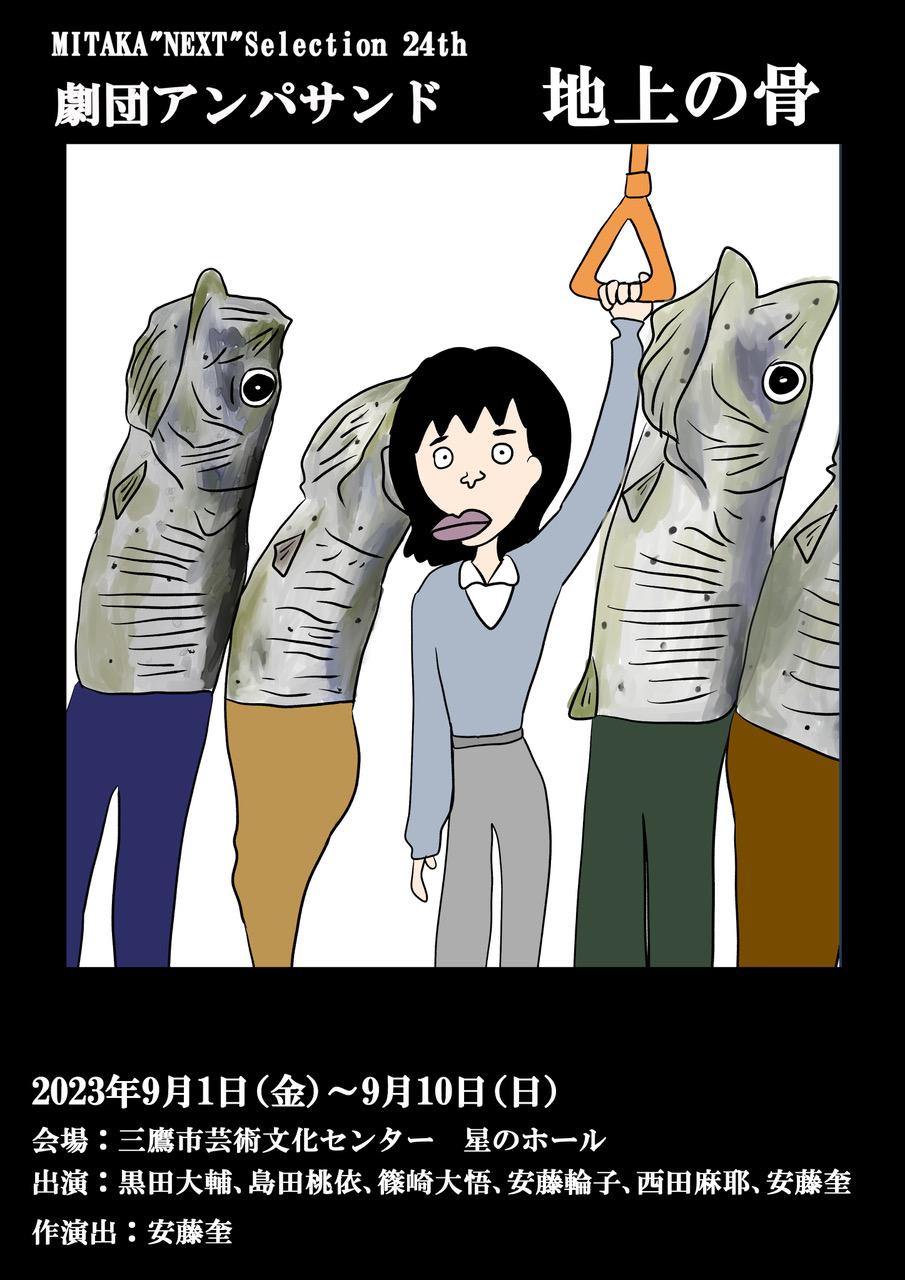
Gekidan Ampersand, Earthly Bones
Written and directed by Kei Ando
Performed by Daisuke Kuroda, Momoi Shimada, Daigo Shinozaki, Wako Ando, Maya Nishida, and Kei Ando
September 1–10, 2023, at Mitaka City Arts Center, Hoshi no Hall
Synopsis
Late afternoon in an office, Miyabi, an overburdened contract employee, is offered some home-cooked fish tsukudani by a more senior colleague, Yasukouchi. She declines, explaining that she will be having dinner with her father, who has come to visit from Kagoshima. Yasukouchi and the rest of the team keep telling each other, considerately, to go home early, but the reality is that they are all buried in work and can’t leave the office. With all this going on, Yasukouchi shares his fish tsukudani with everyone. Then, starting with Yasukouchi, who chokes on a fish bone, an unusual phenomenon transpires among the employees who ate the tsukudani, one by one…
List of Characters
Miyabi (Wako Ando): A contract employee, who does not eat any of the tsukudani prepared by Yasukouchi
Yasukouchi (Daisuke Kuroda): A senior colleague, who shares his fish tsukudani
Dobashi (Momoi Shimada): The team leader, swamped with having to revise the training manual
Akemi (Kei Ando): A colleague of equal seniority to Miyabi
Kaoru (Maya Nishida): About the same age as Dobashi (?), and addicted to audition shows
Tetsuo Tomoda (Daigo Shinozaki): Constantly looking for his Weider in Jelly energy drink
-
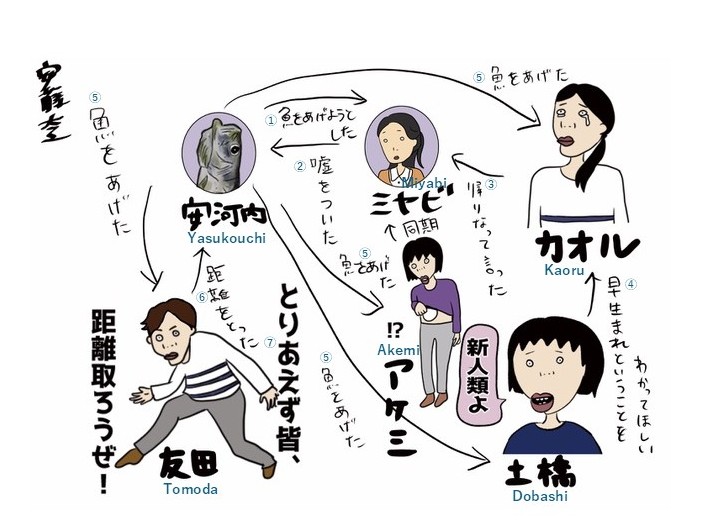
Character relationship chart for Earthly Bones created by Kei Ando
Notes from the chart
① Tries to give fish
② Lies
③ Says, “Go home”
④ Wants to get across she was youngest in her class
⑤ Gives fish
⑥ Gives him space
⑦ “Everyone, give him space!”
Having enjoyed so many of your works, starting with a performance of Shiru yoshi mo nai [There’s no way of knowing] in 2019 at Asakusa Gekitei, I’m delighted to have this opportunity to speak with you. To start off, could you tell us about your first experiences with theater?
After that, I auditioned for a few shingeki-style companies, and ultimately ended up getting into the training program at Theatrical group EN4 I was in their program for two years: the first was nothing but vocal exercises and prop-making, and the second involved creating original works. We also put on independent productions at the theater, but we were a shingeki company after all, so, fundamentally speaking, we were dealing almost entirely with works by celebrated playwrights like Chekhov and Kunio Shimizu5 An older superfan guy I met around then was really into small theater, and got me going to small-theater6 productions, but he was so deep into that scene that I couldn’t really make sense of what we were seeing. Chekhov’s The Seagull was much more fun for me, by comparison. So, I thought I’d better stay with shingeki after all, just like that instructor had said.
To start, Maeda was the first young, living playwright I’d ever met. I’d always thought people like Shakespeare wrote plays, so in the middle of the workshop, I was questioning whether this person could really be a playwright. On top of that, at EN there was an emphasis on delivering the lines perfectly, hitting your marks precisely, and giving yourself over to the characters from plays that had already been written, so the experience at the workshop of performing while trying to get a feel for how the audience was reacting—that was new for me. Each person’s own unique sense of humor came through during the études, and that made me realize that actors are interesting people even in their everyday lives.
-
Shiki Theatre Company
A theater company founded by Keita Asari and others in 1953. Early on, the company staged modern French plays by Anouilh, Giraudoux, and the like, but more recently it has become famous for its long-running productions of musicals such as Cats and The Lion King, and for its nationwide tours.
-
Shimokitazawa
A neighborhood in Tokyo’s Setagaya Ward, known as a theater district because of the many small and medium-sized theaters concentrated there, such as Honda Theater, The Suzunari, Ekimae Theater, and Off Off Theater.
-
Shingeki
A movement and theatrical form that emerged from the late Meiji period onward, influenced by modern Western theater and aiming for a new theater distinct from Kabuki, shinpa (“new group”), or the like. In the postwar period, the movement was spearheaded by companies such as Bungakuza, Haiyuza, and the Mingei Theatre Company, which staged numerous translated, as well as modern and contemporary plays.
-
Theatrical group EN
A theater company founded by Hiroshi Akutagawa in 1975. It continues to stage a wide range of works to this day, from classical to contemporary works, both in Japan and overseas. The EN Theatre Research Group, an affiliated entity, also trains aspiring actors.
-
Kunio Shimizu
A playwright, director, and novelist born in Niigata Prefecture in 1936. He rose to prominence from the late 1960s through his collaborations with the director Yukio Ninagawa. Significant works include Shinjō afururu keihakusa [Such a serious frivolity], Bokura ga hijō no taiga o kudaru toki [When we sail down the river of cruelty], and Gakuya [Dressing room]. Shimizu passed away in 2021.
-
Small theater
Theater created principally in relatively small venues, and in which young playwrights, directors, and independent theater companies pursue their own distinct expressive forms. It developed out of the underground theater of the 1960s, and experienced a major boom in the 1980s, drawing in young audiences. Today, it comprises a wide range of styles and forms of performance.
-
Gotanndadan
A theater company founded in 1997 by playwright and director Shiro Maeda, and known for their style of portraying the humor and sadness lurking in everyday life with effortless dialogue and sparse stage design. Prominent works include Ikiterumono wa inainoka [No one alive here?], for which Maeda was awarded the Kishida Kunio Drama Award.
-
Seinendan
A theater company founded by playwright and director Oriza Hirata, among others, in 1982. It has pursued what they refer to as “contemporary colloquial theater theory,” which is characterized by everyday spoken language, multiple simultaneous conversations, and restrained performance. This approach has had a significant impact on Japanese contemporary theater from the 1990s onward.
-
Gossip Girl
A TV drama broadcast in the United States from 2007 to 2012, set in New York’s high-class residential Upper East Side neighborhood and depicting the turmoil of love, friendship, and family relationships for young people at a prestigious school.
Kindness used to be something that was considered really good, for example in the way it was represented by Tora-san10 Nowadays though, I think it’s actually considered an annoyance more than anything else. Regardless of whether that’s good or bad, I realized later that I wanted this play to record the fact of this loss of kindness. [The actor] Daisuke Kuroda plays the last person in this world, the last person in Japan, who is kind.
Lots of times when I’m writing a play, I come up with the setting and the characters by envisioning the actors who will be performing. In terms of this particular play, I thought how Maya Nishida seemed like someone who would get a sense of accomplishment from their work by getting angry, or how Daigo Shinozaki seemed like someone who would be a really good person, but who would seem to always be in a different dimension and not really be listening to what other people said. These were the kinds of things that came to my mind, and were what led to creating characters like Kaoru and Tetsuo Tomoda. Of course, this is just an image that I’m completely making up based on these actors, so it’s not necessarily a reflection of who they actually are, but I do think these characterizations help draw out what makes each of them interesting. It’s fun when the actor seems like someone who would do something different than myself because I come up with all sorts of ideas.
-
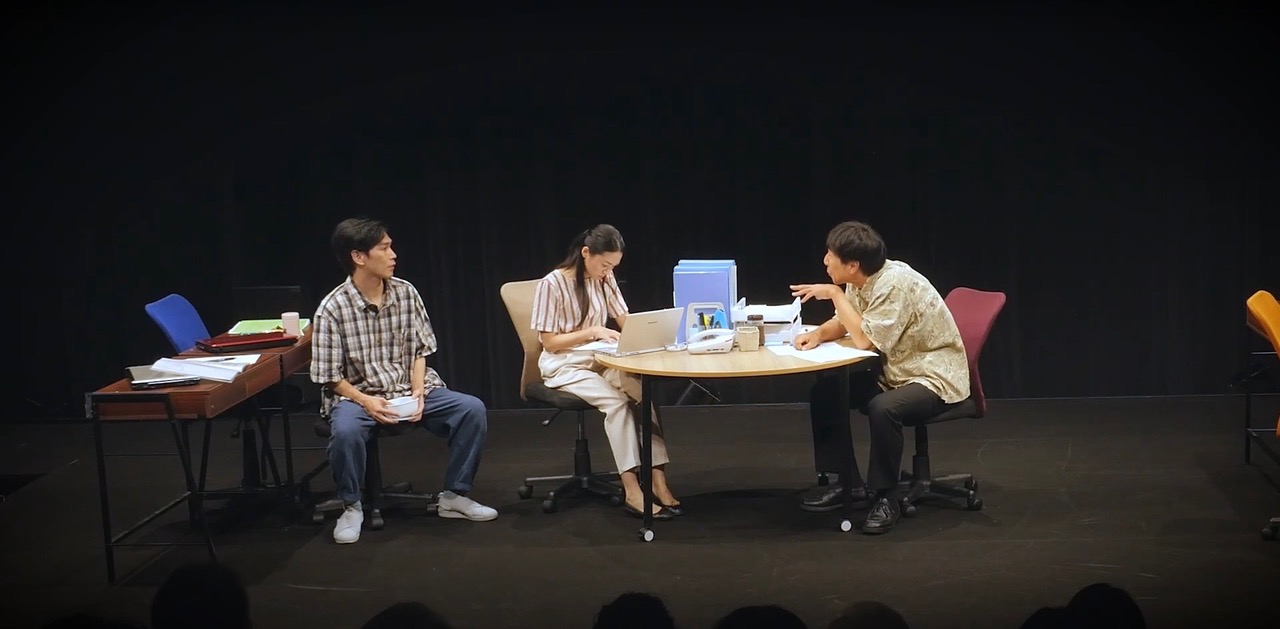
Earthly Bones, 2023. From left to right: Tomoda (Daigo Shinozaki), Miyabi (Wako Ando), and Yasukouchi (Daisuke Kuroda).
Now that you mention it, Soredokoro janai [Now is not the time]11 was the one time I wrote about a couple. I thought that I might be able to do it if I wrote about a couple that was completely unrelated by blood, but it was still really embarrassing. But that was based on a true story that my father experienced, so I suppose there wasn’t much I could do about that….
-
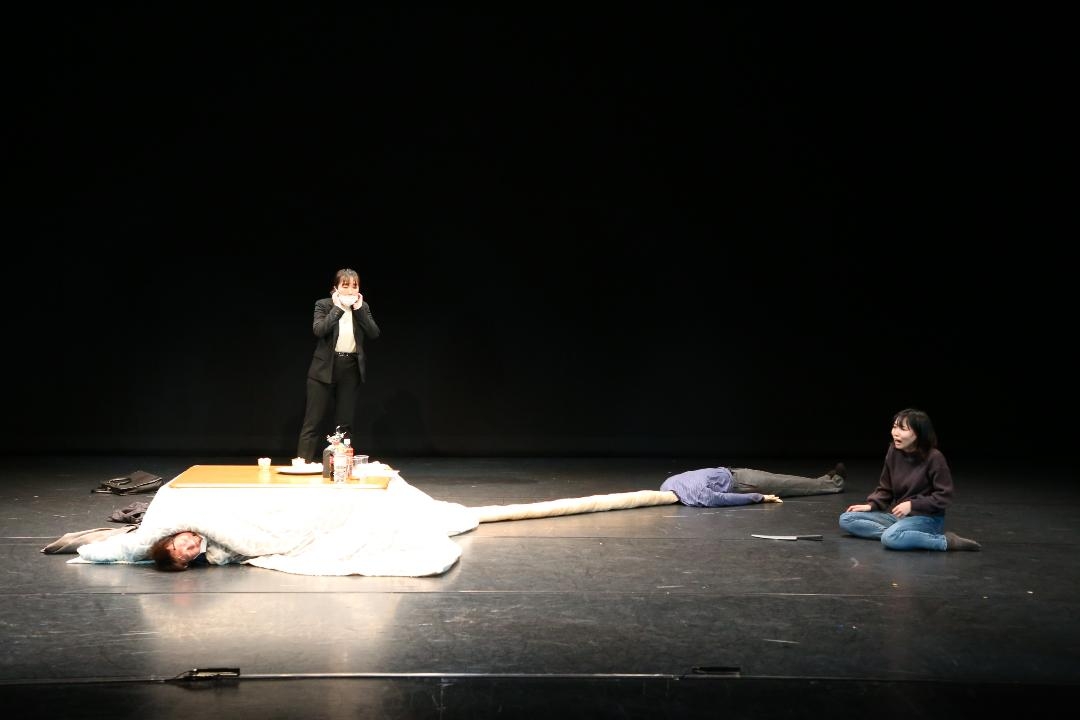
Soredokoro janai, 2022. Photo: Tetsuya Matsushita
From the perspective of the writer, a big factor is that I don’t have to worry about myself. I ask my favorite actors to perform in these works, so I want to take advantage of their individual uniqueness and tend to give all the characters strong personalities. But when it comes to my own role, I don’t have to be as meticulous, and I can adjust the overall balance. To give an extreme example, if there’s someone I want to die at the start of a play, I feel bad asking that of an actor that I went to the trouble of inviting. If it’s myself though, I have no qualms about killing them.
In terms of directing, it’s easier for me to understand what’s happening in a scene if I’m in the middle of it as one of the actors, rather than giving instructions from the sidelines. I’m also able to intuitively understand why this person in this place wouldn’t say this line and how that’s preventing the scene from working. I can adjust things based on how I’m actually feeling, and I think it makes it easier for the actors to understand what I’m doing as well.
I’ve never been good at giving verbal acting instructions. I’ve been told it’s not good for a director to provide demonstrations of the kind of acting they’re wanting, but if I say something like, “Be sad here,” isn’t that going to mean different things to different people? But if I do it myself, then everyone will understand what I mean by “sad.” I have experience performing with actors in a lot of different scenes, so I think it’s easy for them to take what I say not as a request to copy me, but as a single point of reference.
-
Tora-san
This is the nickname of Torajirō Kuruma, the main character played by Kiyoshi Atsumi in Otoko wa tsurai yo [It’s tough being a man], directed by Yōji Yamada. Tora-san is an itinerant vendor beloved as a man with a deep sense of duty and kindness despite the trouble stirred up by his meddlesome tendencies.
-
Soredokoro janai [Now is not the time]
This Gekidan Ampersand play was first performed as part of the 2021 Kanagawa Short Drama Award, and was performed in an extended version in 2022. The play is about a husband who becomes possessed by a ghost with a long neck as he’s on his way to the office. As his body changes, the couple’s daily life takes an unexpected turn.
-
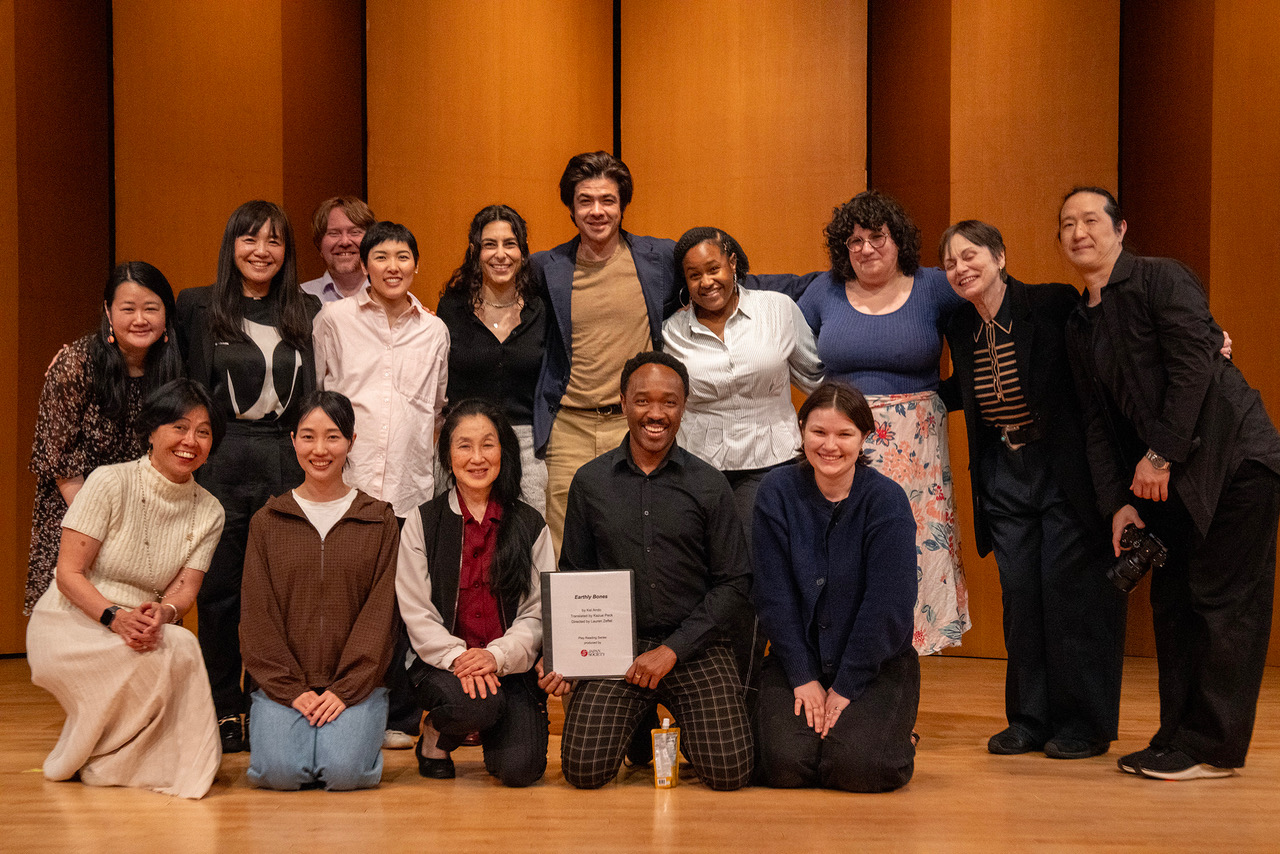
With the cast and crew of the reading of Earthly Bones staged in New York, 2026
The term “evil spirit” comes up in the work, and I was struck by a question that I got during the rehearsal: “Evil according to what religion?” In Japan we can just say “evil spirit” and that’s enough, but they were trying to define which set of parameters was determining the evilness of the spirit. I found that difference interesting.
Of course, proper nouns like “Weider in Jelly” (the name of a nutritional jelly drink supplement for use when busy), and geographical information like the distance between Tokyo and Kagoshima are things that are difficult for non-Japanese audiences to understand, but there were surprisingly few parts where I felt like the flow of the story couldn’t be understood.
-
Earthly Bones English reading performance
This performance was held by the Japan Society in New York. It was translated by Kazue Peck, and directed by Lauren Zeftel. A post-performance Q&A session with Ando and the director was also held.
Performance information
Gekidan Ampersand
Tachidomaru ni wa chikasugiru [Too close to stop]
Written and directed by Kei Ando
Performed by Hairi Katagiri, Natsu Fukui, Wakaba Nagai, Wako Ando, Yui Nishide, and Kei Ando
Tokyo: October 28–November 1, 2026, at Shinjuku Theater Tops
Mie: November 7–8, 2026, at the Mie Center for the Arts Theater
Sapporo: November 14–15, 2026, at ConCarino Cultural Lifestyle Support Facility
-
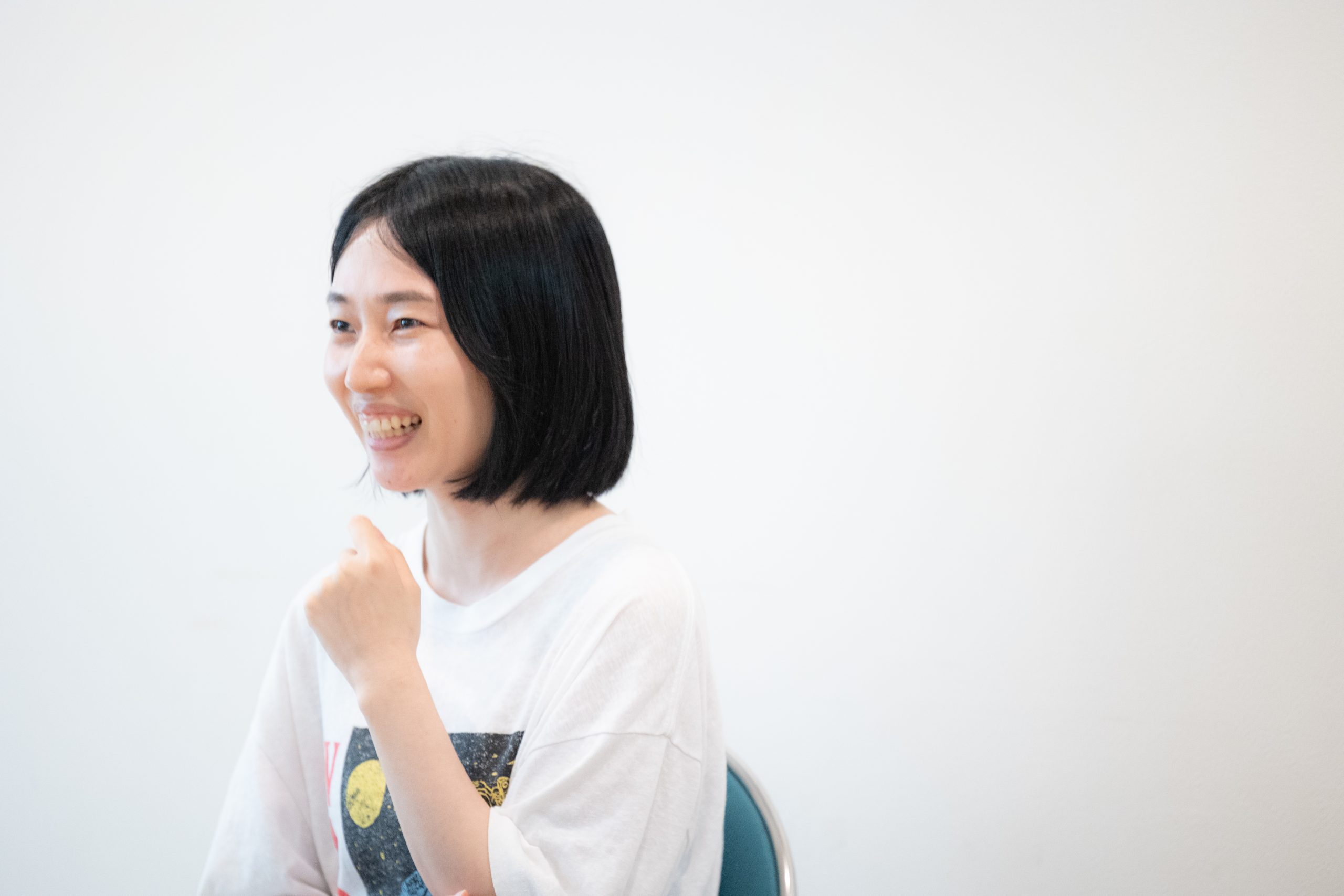
Photo: Mayuko Yamaguchi
Related Tags