


Kazufusa Hosho
Wearing National Treasures: The Universal Potential of Noh + The Hosho Head Family’s Collection of Noh Masks
Ⓒ Kikuko Usuyama
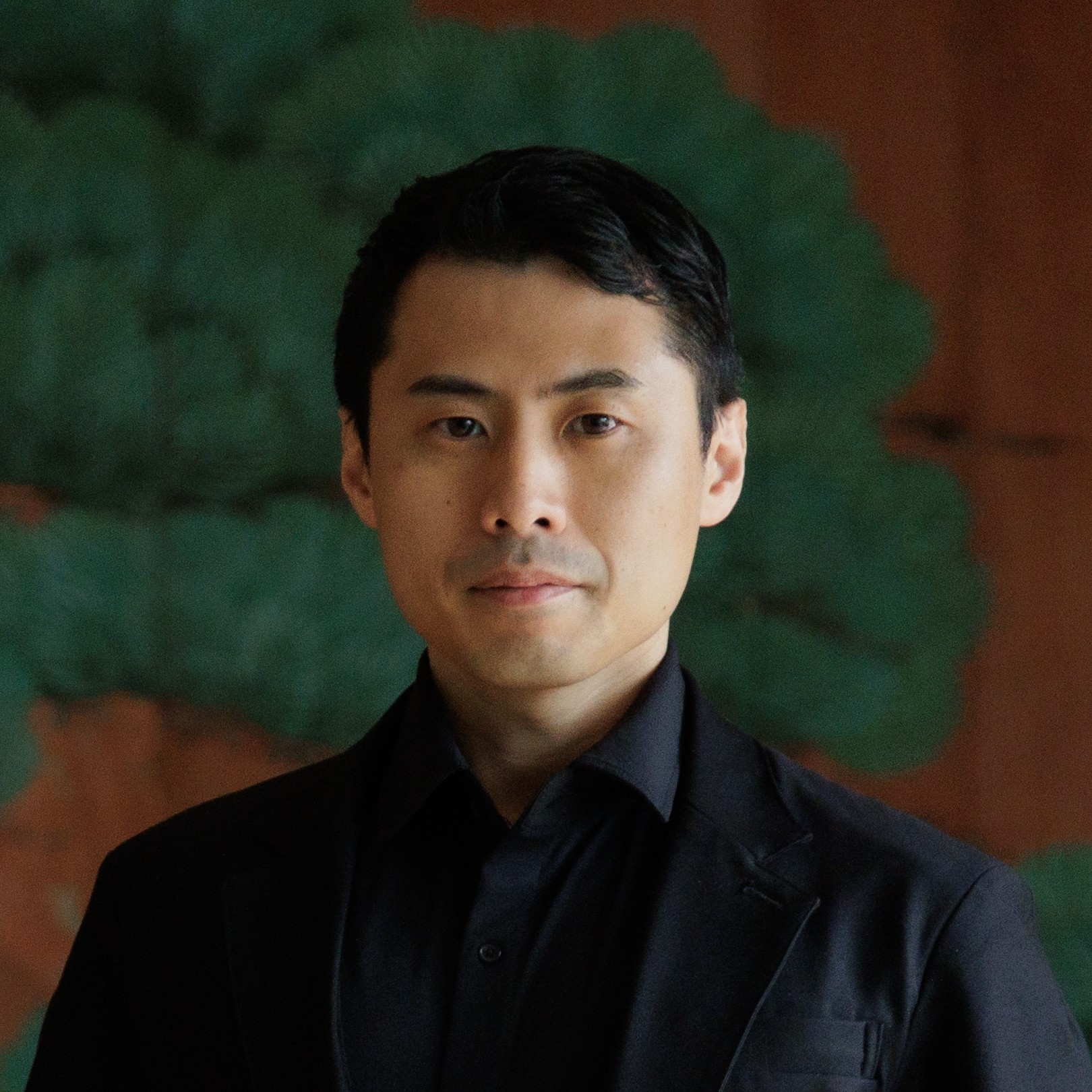
Photo: Kikuko Usuyama
Kazufusa Hosho
Noh performer Kazufusa Hosho, the 20th-generation head of the shitekata Hosho School, was born in Tokyo in 1986 as the eldest son of Fusateru Hosho, the 19th-generation head of the shitekata Hosho School. He studied under his father and made his stage debut in 1991, appearing as a child role in Seiobo. While placing great importance on traditional Noh performance, he has also actively engaged in inter-school performances and the revival of past works. In addition, he performs regularly overseas, driving continuous cultural exchange initiatives in Italy, Hong Kong, the Middle East, and other regions. He served as the Noh consultant for the Disney+ drama SHOGUN (2022). He received the Tokyo University of the Arts Acanthus Music Prize in 2008 and the New Artist Award at the 40th Matsuo Performing Arts Awards in 2019. In 2024, he also served as supervisor for the new manga series Shite no Hana – Nogakushi Haga Kotaro no Sakikata (Flower of Shite – Noh Performer Haga Kotaro’s Way of Blooming), serialized in Weekly Shonen Sunday.


The Hosho School is one of the five major schools of Noh theater shite1, with a history spanning over 600 years. Kazufusa Hosho, who inherited this distinguished tradition as the 20th-generation head, is not only an accomplished performer but also utilizes his exceptional artistic sensibility as a producer to organize overseas performances, foster exchanges with other schools, and pursue new creative initiatives.
Furthermore, as the head of the Hosho School—which has weathered countless wars and earthquakes while preserving its venerable Noh masks and costumes—he maintains an open approach by generously using these National Treasure-level heirlooms in performances and making them available to the public. In the latter half of this article, we introduce 13 carefully selected Noh masks from the Hoshokai collection.
Interview and Text by Shoko Kodama
English Translation: Yume Morimoto, Ben Cagan (Art Translators Collective)
Exploring the universal potential of Noh
At that time, I came to strongly feel that without holding regular events to establish a firm foothold, it would ultimately be meaningless. I felt it was essential for Noh performers to take the initiative, so I began studying Italian to be able to communicate in everyday conversation. Since then, I have performed in Florence, Vicenza, and other cities, and I have been invited to perform at the Teatro Franco Parenti and the Teatro Puccini in Milan.
In Hong Kong, we’ve had strong attendance, with audiences often requesting Shakkyo14, set on Qingliang Mountain in China and featuring a dynamic shishi (lion) dance. Funabenkei4 was also very well received. In that sense, Hong Kong audiences tend to place a strong value on dramatic storytelling as well.
The UAE presents a greater challenge. Since performances involving alcohol are generally not permitted in Islamic countries, we have to make adjustments, such as removing scenes that involve drinking. Because swords are regarded as symbols of coming of age, there has been interest in Kokaji5, which features the spirit of a sword. Romantic stories, however, tend to attract less interest. But I have found myself drawn to the poetic culture of Nabati6, where it seems possible to identify parallels with Japan. Whether in love letters or to record the news, I feel similarities to Japan’s waka poetry culture.
I’d like to stage Momijigari7 there one day. There is a similar story in the Middle East in which a young man is lured by the scent of incense to a place where he finds women. They turn out to be evil spirits, and although he is nearly attacked, he fights them away with his sword. I think it would be interesting to adapt Momijigari for the UAE.
-
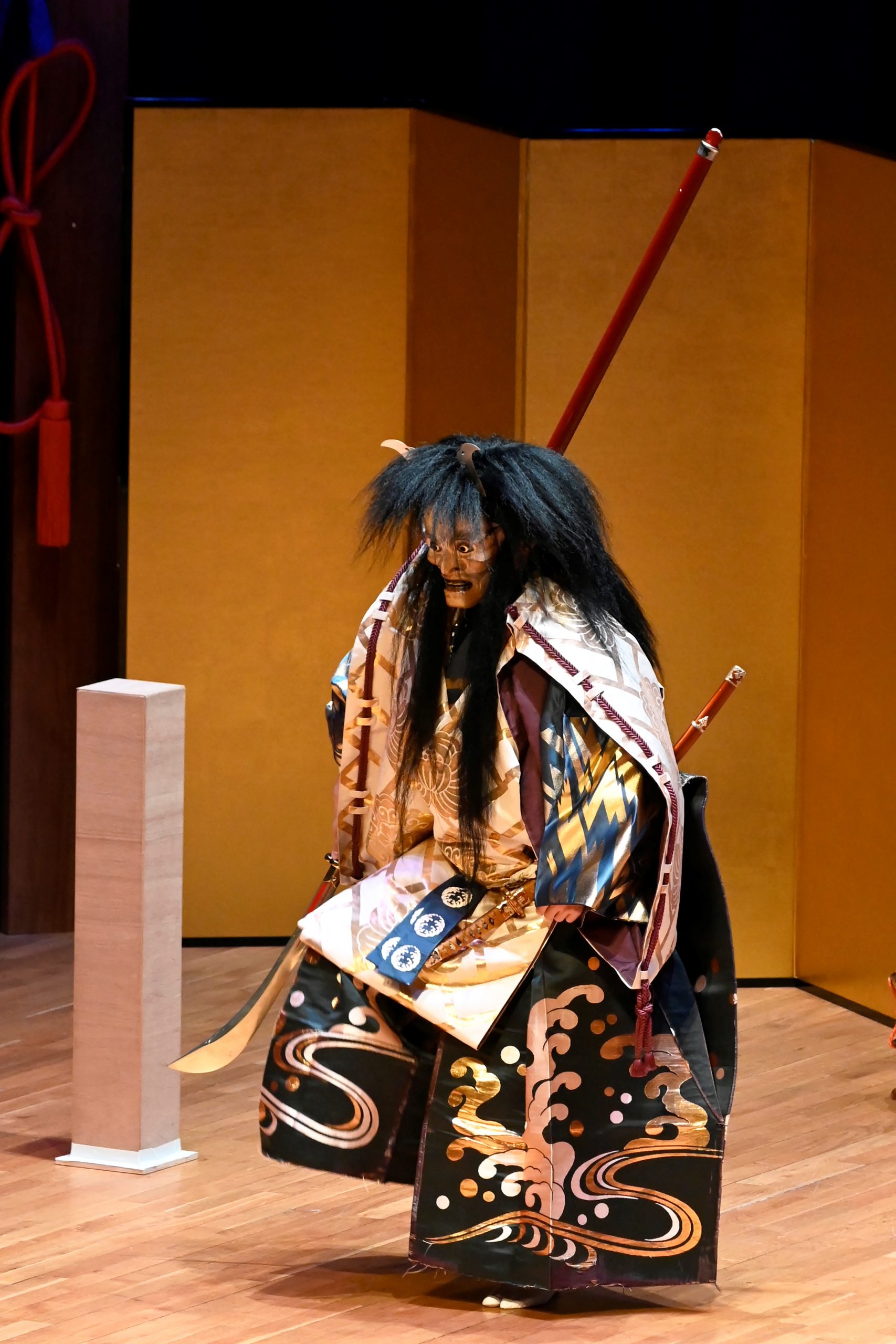
Funa Benkei in Hong Kong Ⓒ Annie Chan
-
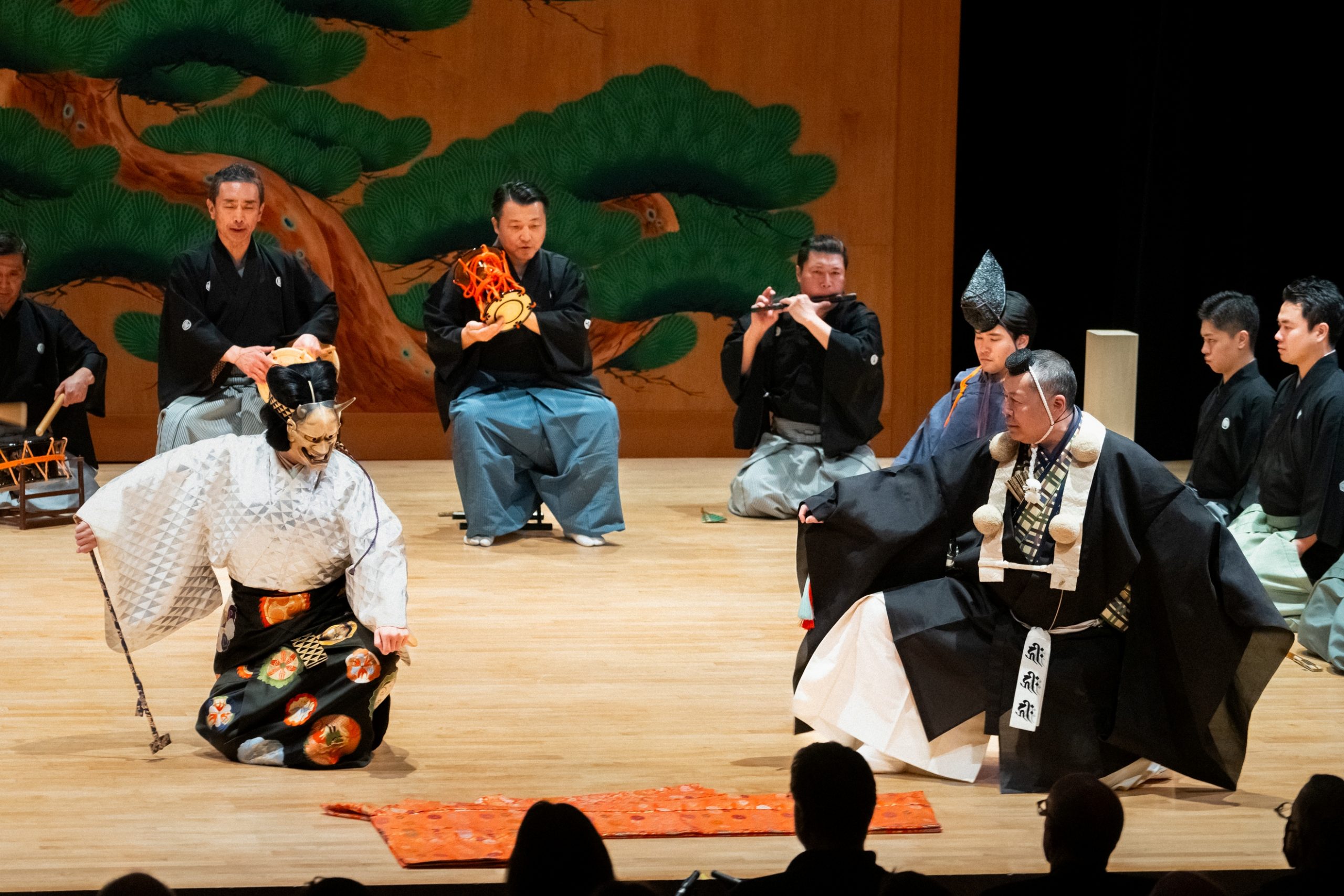
Pictured (front, L-to-R): HOSHO Kazufusa (Lady Rokujo); TATEDA Yoshihiro (Monk)
Hosho Noh School performing the noh play Aoi no Ue as part of their North American debut at Japan Society, December 2025 © Ayumi Sakamoto
Provided by Japan Society (NY)
I make a point of clearly articulating what I want audiences to see. To say, “It’s a comprehensive art form, so just enjoy whatever part you like,” strikes me as a kind of laziness on the part of the presenter. Even for overseas performances, I clearly define the theme for each production. For Aya no Tsuzumi, I emphasize the romance between people of different social classes. For Yoroboshi, I highlight the protagonist’s mental strength. In a sense, it’s like gathering like-minded people. Once you form a community, a market emerges. I keep a clear vision in my mind of the kind of audience I want to come see the piece.
Throughout this history, one can sense the Maeda family’s skillful approach to cultural governance. I believe culture exists to elevate people’s intellectual refinement. Raising cultural standards together with the townspeople was sure to have increased the cultural literacy of the average person. When those in power invest money and provide a space in which artists can work freely, a wide variety of artistic works are born. The townspeople experience them, become inspired, and everyone becomes intrigued. Direct engagement with culture brings a sense of catharsis. I believe the Maeda family succeeded in creating exactly that kind of system, making it an ideal model for how living culture can be utilized.
-
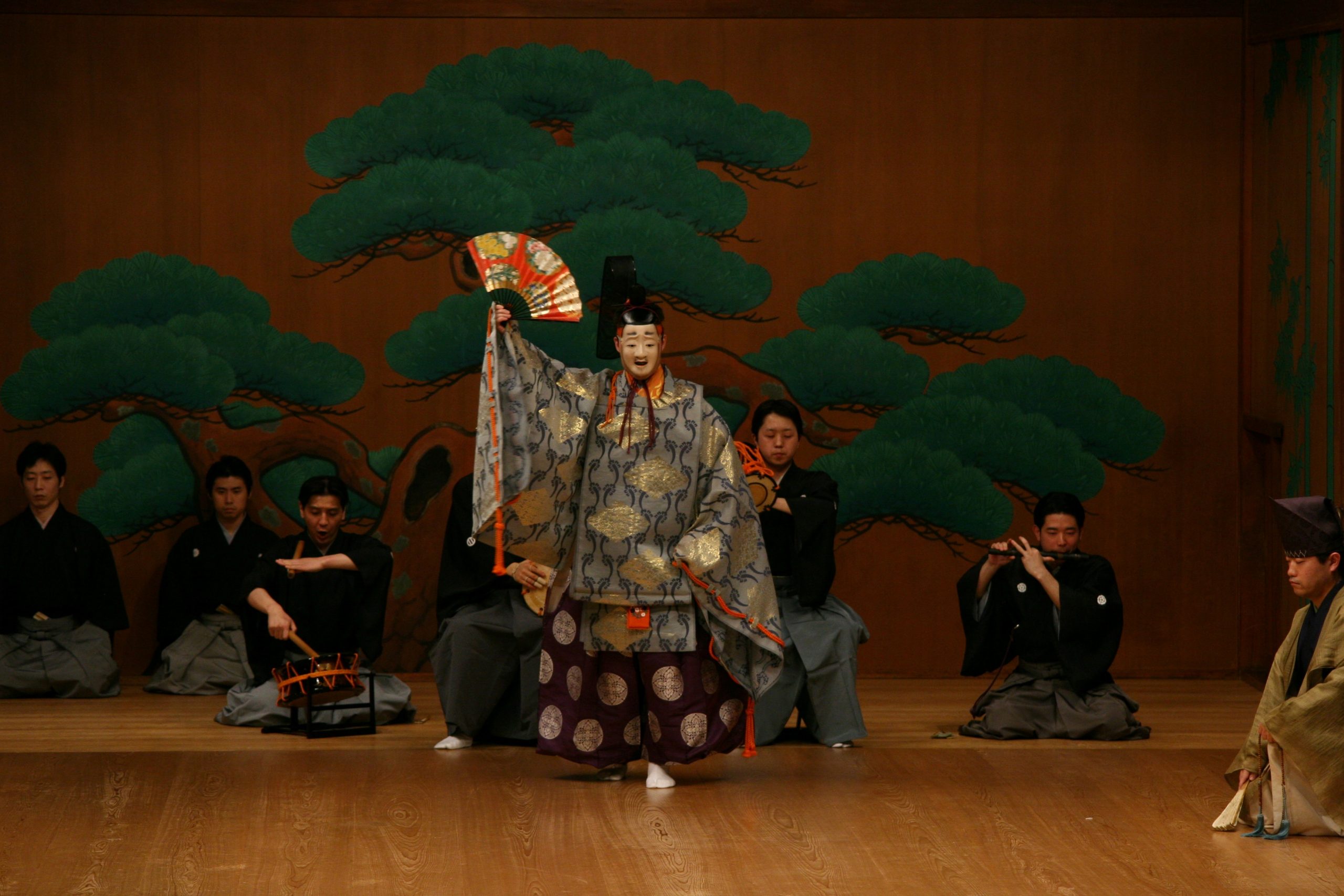
Raiden(来殿) © Hoshokai.
【Exhibition and Performance Information】
Special Exhibition Commemorating the 100th Anniversary of the Maeda Ikutokukai Foundation
The Maeda: Legacy of a Prosperous Samurai Family
April 14–June 7, 2026 Heiseikan, Tokyo National Museum
https://tsumugu.yomiuri.co.jp/kagamaedake2026/english.html
Noh Theater at the Tokyo National Museum
April 14–June 7, 2026 1st Floor, Main Building Tokyo National Museum
https://tohakunoh.com/english
Hosho Noh Head Family Noh Mask Collection
-
One of the Hosho family’s most famous masks, Kishiru Ayakashi (16th century). Resin has seeped to the surface, giving it a menacing, bruise-like appearance. It is used for roles such as male vengeful spirits in plays like Funabenkei.
In fact, masks from the Muromachi period can be difficult to use because their expressions tend not to shift very much, which limits their effectiveness on stage. Since they were created during the formative period of Noh, many have an overly assertive presence. To me, the most remarkable masks are those from the Azuchi-Momoyama (1574–1603) through Edo (1603–1869) periods, when master mask makers such as Zekan, Kawachi, and Omi competed with one another in artistry and technique. Noh masks from this era appear natural and compelling regardless of who wears them. They were created with actual stage performance in mind, and I believe there is deep significance in continuing to use them today.
When performers from the Hosho School use masks in their performances, I am usually the one who selects them. Sometimes they react with surprise and ask, “Is it really alright for me to use this one?” But I hope that giving them such opportunities will inspire them and ultimately lead to stronger performances.
-
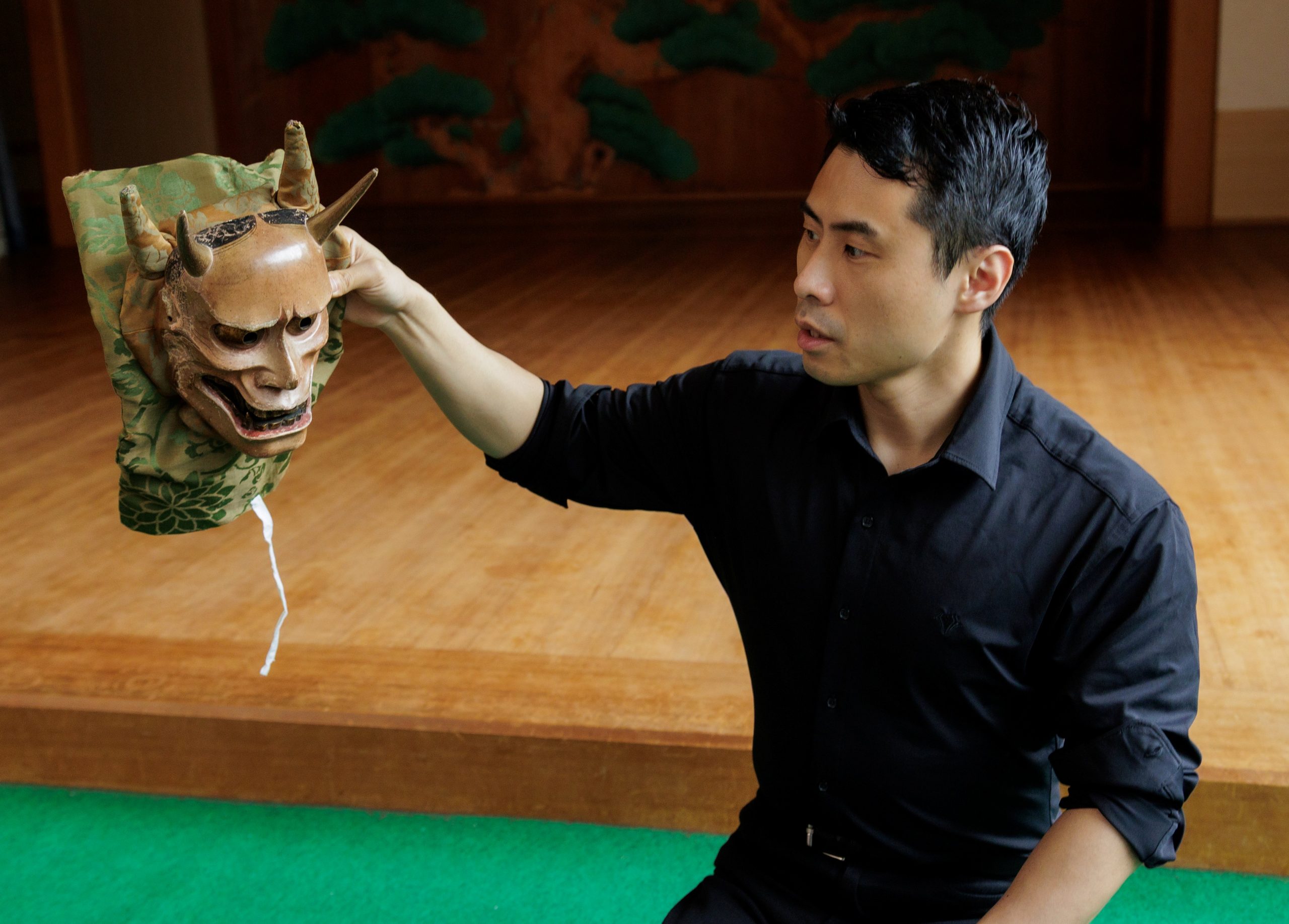
Kazufusa Hosho resenting theUkiki no Hannya (floating wood hannya; 16th century)
Elders masks
Okina9 (old man)
-
Ⓒ Hoshokai
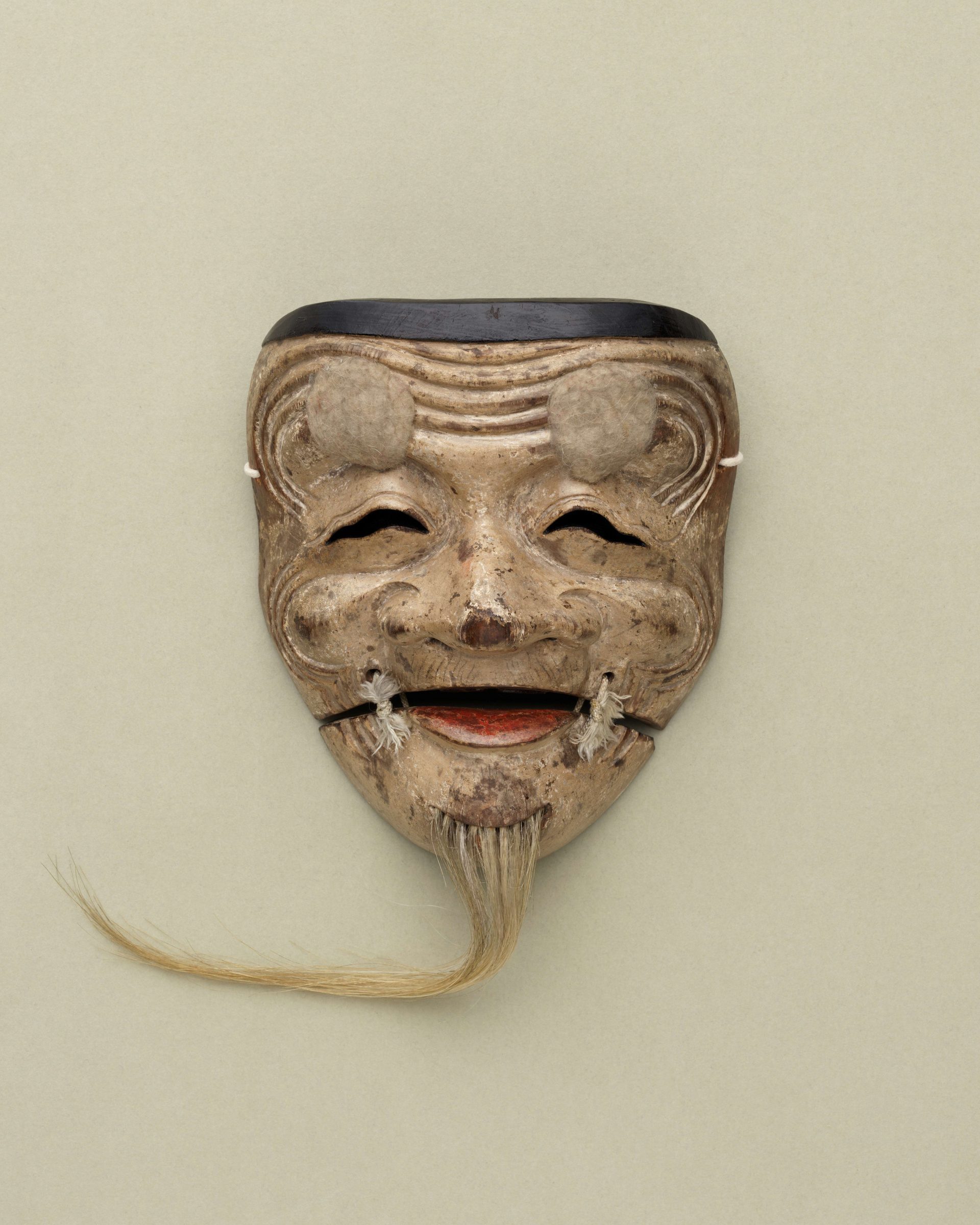
Created during the Muromachi period (16th century), this mask is specifically used for Okina, a piece that prays for peace throughout the land and tranquility for the nation. Because of its white-painted surface, it is also known as the Hakushiki-jo (white-faced old man).
Associated with strong ritual imagery, the mask is believed to house a deity, and is the only mask that the performer puts on while on stage. It features a kiriago (split jaw), in which the upper and lower parts are separated, with the lower jaw suspended so that it can move. The beard on the chin is made of horsehair, while the eyebrows are rabbit hair.
Maikojo (dancing old man)
-
Ⓒ Hoshokai
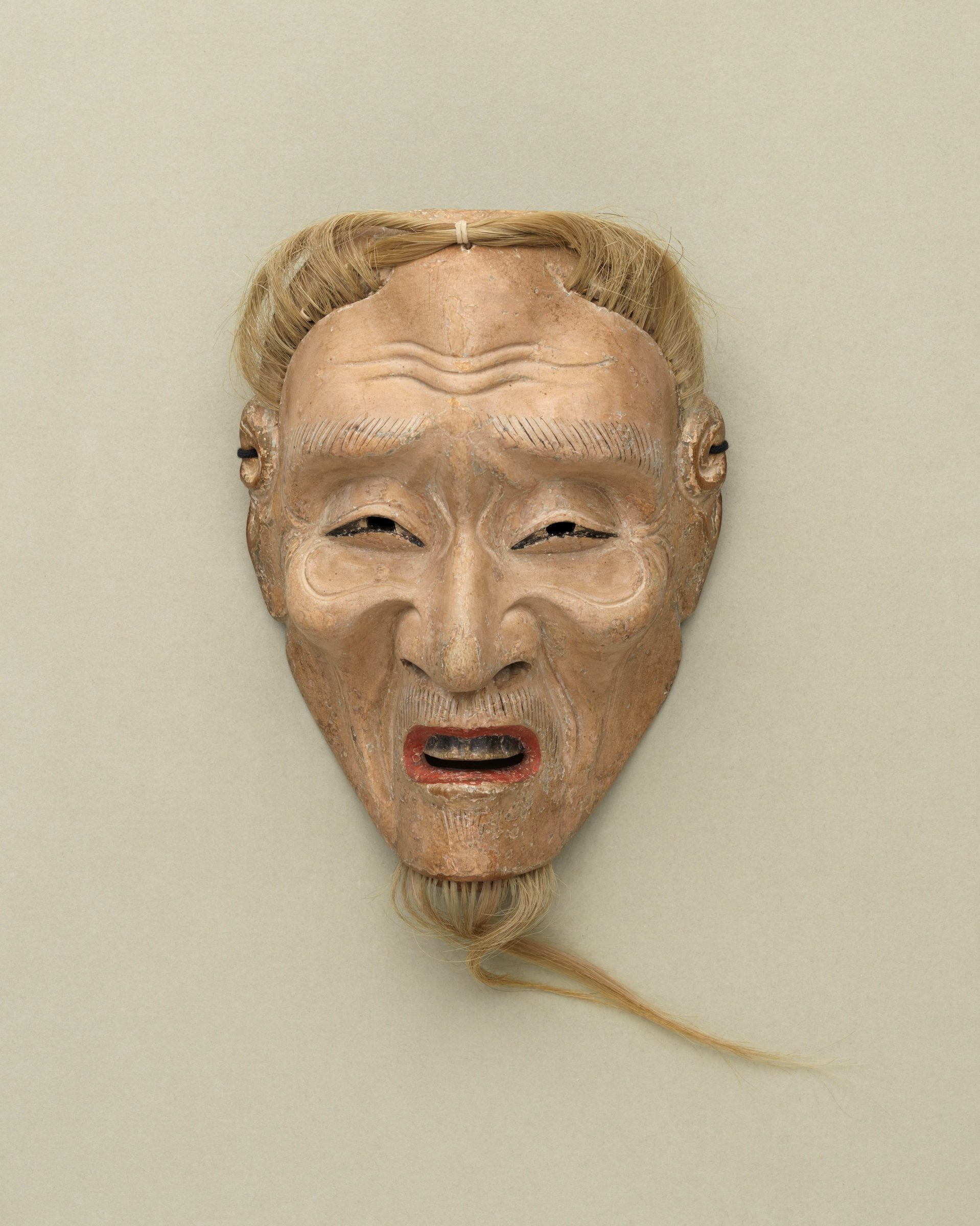
Dating from the Muromachi period (15th–16th centuries) this mask depicts an elderly man performing a dance. It has a very distinctive expression. Although it may appear somewhat unusual, on stage, it transforms into a strikingly handsome man—a truly mysterious mask.
Woman masks
Fushikizo (noble woman)
-
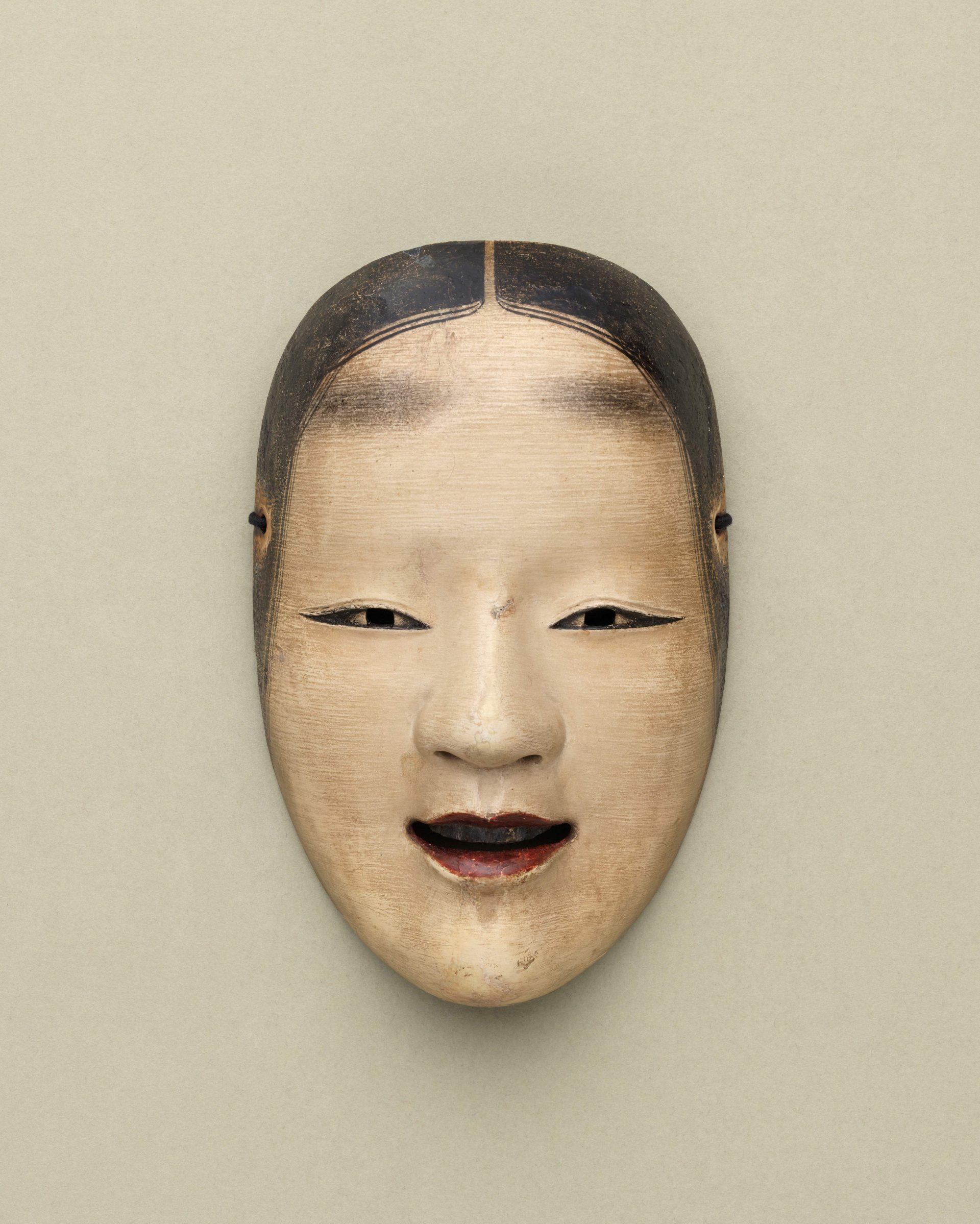
Ⓒ Hoshokai
This mask dates from the early Edo period (17th century). It is a woman mask. Its most distinctive feature is the fushi (natural wood knot) located between the eyebrows. When people think of Noh masks, they often imagine smooth, pristine faces, but this knot functions almost like a beauty mark, naturally drawing the viewer’s gaze to the face. This feature has made it a representative mask of the Hosho School. It features a sharp jawline and visible brush marks on the sides. It responds well to light and shadow, resulting in a remarkably expressive appearance. It is used to portray refined woman roles.
Shakumi (middle-aged woman filled with sorrow)
-
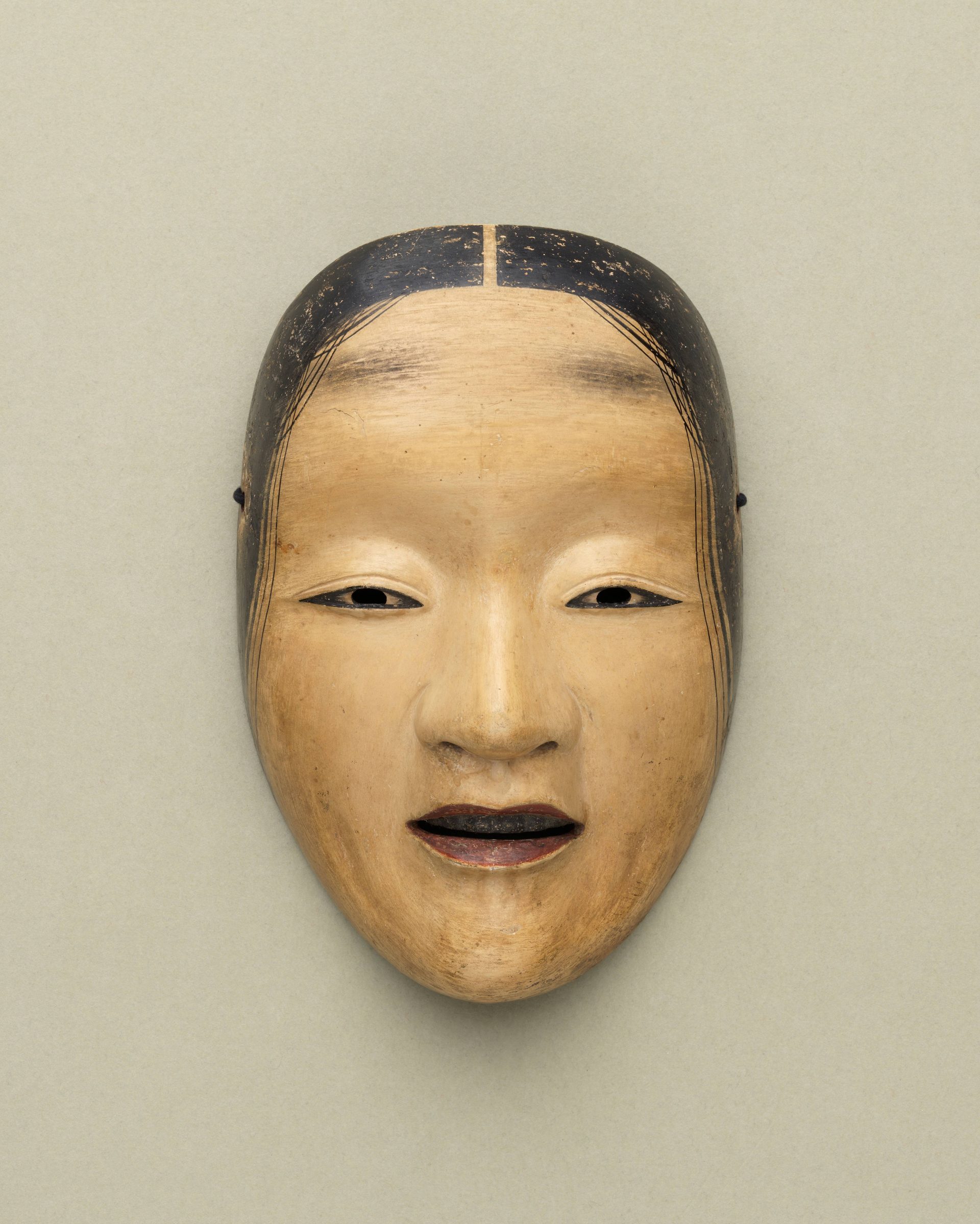
Ⓒ Hoshokai
This mask is used to portray middle-aged and mature women. It was crafted by Kawachi, a master mask maker regarded as a leading artisan of the early Edo period (17th century).
Although the coloring appears somewhat brownish, it is said to be intentionally dark to respond to the red hues of the setting sun. The expression exudes a sense of melancholy. This piece dates from a period when masks began to be crafted with the intention of being worn. It depicts a woman with a dignified expression, reflecting her accumulated knowledge and life experience.
Supernatural woman masks
Namanari (a woman in the process of becoming a female demon)
-
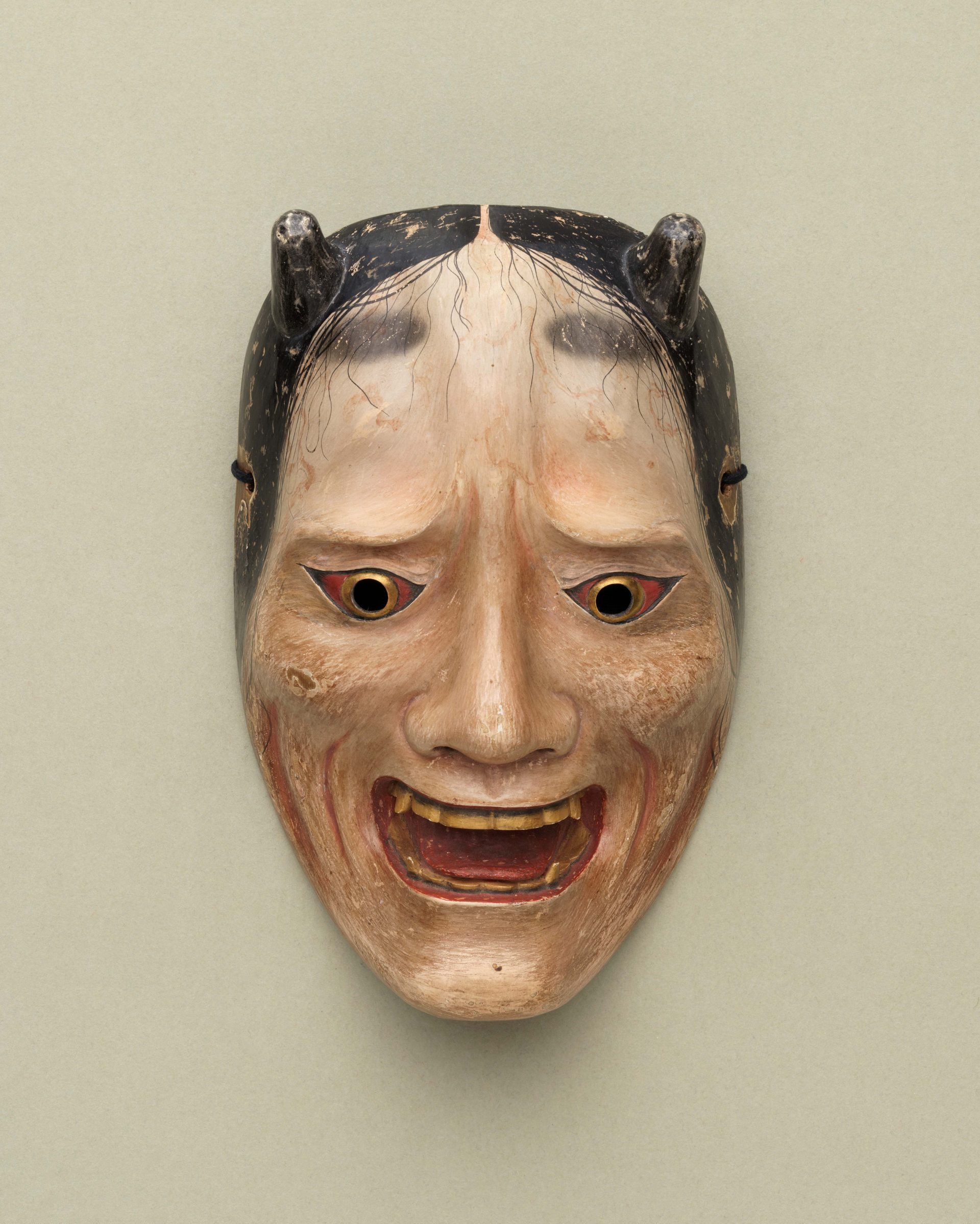
Ⓒ Hoshokai
This is a woman mask from the early Edo period (17th century). Horns are beginning to emerge on either side of the forehead.
It is the mask used exclusively for the shite role in the second act of Kanawa10. I think this version of the mask from the Hosho school is the most beautiful. With red eyes and golden irises, the figure is no longer human but is already beginning to transform into a demon.
Hashihime (a woman consumed by jealousy and rage)
-
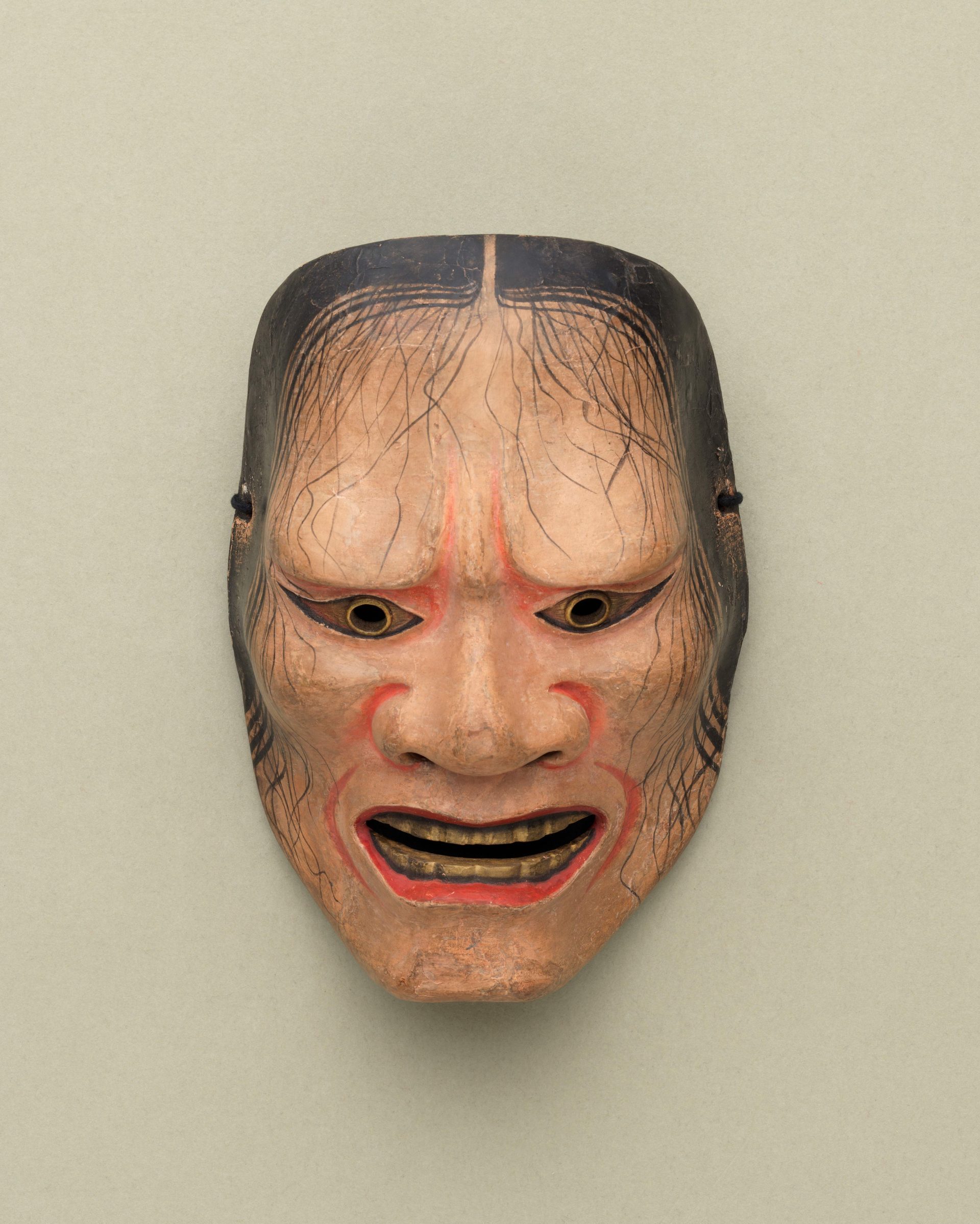
Ⓒ Hoshokai
This mask also bears a frightening expression. Created during the Momoyama to early Edo period (16th–17th centuries), it is attributed to the artist Magojuro.
Slightly different from a demon, Hashihime shows the expression a woman takes on when transforming into a dragon. Originating from the legend of Hashihime of Uji, in which a woman becomes a vengeful spirit driven by jealousy, this figure possesses both divine dignity and majesty. The teeth are neatly arranged rather than fang-like. Because the Hosho School possesses only one example of the Namanari mask, it is sometimes used in performances of Kanawa.
Shinja (jealous female demon or serpent woman)
-
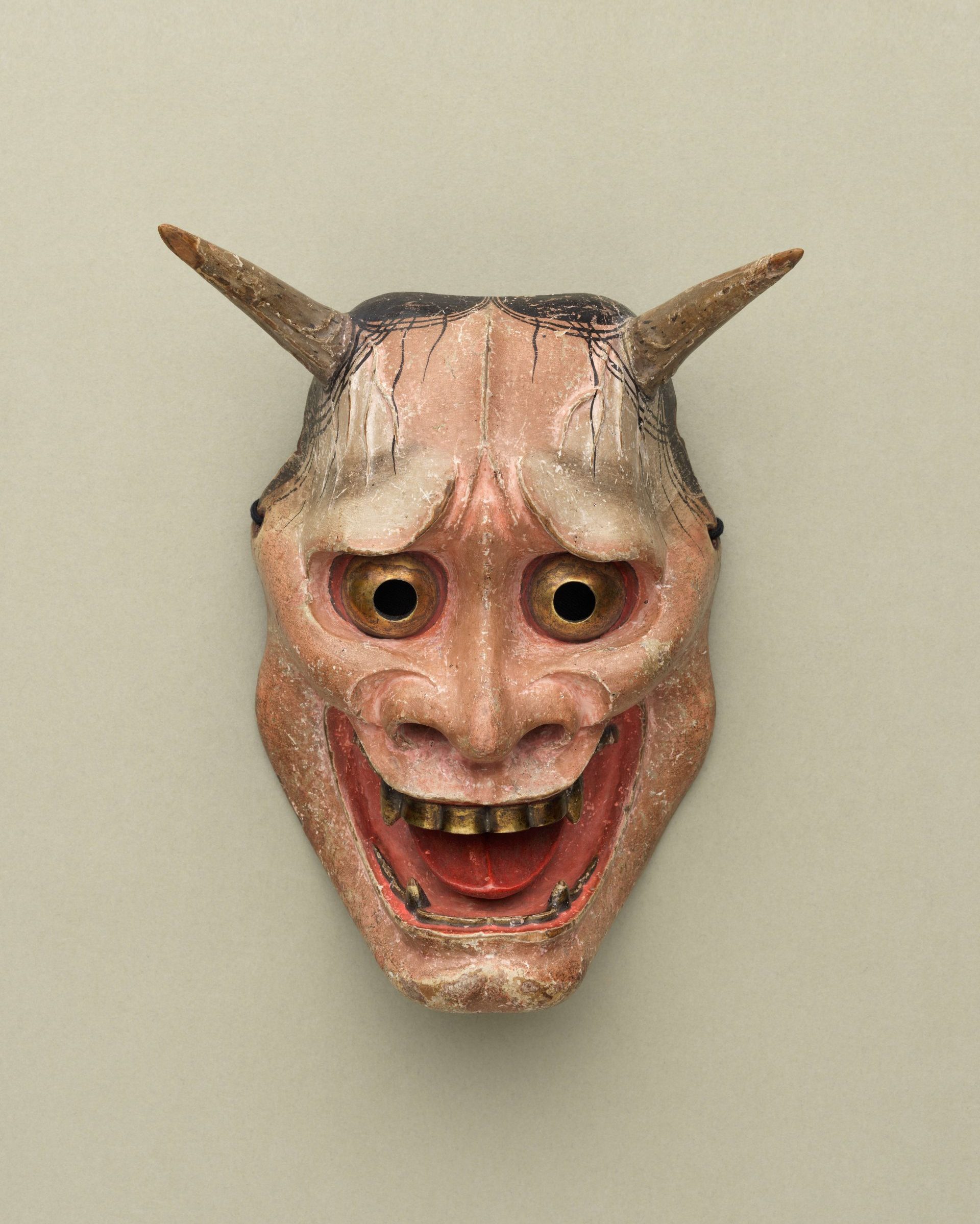
Ⓒ Hoshokai
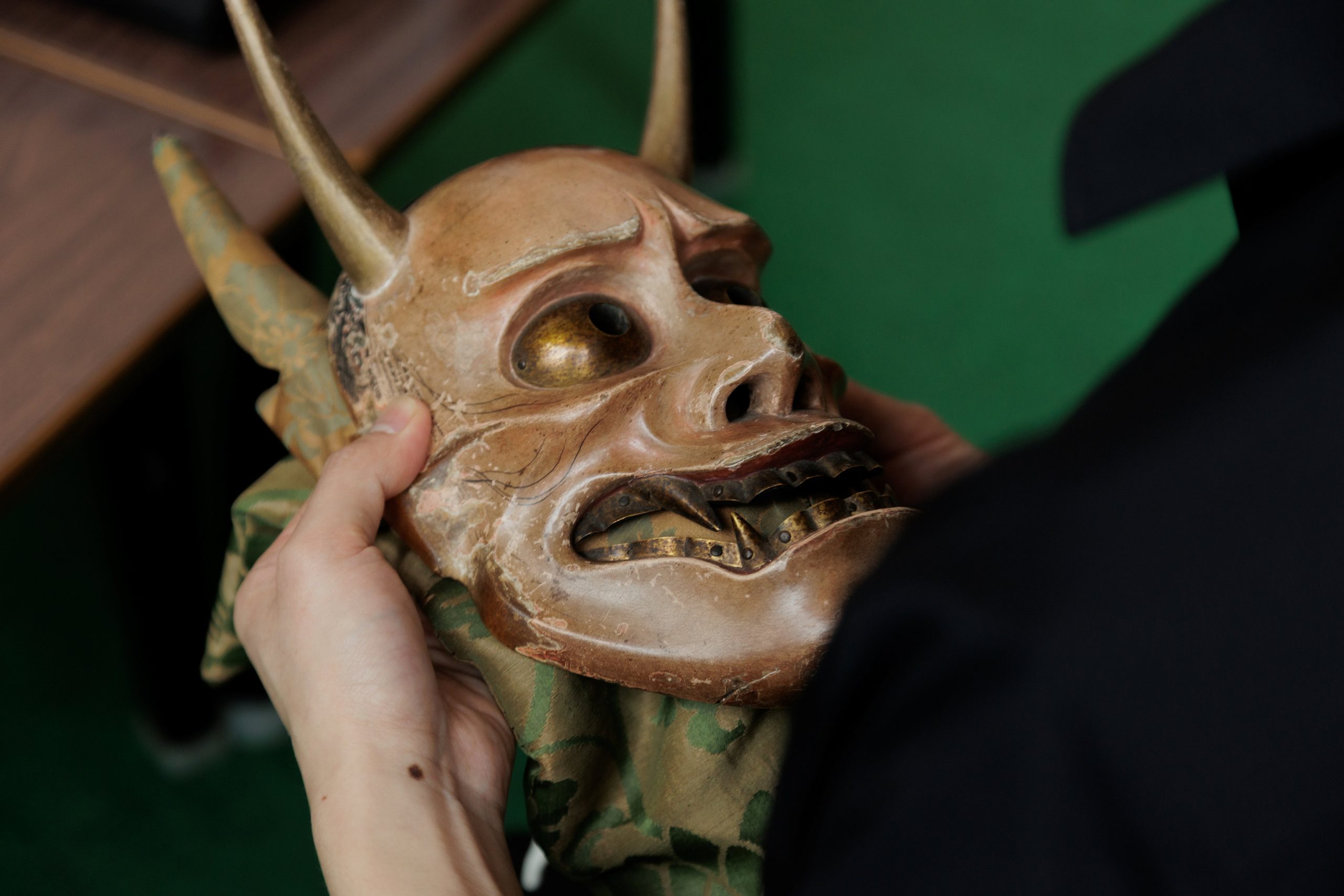
This mask is said to be the work of Shakutsuru, a legendary Noh mask maker of the Muromachi period (15th century). It features two horns protruding from the head, bulging veins on the forehead, and sharp fangs visible within its wide-open mouth.
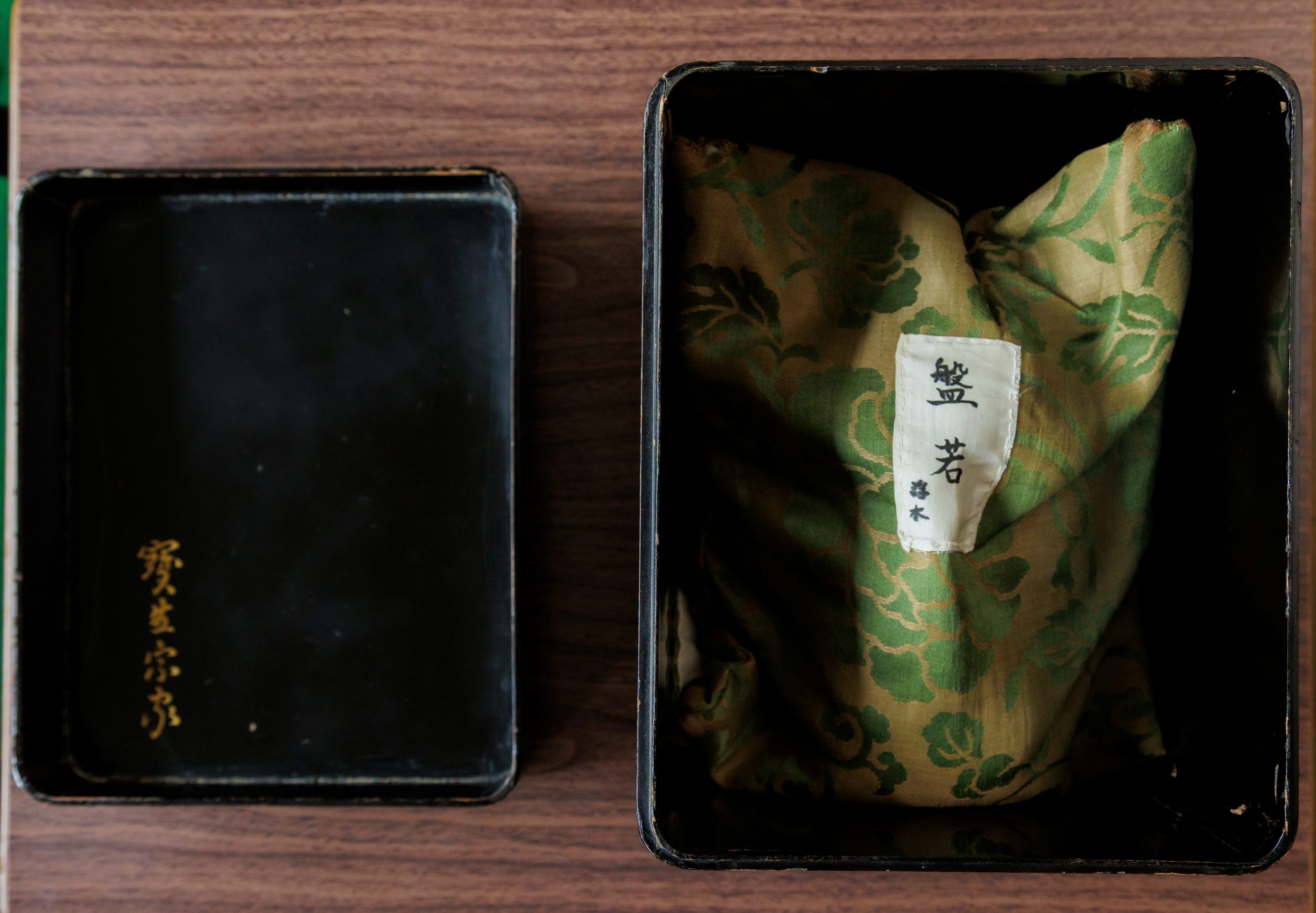
This is the female demon mask used for the nochi-shite in Dojo-ji11, but because it is quite large, it can appear somewhat unbalanced on performers with smaller frames. When someone as small as I am performs the role, I instead use the Hannya (盤若) mask, known as Hannya (般若) in other schools.
Hannya
-
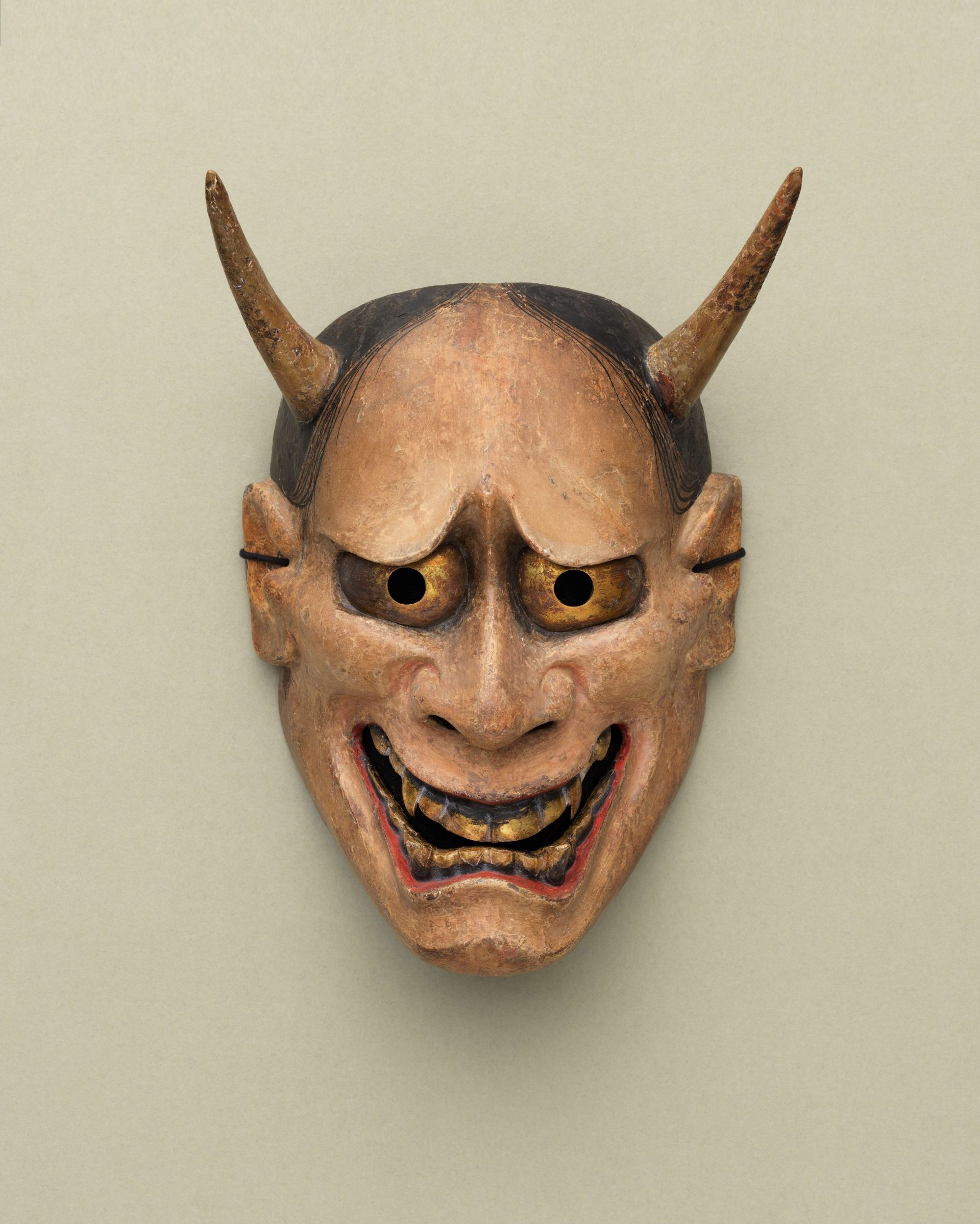
Ⓒ Hoshokai
The term hannya (般若), from which the mask takes its name, is originally a Buddhist term meaning “wisdom” and does not in itself refer to a demon. The horns are thought to be the result of reason spiraling out of control. While male demons act on instinct, thinking things like “I have a desire to eat” or “That girl is beautiful,” female demons are often the result of overthinking. Their intelligence is what causes them to lose control. Perhaps that has not changed from the past to the present. What makes female demons so formidable is that, deep down, they know “I should not do this” or “I should not think this.” And yet they cannot suppress their resentment. In Kanawa as well, it is precisely because of love that women feel anguish. They are driven by the feeling that if it were not someone they cared about, they would not suffer in that way.
This Hannya is called Ukiki no Hannya (floating wood hannya). It is said that a former head of the Hosho School once encountered a storm while traveling by boat. To calm the storm, he threw this mask into the sea, after which the storm subsided. However, upon entering the harbor, the mask was seen bobbing on the water, chasing after him from behind—hence its name.
Man masks
Kawazu (ghost of drowned man)
-
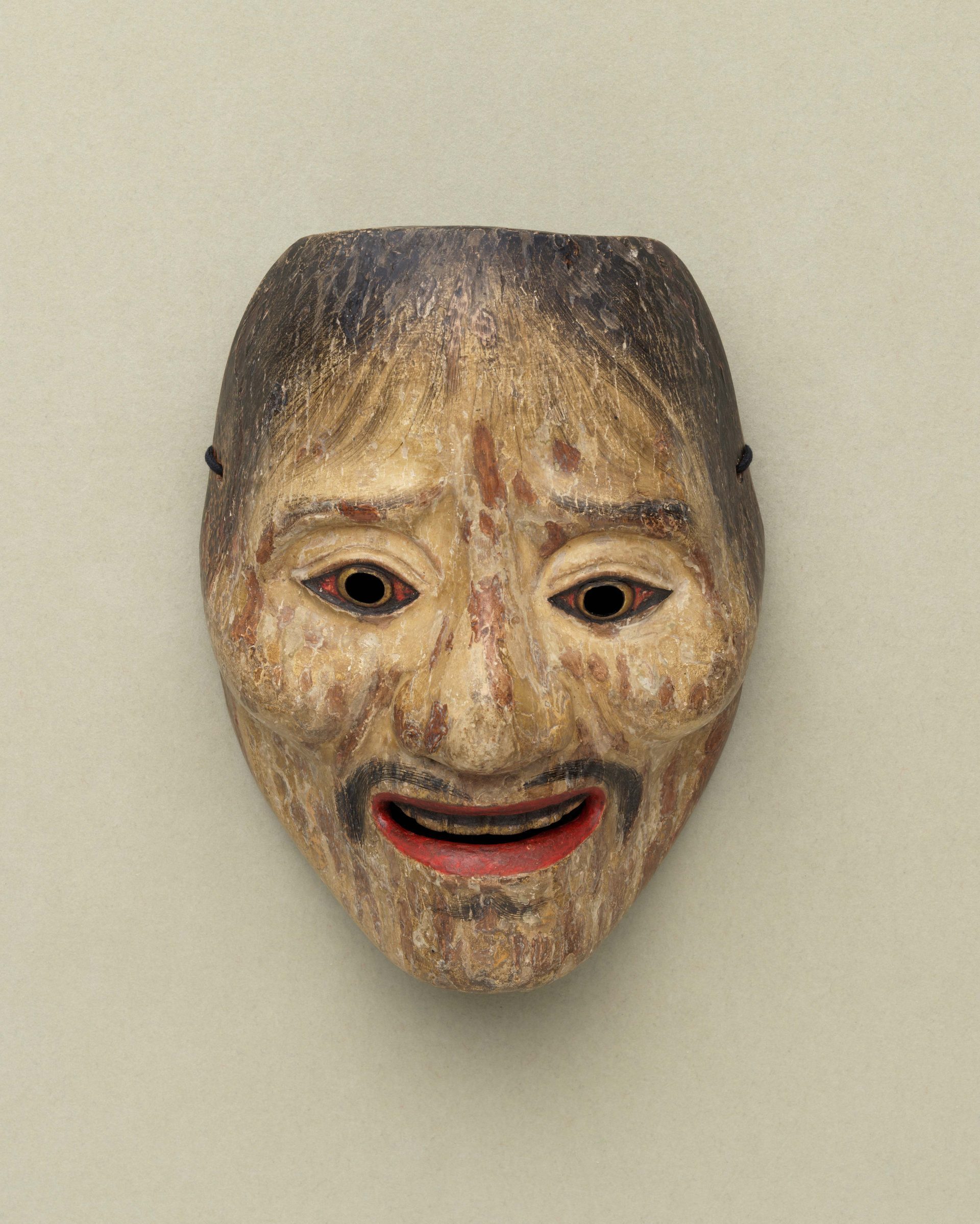
Ⓒ Hoshokai
This mask dates from the Momoyama period (16th century). Its sorrowful expression is particularly striking.
It is used exclusively for the nochi-shite in Akogi12. It depicts a fisherman who was punished for fishing in a prohibited area. As punishment, he is drowned at sea and, after his death, falls into hell. It evokes the image of a drowned body.
Hatachiamari (resentful ghost of the young fisherman)
-
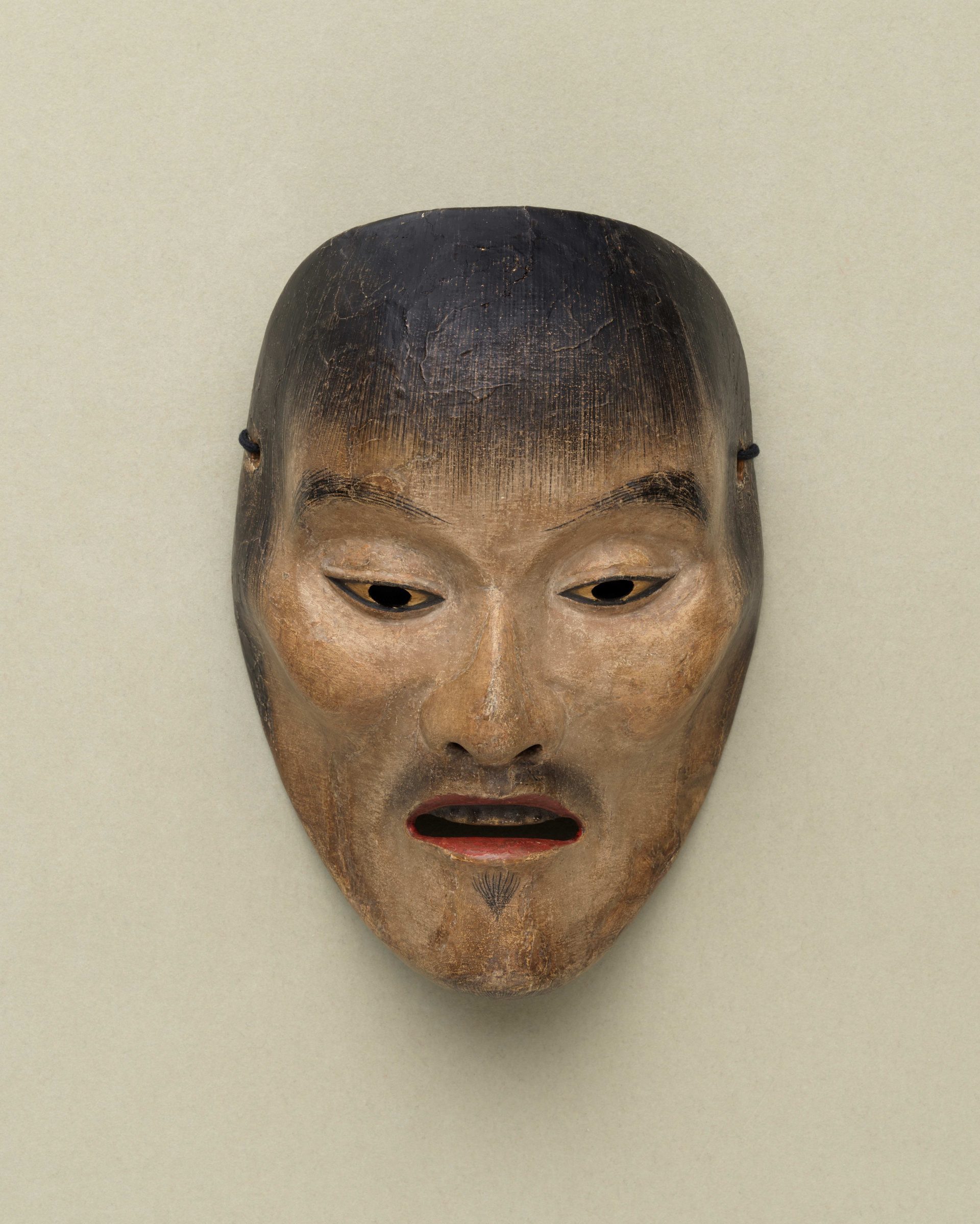
Ⓒ Hoshokai
This mask dates from the Momoyama to early Edo period (16th–17th centuries). It is used exclusively for the nochi-shite in Fujito13, a play even more tragic than Akogi. In the story, a fisherman who guides a warrior across a shallow crossing to the battlefield is killed with a sword by that warrior, who fears the fisherman might reveal his secret. The fisherman’s body is then cast into the sea. This mask, too, has a raw, lifelike quality reminiscent of a drowned corpse.
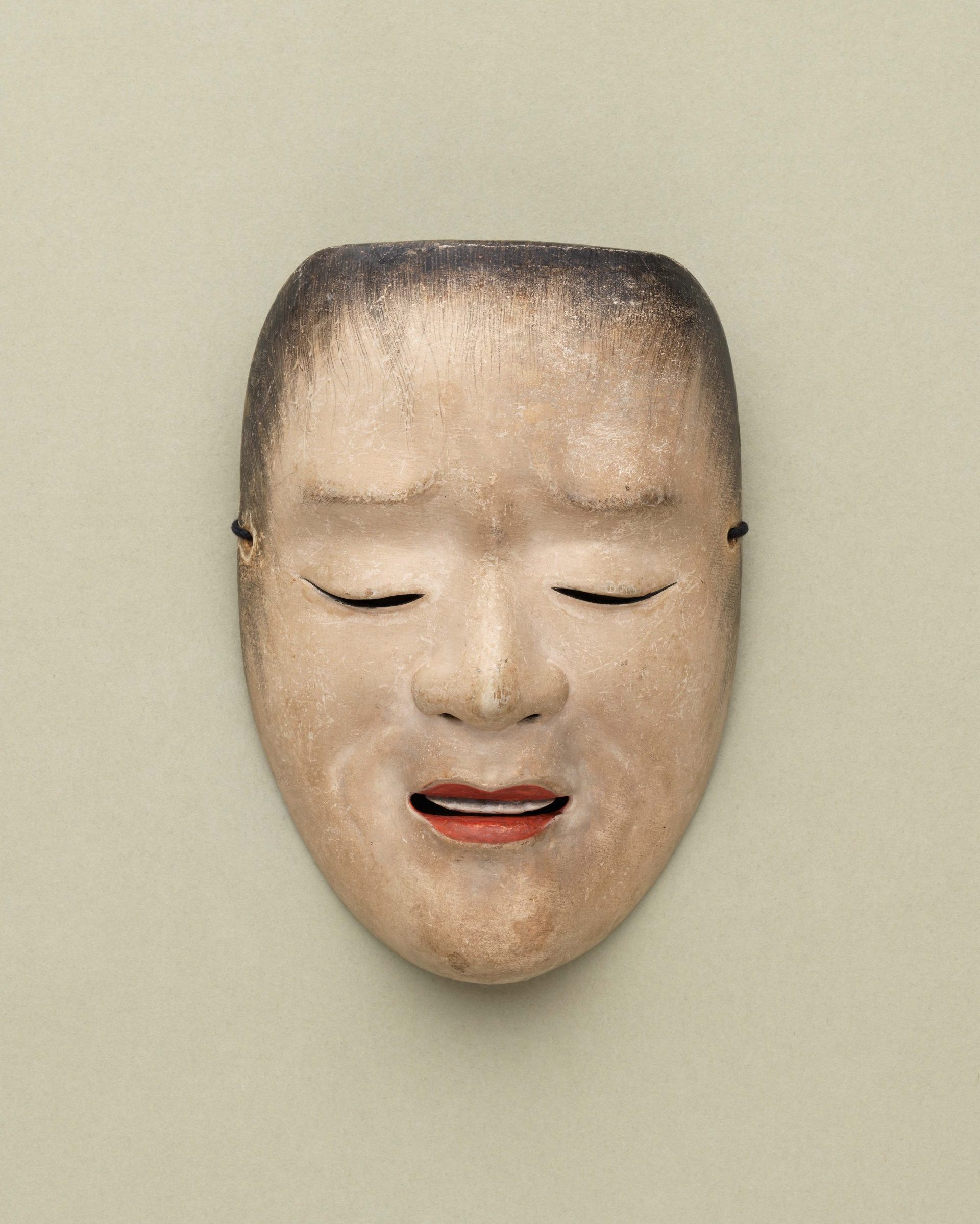
Yoroboshi (blind monk)
-
Ⓒ Hoshokai
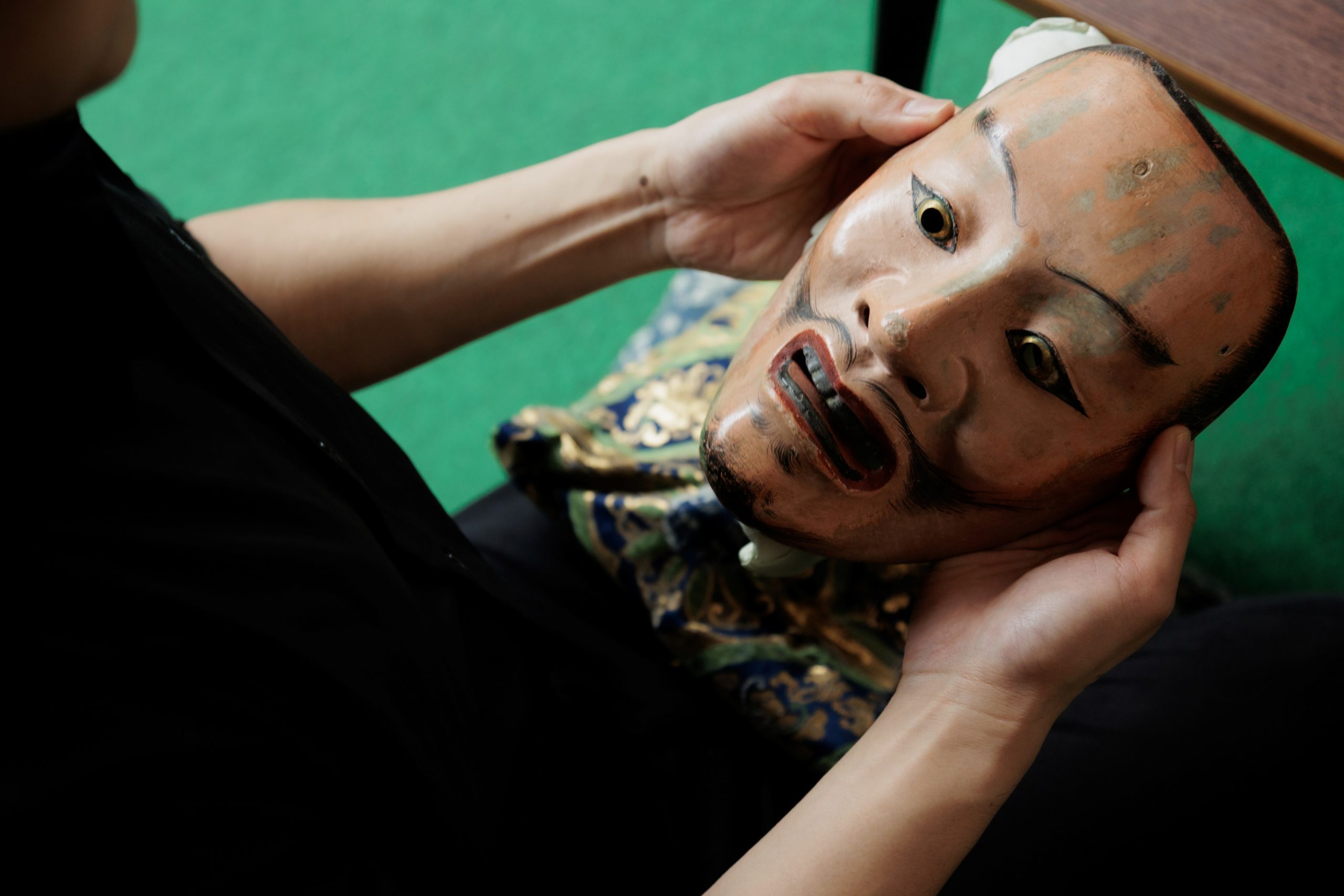
This mask, created in the early Edo period (17th century), is used exclusively for the role of Yoroboshi. When laid flat during mushiboshi (periodic air-drying) to prevent insect damage, it resembles a death mask. Although not visible in the photograph, the eyes are deeply sunken and lack eyeballs. It is an extremely realistic mask, with a unique appeal that blends fear and a sense of reassurance. It conveys a sense of inner passion beneath a restrained exterior.
Supernatural man masks
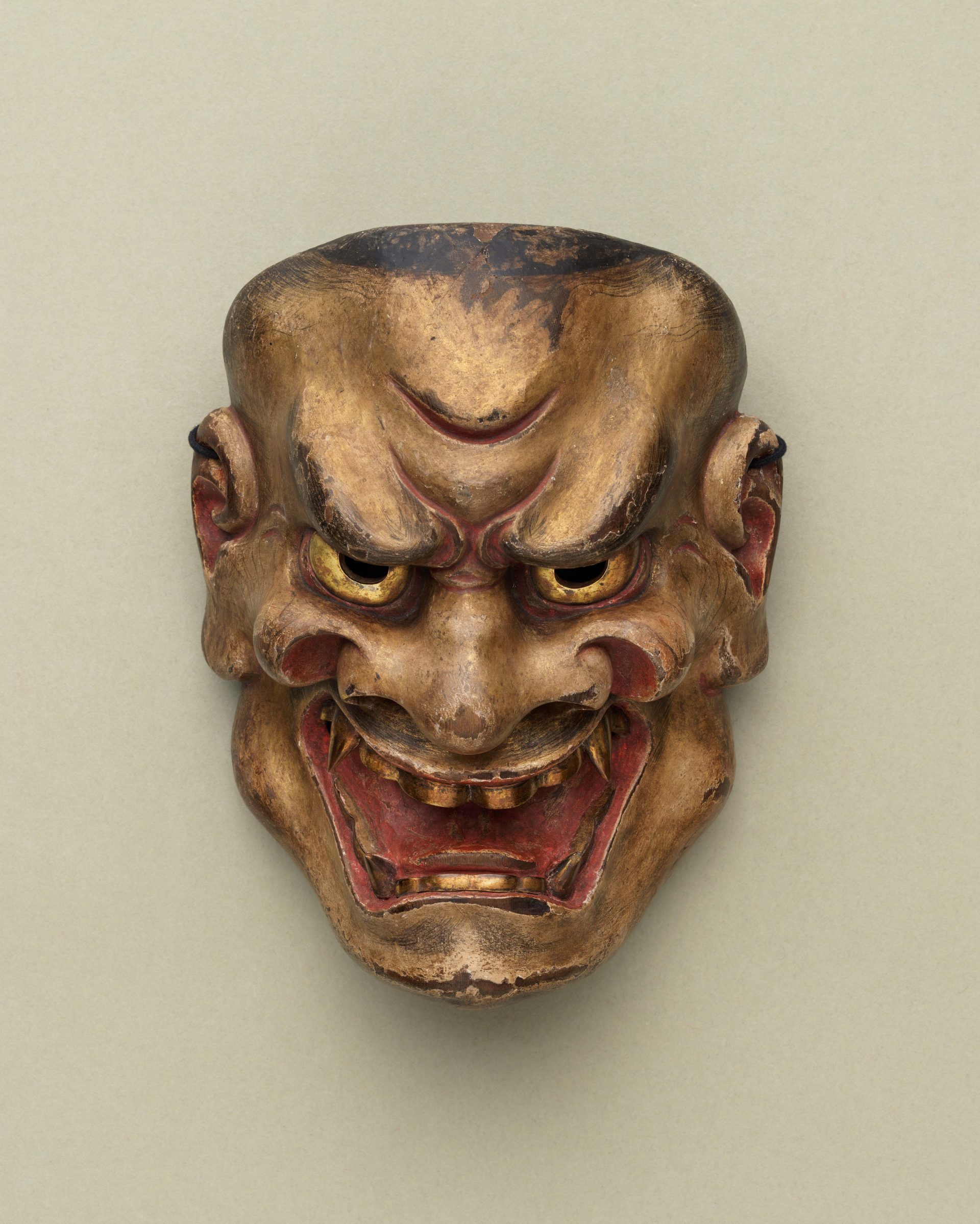
Kojishi (fierce deity/young lion)
-
Ⓒ Hoshokai
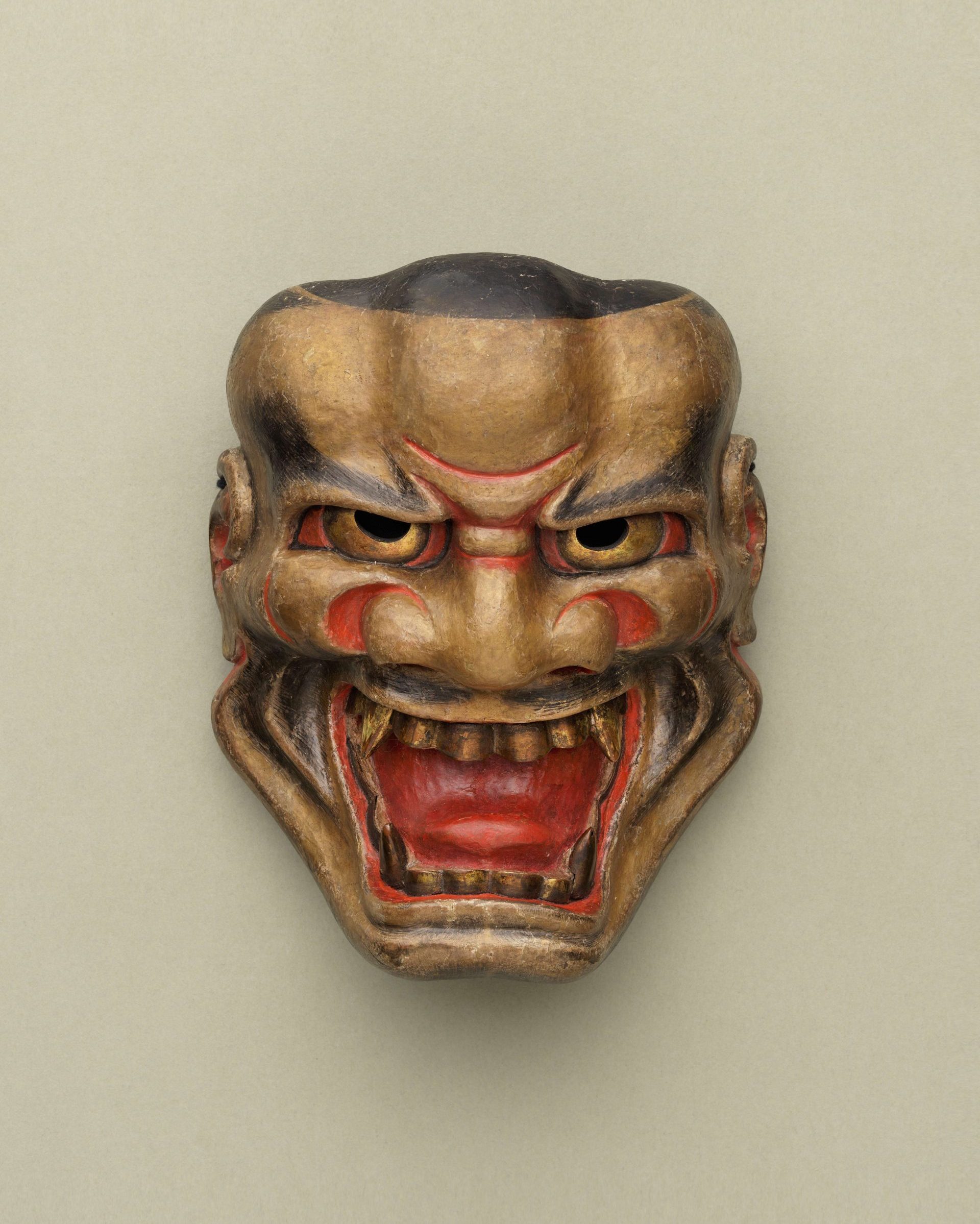
Shishiguchi (lion spirit)
-
Ⓒ Hoshokai
Both masks date from the Muromachi period (16th century) and form a rare pair created as a set. They are used exclusively for the renjishi segment in the Shakkyo14. Because the performers shake their heads vigorously during this piece, two mask cords are used, and bound tightly to ensure the masks do not slip off. This is painful, and leaves marks on the head.
-
Shite
The principal role in Noh theater. A Noh performance is composed of the shite, waki, kyogen, and hayashi. There are five shite schools—Kanze, Hosho, Konparu, Kongo, and Kita—and performers who play the shite belong to one of these schools. In Noh plays consisting of two acts, the lead performer in the first act is called the mae-shite, while the lead performer in the second act is called the nochi-shite. Although these roles may occasionally be played by different performers, they are typically done by the same person.
-
Yoroboshi
Believing the slander of others, Takayasu Michitoshi banishes his own son, Shuntoku-maru. Later, while offering alms at Shitenno-ji Temple in remorse for his actions, Michitoshi encounters a blind boy known as Yoroboshi. Realizing that the boy was in fact his son, Michitoshi reveals his own identity as his father and brings him home.
-
Aya no Tsuzumi
An elderly gardener falls in love with a noblewoman. She sends word that she will reveal herself to him if he can make a drum covered in twill, rather than leather, produce a sound. The old man strikes the drum, but it remains silent. Driven to despair, he throws himself into a pond and later returns as a vengeful spirit to appear before the woman.
-
Funabenkei
Minamoto no Yoshitsune, who is being pursued by his elder brother Minamoto no Yoritomo, the shogun of the Kamakura shogunate, attempts to flee. Meanwhile, his lover, Shizuka Gozen comes to see him. After an emotional farewell, Shizuka Gozen departs. Later, as Yoshitsune and his followers set out by boat, they are attacked by the ghost of Taira no Tomomori, whom Yoshitsune had defeated in battle.
-
Kokaji
While Sanjo Munechika is forging a sword by imperial decree, the deity of Inari appears in the form of a fox and helps him complete the blade by taking turns to strike the anvil.
-
Nabati
A form of oral poetry rooted in nomadic cultures of the Middle East and recited in vernacular everyday dialects. It is a popular poetic tradition widely shared through recitation and song, covering themes that range from romance and tribal pride to social satire.
-
Momijigari
Taira no Koremochi, a military commander who goes out to view the autumn foliage, is invited to a banquet in the mountains by a beautiful woman accompanied by her retainers. She reveals herself to be a demoness.
-
Raiden (来殿)
Sugawara no Michizane was a statesman of the Heian period who is said to have been driven from power through the schemes of his rival, Fujiwara no Tokihira. After his death, he came to be widely revered as Tenjin, the deity of learning. The original play, Raiden (雷電), is based on the legend that Michizane’s spirit brought calamity upon those who had wronged him. In the play, a monk attempts through prayer to subdue the raging Thunder God—who is in fact Michizane in disguise and appears as the shite —leading to a fierce spiritual battle between them. It was later rewritten as Raiden(来殿) for the Maeda family, who were said to be descendants of Michizane, with the latter half of the play significantly altered. In this version, the nochi-shite appears as a noble figure and performs a celebratory dance of joy.
-
Okina
A ritualistic piece in which the performer portraying the old man prays for peace throughout the land and the safety of the nation.
-
Kanawa
A woman who has been abandoned by her husband prays for revenge and transforms into a demon while still alive.
-
Dojoji
A play based on the legend of a woman who becomes so infatuated with a mountain monk that she transforms into a giant serpent to pursue him. She coils herself around the bell at Dojoji Temple, where he is hiding, and causes it to melt. In the latter part of the play, the performer takes on the form of a demon woman.
-
Akogi
The spirit of a man who was killed after being discovered secretly fishing in an area where that was forbidden appears before a traveling monk in the form of an old man. In the latter part of the play, he reveals the torments of hell.
-
Fujito
Having been guided to the battlefield by a fisherman, Kamakura-period military commander Sasaki Moritsuna then kills the man in order to ensure his silence. The mae-shite is the murdered fisherman’s mother, who expresses her hatred toward Moritsuna, while the nochi-shite is the fisherman’s vengeful spirit.
-
Shakkyo
Set on Qingliang Mountain in China, a young boy performed by the mae-shite stops a monk who is about to cross a stone bridge and tells him the story of the bridge’s origins. A short while later, a shishi (lion) performed by the nochi-shite appears and performs a vigorous dance. In the kogaki, or special performance variation, renjishi, two lions appear instead.
-
Courtesy of Hoshokai Ⓒ Kikuko Usuyama
-
Related Tags