


Kaori Nishio
Questioning Her Own Position Through Encounters with Others
Photo: Akihito Abe
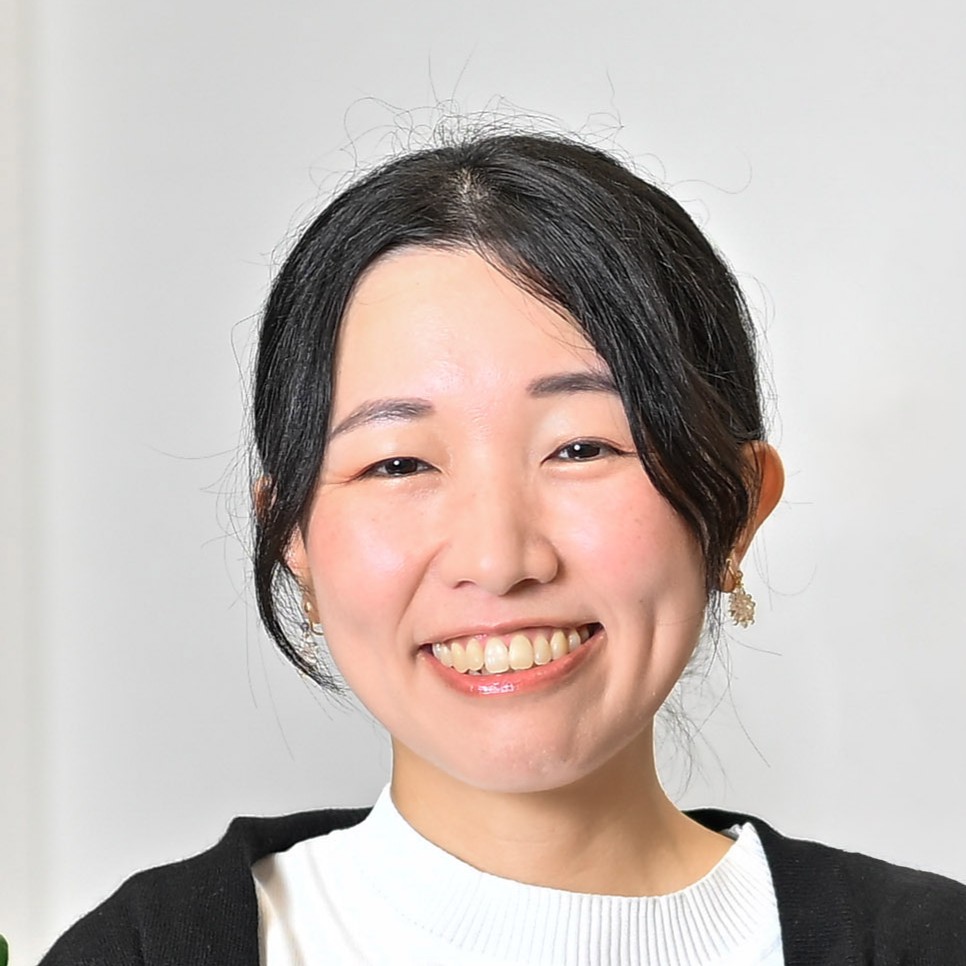
Photo: Akihito Abe
Kaori Nishio
Kaori Nishio is a playwright, and the founder of Bird Park. She was born in Tokyo in 1985, and spent part of her childhood in Malaysia. She founded Bird Park in 2007, and wrote and directed all of the group’s productions up to To the End, One by One on Solitude Hill in 2019, from which point her primary role has been playwriting. Her plays KANRO (sweet drops from heaven) (2013), Hey God, Job’s calling you! (2017), and To the End, One by One on Solitude Hill (2019) all reached the final shortlist for the Kishida Kunio Drama Award. Beyond her work with Bird Park, her credits include What if you know who shows up from the corner of room 51 at 9 in the morning (which she wrote and co-directed), presented at Shizuoka Performing Arts Center (SPAC)’s World Theatre Festival Shizuoka under Mt. Fuji 2015. From 2026, Nishio has been participating in BIOTOPE — Camp for Playwrights / Theatre-makers, hosted jointly by SPAC and the Japan Foundation.
Kaori Nishio, playwright and founder of Bird Park, has continually questioned her own position as a writer, while directing her attention toward people considered as minorities, and those on the margins of society. Her project on Karayuki-san (Japanese women trafficked overseas for prostitution), for example, explores the historical relationship between Japan and the rest of Asia through research conducted in Malaysia and South Korea. Nishio is also participating in BIOTOPE, which brings together playwrights from Southeast Asia and Japan. We spoke to her about where she stands now, and the path that has brought her there.
Interview and text by Kenta Yamazaki
English Translation: Ben Cagan, Hibiki Mizuno (Art Translators Collective)
Nishio’s childhood in Malaysia
I lived in Malaysia from the last year of kindergarten to the summer vacation of fifth grade in elementary school due to my father’s work. This being the ’90s, Japanese expats lived in quite luxurious condominiums. All of a sudden we had tennis courts and a pool, a housekeeper and a driver, and it felt like my life had suddenly gone through a drastic change. I was even taken by bus to a prestigious school for Japanese students, so even though I was living in Malaysia, in reality I was almost fully enclosed within a Japanese community. But when I looked out the window, Kuala Lumpur still had this strong impression of being rough around the edges back then, and that felt divorced from my own daily experience. I wondered vaguely what was going on there.
There was also a memorable incident after coming back to Japan that has stuck with me. One day, my mother suggested I take the entrance exam for selective junior high school, and when I asked her why, she replied that “I think it would help you make good friends.” She also said, “I think you could do without meeting too many bad friends.” This idea of there being an us and them somehow became strangely connected in my mind with “noblesse oblige,”1 a phrase my father often used, and with my life in Malaysia. I think this has led to my sense that I’m always looking at them, and the guilt that comes from that.
-
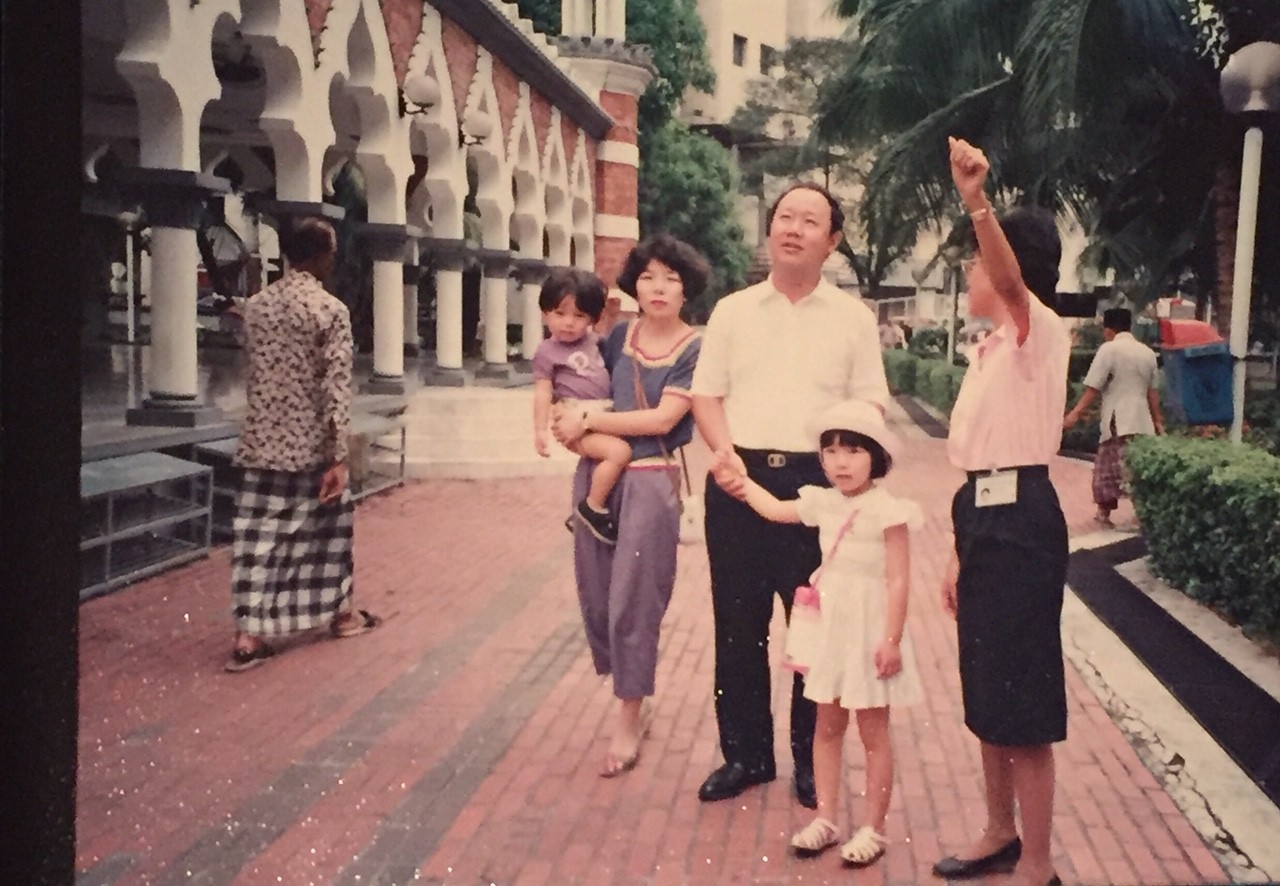
Kaori Nishio’s childhood in Malaysia
Encountering that which had been overlooked
Keizo Maeda, who appeared as a guest lecturer, showed us a video art piece by director and visual artist Tadasu Takamine called Kimura-san. The eponymous Kimura is a victim of the Morinaga Milk arsenic poisoning scandal, and unable to control his limbs or speak properly. Tadasu Takamine found himself wanting to make a work about Kimura when caring for him and, wanting people to understand that there were human beings like him, Kimura agreed—Kimura-san was the result. Within the broader theme of care, the work focuses on sexual assistance, and in particular on masturbation assisted by a third party.
If I hadn’t seen this work, I would never have known about Kimura, or given him any thought. When I thought about these realms out there that I’d lived my life without even witnessing, I felt like there was a connection there to other things I had encountered in de Vos’ class, such as ankoku butoh and Vaslav Nijinsky’s works. Wanting to think more about the idea of “good friends” and “bad friends,” about what “good” and “bad” really mean in the first place, and whether it’s best to avoid people who are “bad,” I decided to continue my studies in the field of Culture and Representation rather than law.
-
Noblesse oblige
A phrase of French origin, meaning that nobility comes with obligations. The idea is that those of elevated social status or power should fulfil social and moral obligations toward those in less advantaged positions, and society more widely.
-
Patrick de Vos
A performing arts scholar from the Belgian Congo and specializing in the performing arts of Japan and France. Patrick de Vos is professor emeritus at the University of Tokyo.
At that time, I hadn’t thought that I would make theater my career, but I did want to get some practical experience, so I was also working on Bird Park’s first production in parallel with writing my thesis. But having actors perform lines that I’d written from my own experiences didn’t go so well in that first work, back in 2008. So, for the second effort, I decided to create something that came from outside myself, and chose to base it on Hiromi Ito’s long-form poem Kazoku āto [family art]. Ito’s writing had a profound influence on me. I thought that this approach of responding to external things might allow me to create a work that bridges the gap between myself and the actors, so I continued to draw inspiration from places like old houses or news stories that interested me for a while after that.
Engaging with the “public”
There were so many works at Festival/Tokyo, the likes of which I’d never seen before, and that had a transformative impact on my mind, which was essentially a blank slate, surprising me with what can be done on stage. The work I put together for the open call program didn’t go so well itself, but nevertheless, I felt like I was really welcomed and that made me feel like there was a possibility to continue working in theater.
-
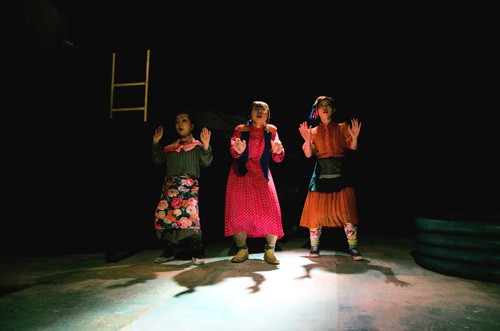
The Unending Warmth of a Bedwetting Bog, 2011. Photo: Fumiko Tsukada
This play was based on the court records of the case concerning California’s law to ban same-sex marriage, and a full production had originally been scheduled for Festival/Tokyo in November of the same year. However, after putting on the staged reading, I realized that I didn’t know how to make it work as it was with Japanese audiences. So, drawing on my experience with 8, I wrote a new work of my own, Invisible Neighbors (inspired by “8”).
8 was originally written and staged by the screenwriter Dustin Lance Black, an activist who fights for the rights of sexual minorities, as part of his activism advocating for same-sex marriage. I had thought that I too had been considering social issues through art but, encountering a work born out of an activism context, I was surprised at how the purpose was completely different, and I realized once more that I wanted to pursue my own interests within the art world.
In the creation process, I struggled to find the right balance between what I wanted to do on the basis of my own tastes and respect for the work and the context around it, and that was extremely difficult. This was also my first experience being clearly treated as part of the majority—as someone who doesn’t belong to the group in question. Even though I was intending to participate as an individual, I found myself always reduced to a member of the majority, which was a bit discouraging. However, reading Kiryū no naru oto [The sound of air streams], by sociologist Munesuke Mita, and Kanjou-Tou (Toroidal Island) = Geopolitics of Trauma, by psychiatrist Naoko Miyaji, helped me tremendously by allowing me to see where I stood, from a somewhat broader perspective.
-
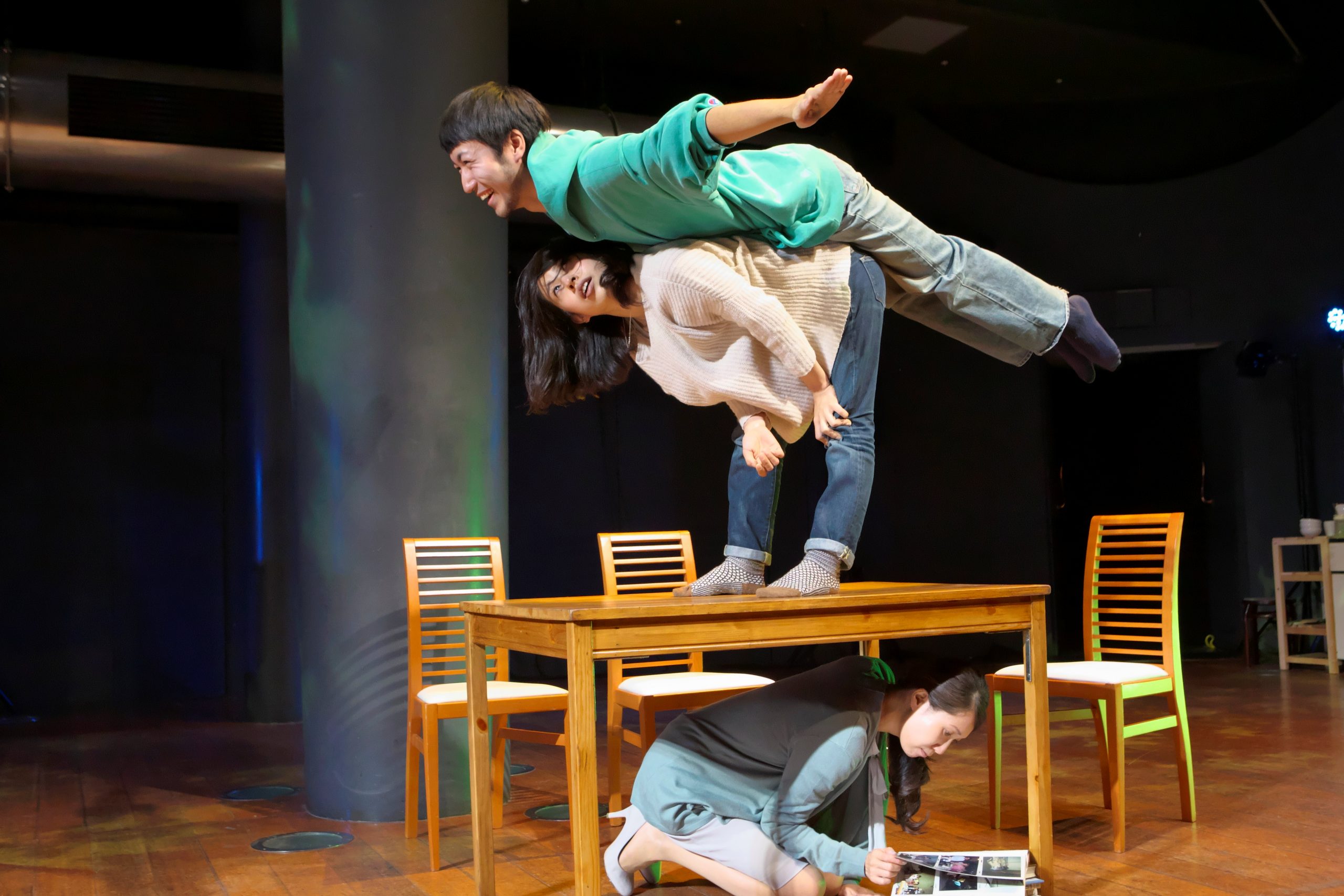
Invisible Neighbors (inspired by “8”) at Festival/Tokyo 2014. Photo: Tsukasa Aoki
Encounters and realizations at Festival Theaterformen
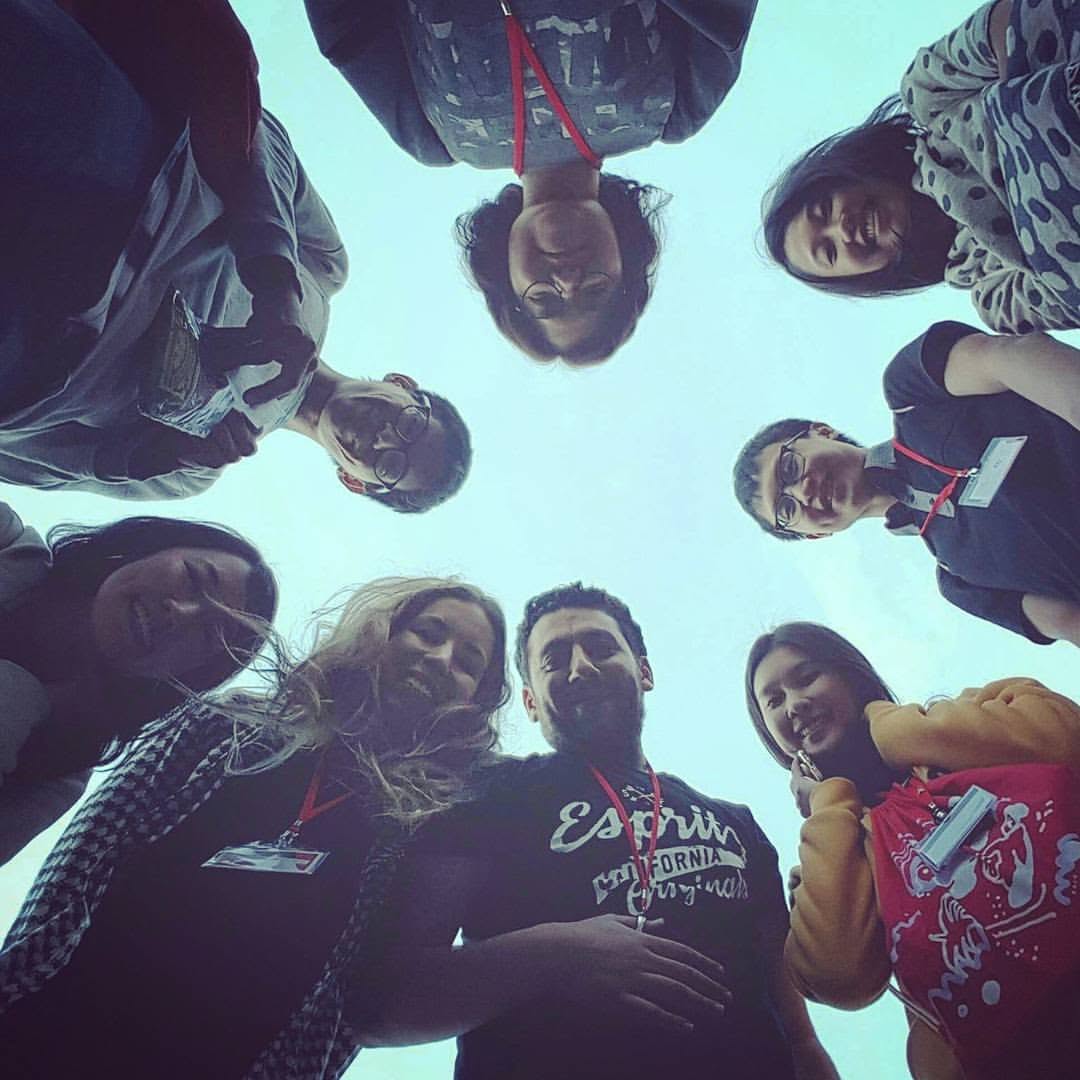
It was also through this program that I became aware of English’s position as a language. Neither the Korean artists nor I were very good at it and kept apologizing for our poor language ability whenever we would speak up. One time, an artist from South Africa told us to stop apologizing. They said something along the lines of, “Every time you say that, it reminds me that my ability to speak English is a result of colonization.” Of course they meant it as a kind of joke, but it was the first time I started to think about the hegemony and hierarchy of languages.
It was a wonderful opportunity to be officially invited to Europe and to experience and think about various things in a relaxed environment. At the same time, I struggled to feel positively about the market and context that support the scene, the European performing arts system and garnering praise within it. In this way, I really felt that artists do not have a lot of freedom.
-
Members from the artist camp at Festival Theaterformen, 2015.
From research in Malaysia to the Karayuki-san project
When I started my research, I barely knew anything about Karayuki-san, but as I delved deeper, I saw the ways that the issue has connections to us living in the present. In Penang at the time, Japanese prostitutes were considered to be at the bottom of the social hierarchy, as figures looked at from outside of the window. It made me think of how the position I am in is also purely coincidental, and how imperialism points to efforts to climb up the social ladder on a personal or national level, however little, rather than to eradicate these structures. These structures themselves haven’t changed, even in the postwar context.
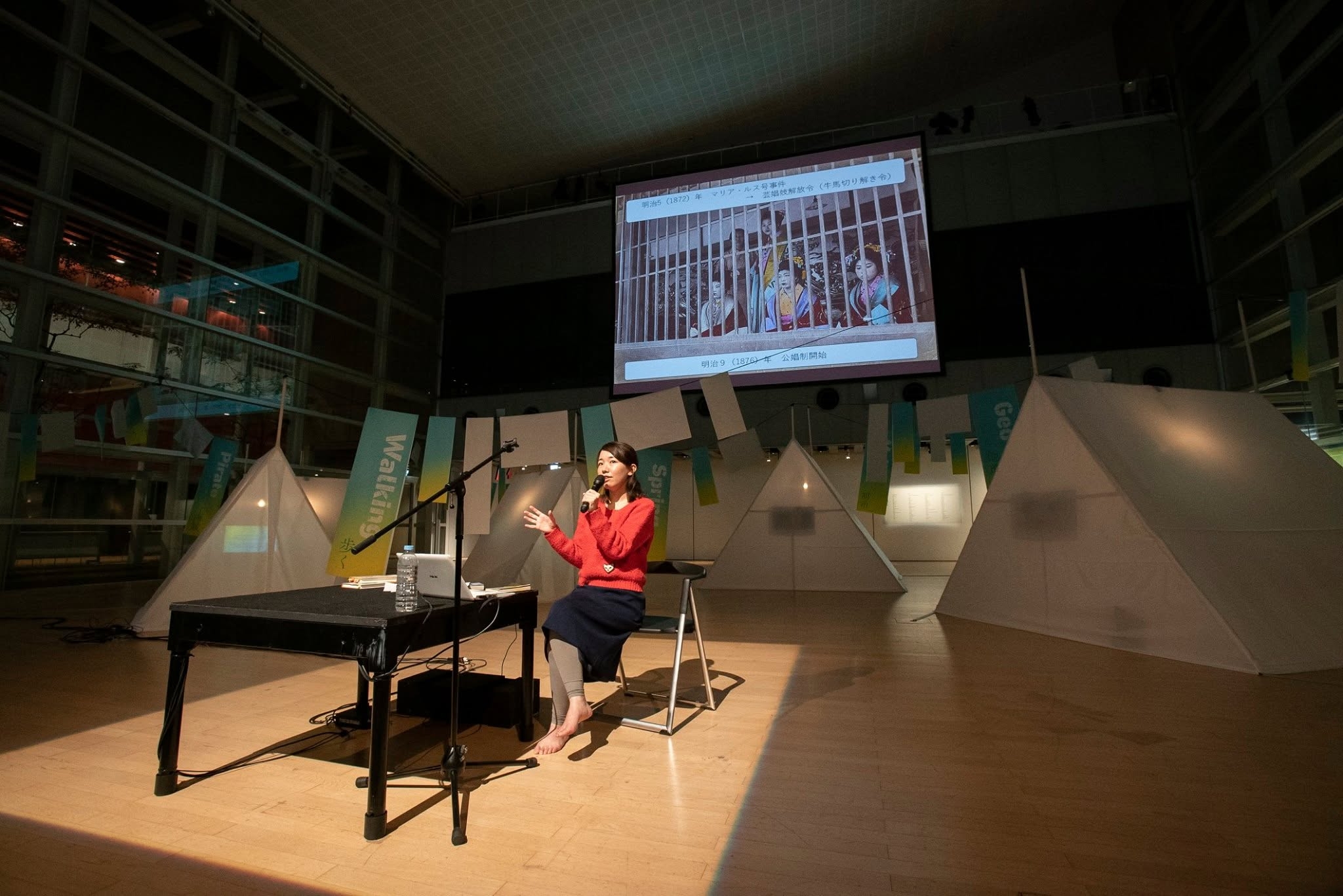
I was joined by dancer Ren Xin Lee, who I had met through Theaterformen, for my 2018 research about Karayuki-san, which led to an opportunity to present the results at Five Arts Centre, where she worked. From there, Five Arts Centre’s Mark Teh invited me to participate in The Breathing of Maps, an exhibition at YCAM for which he was guest curator, so I staged a more polished lecture performance called Why I am here, why she is there — Journeys around Karayuki-san in December 2018.
-
Why I am here, why she is there — Journeys around Karayuki-san, 2018. Photo: Yasuhiro Tani
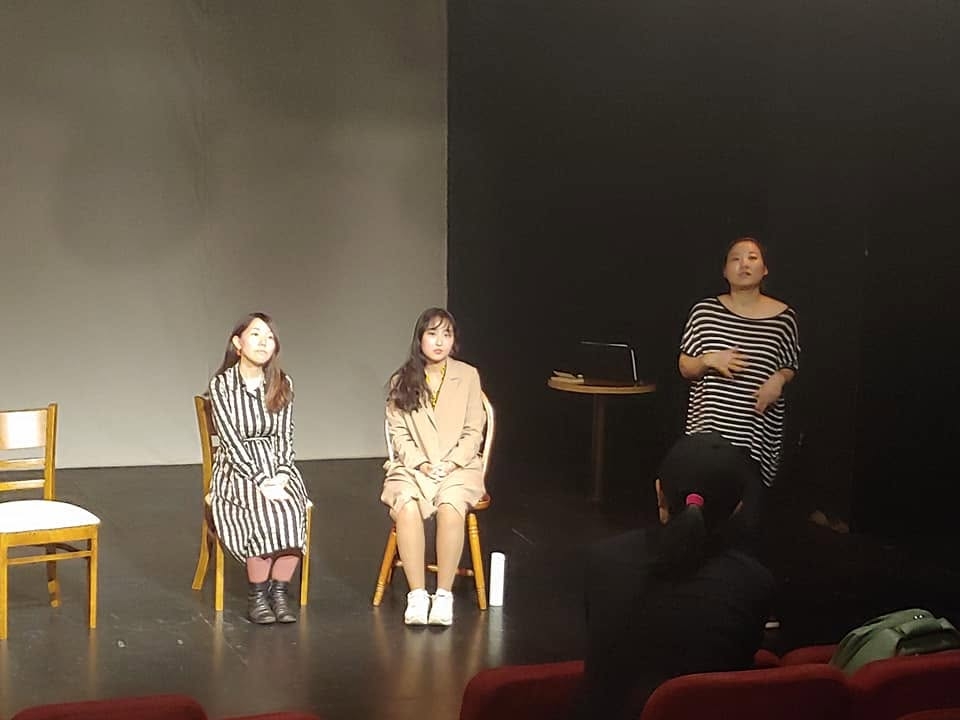
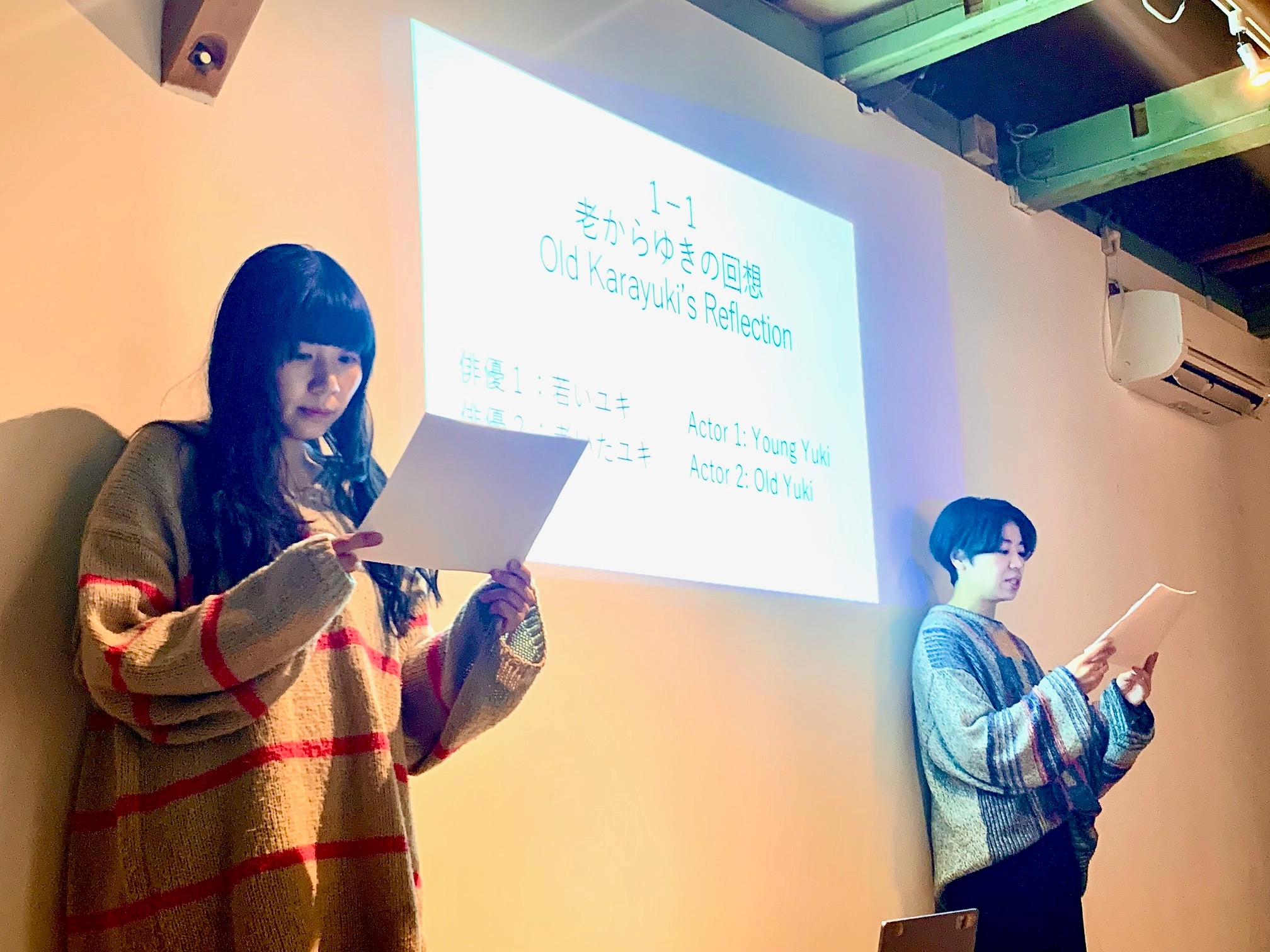
Just as I was feeling the necessity to do research in Korea, I was invited to the Asian Women Directors Festival held in Seoul in 2019, where I staged Why I am here, why she is there — Journeys around Karayuki-san again, but with actors this time. The Karayuki-san project went on hiatus while I was going through childbirth, and restarted in 2025 with a drama reading titled She Swims Away Beyond Reach performed in December that year. The piece is scheduled to have its premiere in February 2028.
-
Asian Women Directors Festival, 2019.
-
She Swims Away Beyond Reach, 2025. Photo: Kaori Nishio
-
Festival Theaterformen
An international performing arts festival launched in 1990. It is currently held every June, alternating between the two German cities of Braunschweig and Hanover. “Theaterformen” means “theater forms.”
-
Penang’s George Town Festival
An annual international arts festival held in George Town, a UNESCO World Heritage city on the Malaysian island of Penang. It is one of Southeast Asia’s largest international arts festivals, presenting a diverse range of genres, including performing arts, music, visual arts, and street performances.
Building solidarity among theatermakers—participating in BIOTOPE
-
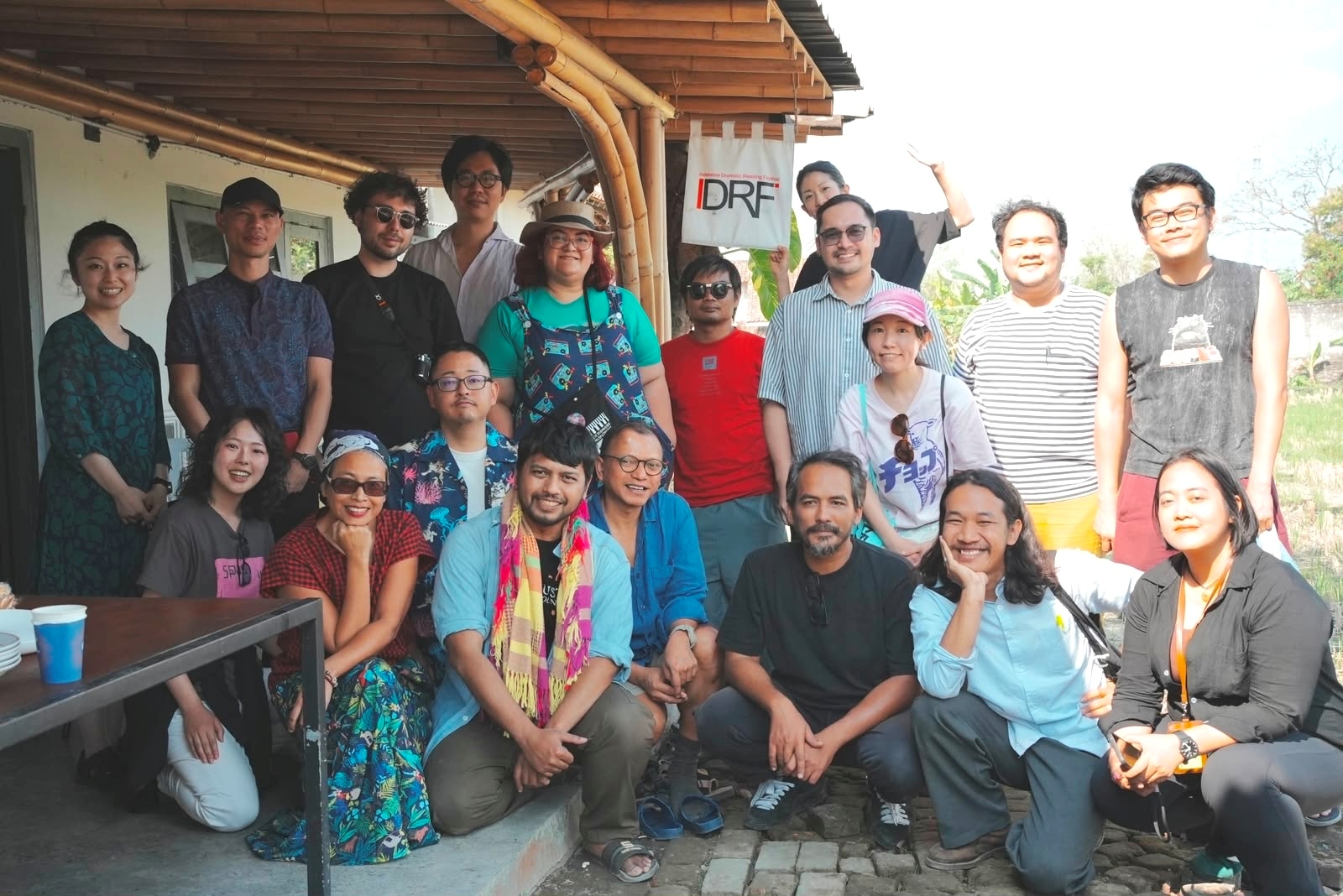
Members of BIOTOPE. Photo: Kyo Nakajima
When the BIOTOPE participants speak together, we always end up talking about things like colonialism, the definition of a state, or what a characteristically Japanese piece looks like. In a creation setting, you tend to focus on the piece you’re working on, but when speaking with members of BIOTOPE, we always talk about things beyond performances, and I feel that those conversations support the network-building process. I think it’s also because we have a place to gather that we’re able to have various conversations, and at the same time, it’s difficult to create that kind of environment by yourself, so in that way, I feel very grateful for the program’s existence.
The questions that have arisen from Nishio’s childhood years spent in Malaysia still define her approach to this day. For the artist, encounters with others have not only expanded her creative possibilities but have consistently provided opportunities to reflect on her own position and environment. After the three years spent with BIOTOPE, where will Nishio be standing, and how will she view herself in that place?
-
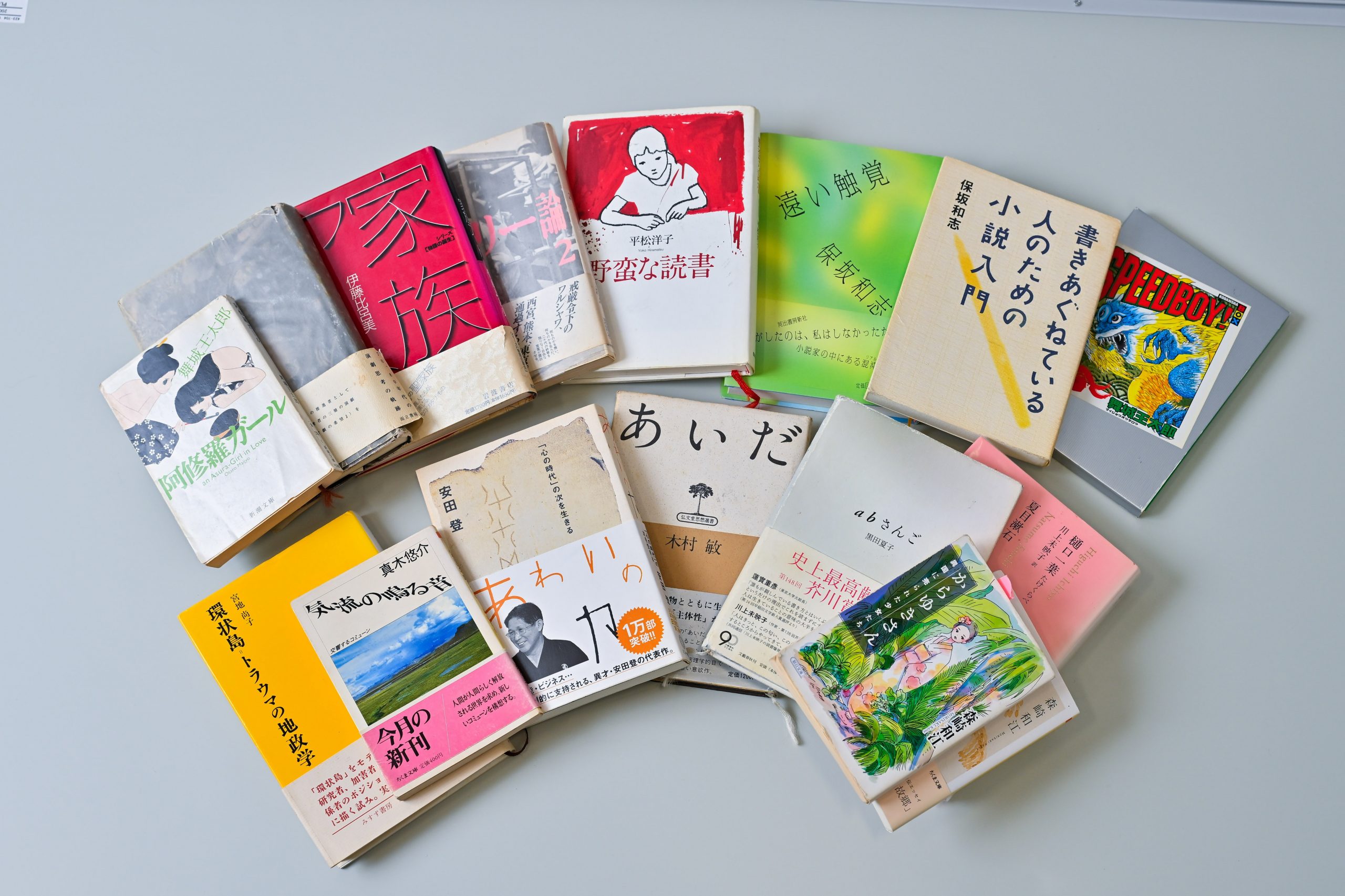
Photo: Akihito Abe