


Chiaki Soma
Independent in Institutions—Defining a Distinctly Asian Curatorial Style
Photo: Atsuharu Ino
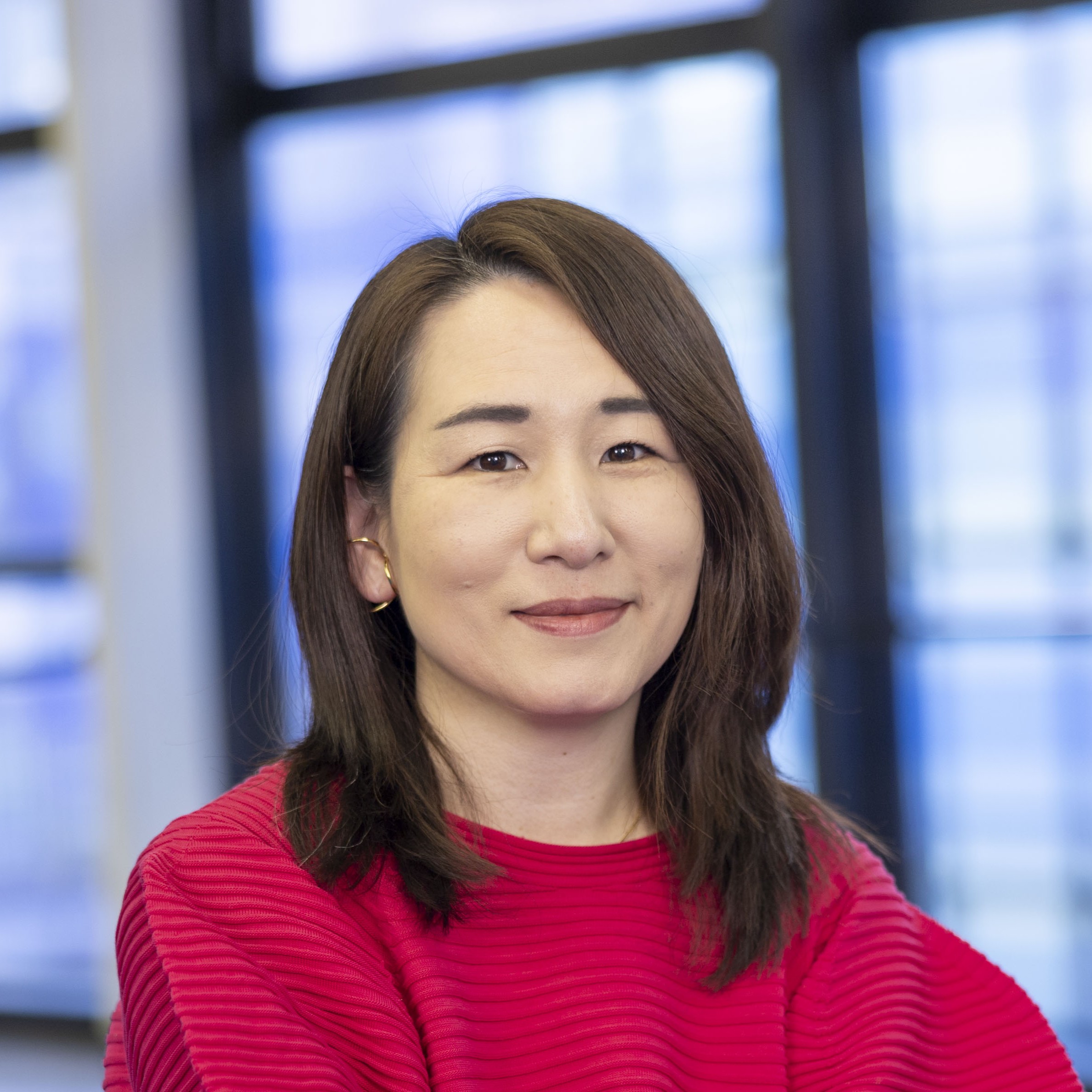
Photo: Atsuharu Ino
Chiaki Soma
Chiaki Soma is an art producer specializing in curating interdisciplinary contemporary performances. She has served as program director and curator for various festivals, including Festival/Tokyo (2009–2013), Aichi Triennale 2019, Aichi Triennale 2022, Theater Commons Tokyo (serving as both Director and Chairperson of the Executive Committee since 2017), and Theater der Welt 2023. She is the Representative Director of Arts Commons Tokyo, a non-profit organization, Program Director of the Opening Preparation Department, Minato Arts Center (m〜m), and an Associate Professor at the Graduate School of Fine Arts, Tokyo University of the Arts.
Despite Tokyo being a city where one can enjoy cultures from around the world, no prominent international performing arts festival had (or has) taken root in the metropolis. Within such a context, the emergence of Festival Tokyo (F/T)—which ran from 2009 to 2020—was a breath of fresh air, proposing clear themes and cutting-edge lineups underlined by distinct values. Its first program director was Chiaki Soma, a pioneer in the field who approached the role by building the very foundation for running an international arts festival in Japan. Since then, she has been collaborating with public institutions as an independent programmer, curating timely and significant projects at home and abroad. In this interview, the forward-thinking curator reflects on her career and future, from her experiences in Europe to her recent aspirations to take advantage of qualities specific to Asia.
Interview: Kaku Nagashima
Interview and text: Rieko Suzuki
English Translation: Hibiki Mizuno, Ben Cagan (Art Translators Collective)
- You started your career in 2002 as the international programmer for Tokyo International Arts Festival (TIF). To start things off, could you tell us how you began your career in the performing arts?
- It started off with wanting to gain more experience abroad after graduating college and deciding to study abroad in Lyon, France. There, they have the Lyon Biennale, an international art festival that showcases contemporary art and dance every other year, so I was able to access a lot of art on a daily basis without actively seeking it out myself. I entered a graduate school there to study art management and cultural policy, and began wanting to work as a producer or curator that connects art and society, but I had no idea how to do that in Japan at the time.
This was back when there were no social media or informational portal sites for the arts, so when I temporarily returned to Japan, I looked things up on my own and contacted the Association for Corporate Support of the Arts.1 Sumiko Kumakura,2 who was part of the organization at the time, got back to me directly, and through her introduction I was able to work as a coordinator and interpreter for Taneo Kato,3 who was visiting the Lyon Biennale. When I was returning to Japan, I asked Kato for some advice, and was introduced to Sachio Ichimura,4 which led to my joining Art Network Japan (ANJ). This was 25 years ago.
- TIF started as a biannual festival in 1988, and was then held annually since 1999, with ANJ becoming the main organizer in 2000. The Middle East series, which you oversaw and in which you featured Arab artists in the post-9/11 context, was particularly striking.
- I still clearly remember my very first day at ANJ, July 1, 2002, when I was handed my business card that said “International Program Coordinator,” and Ichimura and I headed to the Japan Foundation’s office. There, he said, “We want to do a Middle East series. The program will be overseen by Soma here.” He spoke about how this project would attempt to use theater to view the Middle Eastern, Arab world—which had previously been filtered solely through the West—in a new light. It was my first time hearing all of this, so I remember thinking, “Is that so?” [laughs].
However, I had lived in France, a country where immigrants have brought in many layers of Middle Eastern history, culture and language. For example, my instructor at a driving school in Lyon was an immigrant from Tunisia. Since I had this kind of indirect connection to the Arab/Islamic world and the Middle East, and I didn’t have a huge language barrier, I really threw myself into the work. I would go to Beirut, come back to Japan for a bit, then go to Jerusalem the next week, just constantly watching various performances taking place in the region.
The plays themselves could be quite simple or even imbued with a sense of propaganda. However, I was also visiting these places for the first time, talking to locals and sharing meals, taking interest in the customs and histories. When you go to the theaters after experiencing these things, you start to see the relationship between the performances and the audience members. In short, I think I was watching these works in order to understand the relationship between the performances, the regional society, and theater. The Middle East series began in 2004, introducing works from Kuwait, Palestine, and Lebanon in its first year, and since then we not only showcased a diverse range of works by emerging and master directors, but we were also able to create international co-productions that had their world premiere in Tokyo.
- When you introduce such works to Japan, their societal background may get obscured, making it difficult for the audience here to understand these contexts.
- Of course, it’s better for the audience members to understand the work’s background, and so you factor in providing that kind of context. Even so, some works deserve to be shown, even if it’s difficult. For example, we really struggled to sell tickets for the Asia premiere of Lebanese director Rabih Mroué’s Biokhraphia in 2004.5 Most people were not familiar with Lebanon as a country and the title didn’t reveal much, but artistically speaking, it was an extremely radical and fascinating piece, so it ended up garnering a lot of attention. So when it comes to this issue of whether people will or won’t “understand” international performances that we invite, I have decided to just bite the bullet and show works that I personally want to see. I think about the ticket sales or the reception and understanding of the work later on. The most important thing is whether I really want to keep seeing that performance. That’s always the deciding factor for me.
-
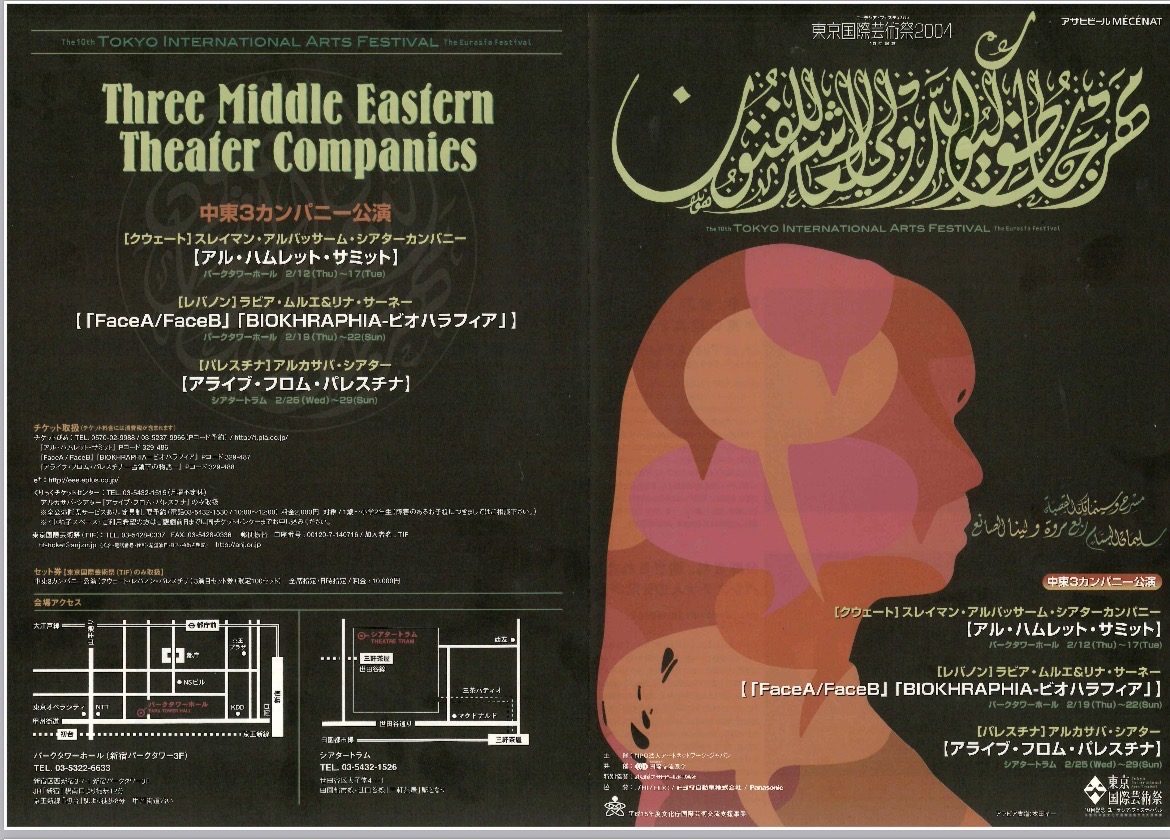
Flyer for the Middle East Series — Tokyo International Arts Festival 2004. Courtesy of ANJ.
- In the latter half of TIF’s run, you also started to collaborate with Akira Takayama from Port B to reconsider and re-experience the city through a theatrical methodology.
- Nishi-Sugamo Arts Factory6 opened in 2004, which provided a rare opportunity to chat with a diverse range of directors, actors, and staff members at the smoking area or salon. Takayama was one of the artists I met there. A relatively young generation of creators gathered at Nishi-Sugamo Arts Factory at the time, helping to propel a symbiotic influence between making and showing works.
I myself worked as F/T’s Program Director while also serving as a dramaturg for performances by Takayama and Norimizu Ameya. This was only possible because the festival’s office was located in Nishi-Sugamo Arts Factory, which was a rehearsal space, or the actual site where performance creation took place. In other words, the fact that the festival was held annually at the very place—a kind of magnetic field—where all kinds of people come together was essential in F/T’s eventual growth as a major platform.
Takayama and I first worked together when I commissioned him to restage Tokyo / Olympic for TIF in 2008. At the time, I was already set to serve as the director of a new festival, F/T, and in doing so, I was asking myself about the identity of Tokyo as a city. Tokyo is a city where it feels like every day is a festival—for example, 50,000 people will attend a single match or event held at the Tokyo Dome. I felt the need to develop a new form that wouldn’t just be driven by the excitement of attendance numbers in order to celebrate a city through theater here. My inquiries as a festival director intersected with Takayama’s theatrical practice in examining the city, which led to having him continue to create and present his works at F/T every year.
-
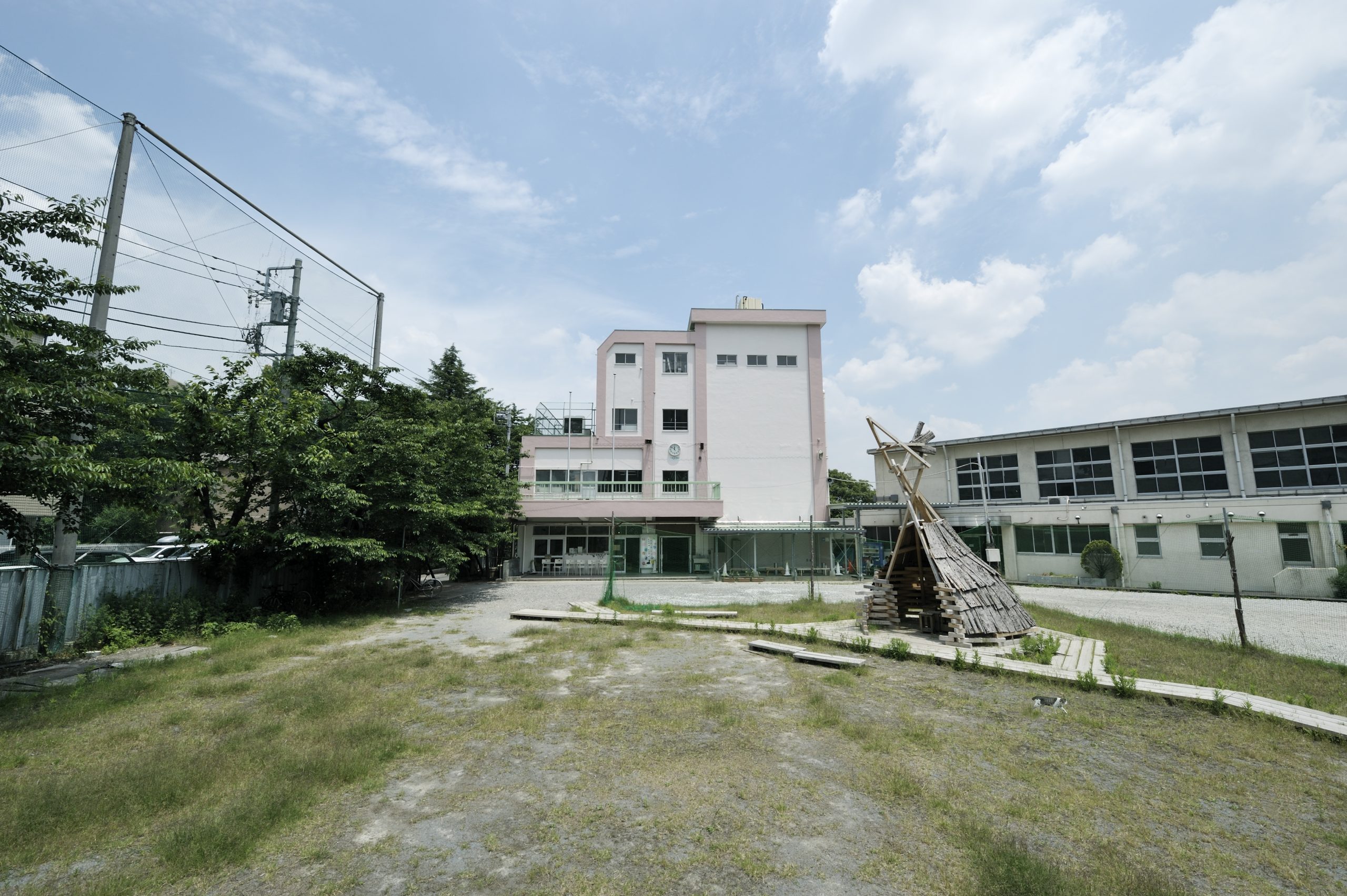
Nishi-Sugamo Arts Factory. Courtesy of ANJ.
-
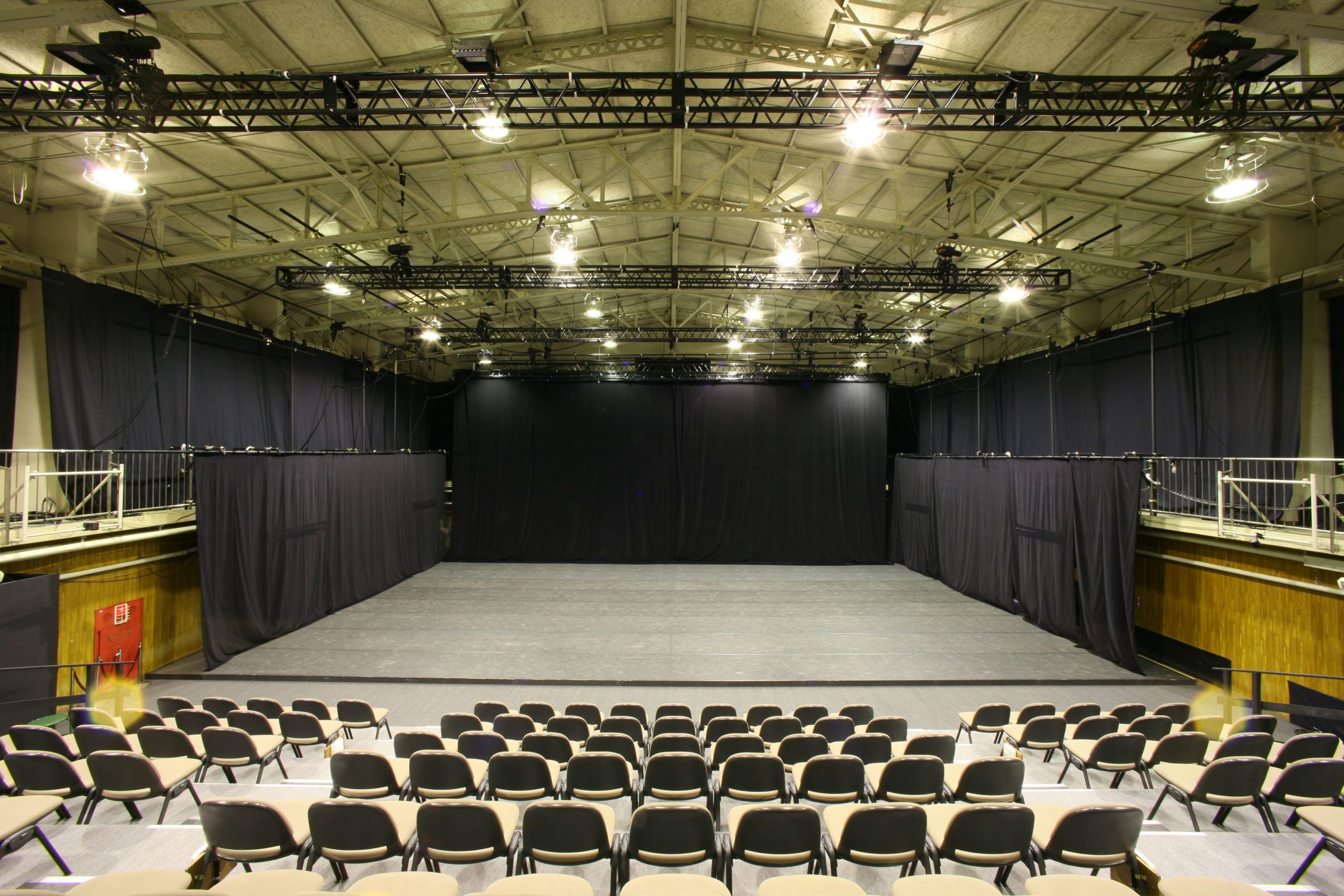
- When F/T launched in 2009, you were just approaching your thirties as you were appointed to the big role of Program Director. I imagine it was a challenge to serve as a director in a position that lacked a role model—how did you handle this pressure?
- It was really difficult [laughs]. But I also think that I was able to take on the challenge because I didn’t have much experience at that point. At the time, the Japanese theater scene had been built by directors—such as Tadashi Suzuki from Toga or Oriza Hirata from Komaba Agora Theater—who were also capable producers. But then suddenly, somebody who was not even a theater director and her team were appointed to host this festival with a budget of hundreds of millions of yen. I believe that fact actually emphasized F/T’s face as a new platform and created a kind of synergy for artists to embark on new, exciting challenges with the festival.
- The transition from TIF to F/T significantly increased your responsibilities, including the larger budget. How did you go about planning the program for F/T?
- As you say, TIF was an independent festival hosted by ANJ, supported each time by grants. As soon as it became F/T, however, the Tokyo Metropolitan Government contributed two hundred million yen as the main organizer, which meant we now had a total annual budget of three hundred and fifty million yen. When I thought about presenting a theater festival in Tokyo at this unprecedented scale, the first thing I thought of was creating an international “airport.” Wherever you go in the world, airports have an international standardized system. In a similar way, I installed a creation and distribution system that would allow performances to participate in the international festival circuit, and came up with a festival structure distinct to Tokyo that would be visible and recognized on a global scale along with the works and ideas presented there.
Specifically, we introduced internationally acclaimed works—based on new aesthetics such as post-dramatic theater—in a timely manner to Japan and more broadly, Asia. For domestic works, we produced performances by contemporary creators that responded to current societal issues, such as the Great East Japan Earthquake, and those that reflected the realities surrounding Tokyo as a city. We also newly produced interdisciplinary performances, and presented all of these works on a global stage. In addition, we launched an open call program to provide a platform for young creators in Asia to present their works and receive international feedback.
-
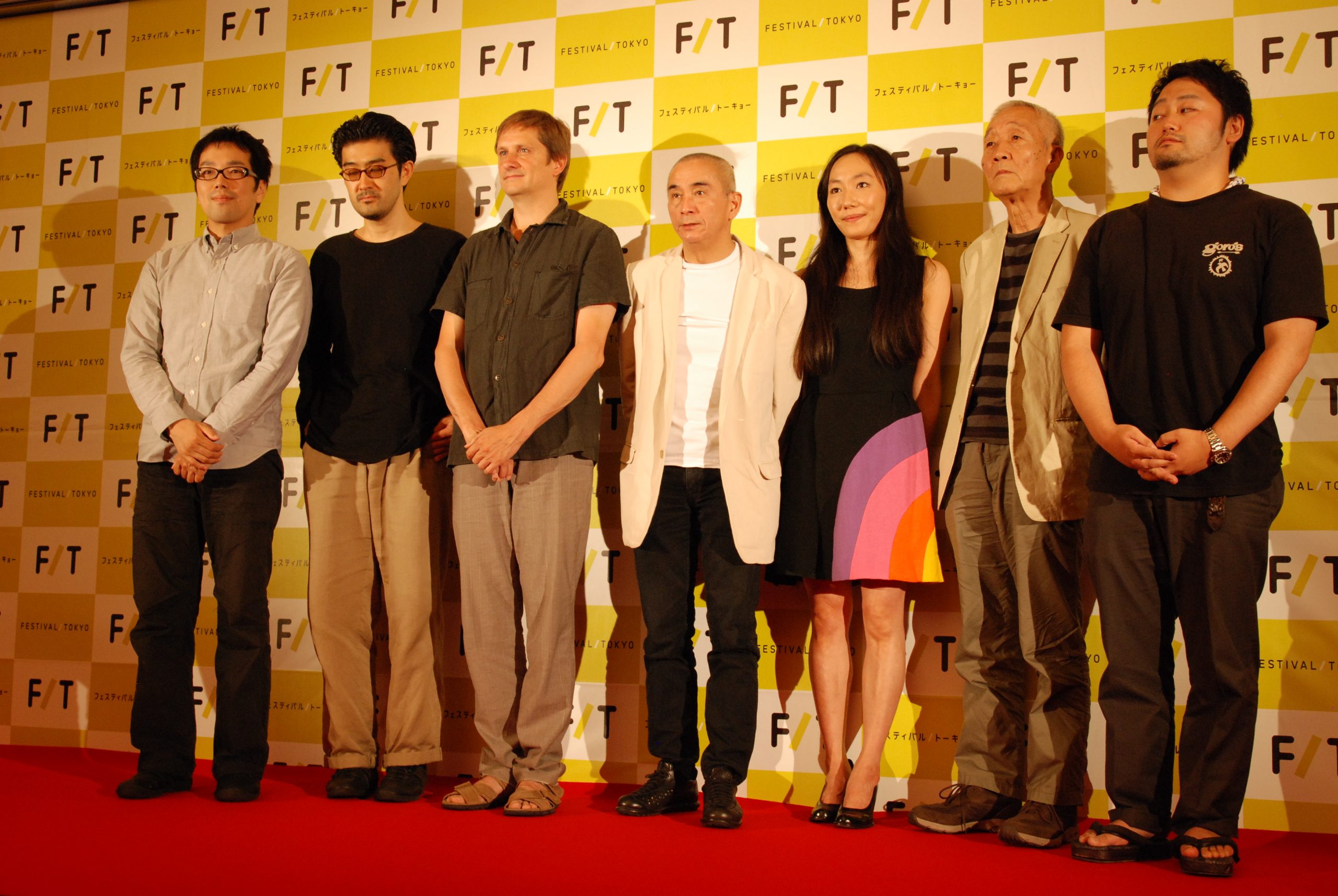
Press conference for F/T09 Autumn. From left: Shu Matsui, Akira Takayama, Chris Kondek, Ushio Amagatsu, Ikuyo Kuroda, Yukichi Matsumoto, Kurou Tanino
- I can imagine you faced challenges because it was a public initiative.
- When there’s a performance that seems obscure, even if 99 per cent of the people feel that they don’t understand it, if even one per cent felt it was necessary for the future society or that it had artistic potential to change history, then the 99 per cent would allow for such a work to be staged—I believe that this is the fundamental principle supporting the public sphere. Even in terms of health care or social welfare, the infrastructure is run by the 99 per cent supporting the one per cent.
However, recently it seems to be the reverse, where projects supported by 99 per cent of the people are cancelled if there is even one per cent in opposition. Even with public cultural initiatives, we see this tendency to cater to the lowest common denominator in the name of risk management and compliance. I already felt this dilemma when I was running F/T, but I feel that this tendency has further increased in recent years.
- When you launched F/T09 Spring, I remember you were saying how you wanted young people to come see the works. I wonder if you were aiming to nurture talent in the upcoming generation.
- Regardless of age, it’s important to make sense of how your present is connected to the past and future. For F/T, I wanted to incorporate that historical perspective while providing a space to experience forward-thinking forms of expression touching on the past and present, extending toward the future. That’s why we did the F/T Teatrotheque series, in which we screened historically significant works from the past, and planned Theater/University for F/T09 Spring and Autumn, in which we invited you, Nagashima, as coordinator. We also had students perform in pieces directed by masters such as Juro Kara7 and Setsuko Yamada8 and present the results to one another, providing an opportunity for students to learn about the history of theater and dance through the festival.
I also believe one of F/T’s legacies is the Emerging Artists Program for Asian artists. We worked with artists such as Ka Fai Choy and Daniel Kok who became leading directors of the region, as well as Kunio Sugihara from Kunio, Yuichi Kinoshita from Kinoshita-Kabuki, Takahiro Fujita from MUM&GUPSY, Kaori Nishio from Bird Park, Kishodai Kageyama from Noruha, and more. Many of the current leading creators participated in the program just around the time that they were finishing their college degree. As a place to connect with peers and motivate one another through competition, the Emerging Artists Program became a kind of stepping stone.
In fact, Satoko Ichihara, who was a student at J.F. Oberlin University at the time, participated as an actor in the Theater/University program. Her theater company Q later participated in the F/T13 Emerging Artists Program, and she won the Kishida Kunio Drama Award with The Bacchae−Holstein Milk Cows, which was presented at Aichi Triennale 2019. She then went on to show the work at the opening of Theater der Welt 2023, and also closed the festival with the world premiere of Yoroboshi: The Weakling. My trajectory as a festival director overlaps with Ichihara’s achievements over the past 15 years, and I feel extremely honored that I was able to help such a talented director to develop her career on the global stage.
-
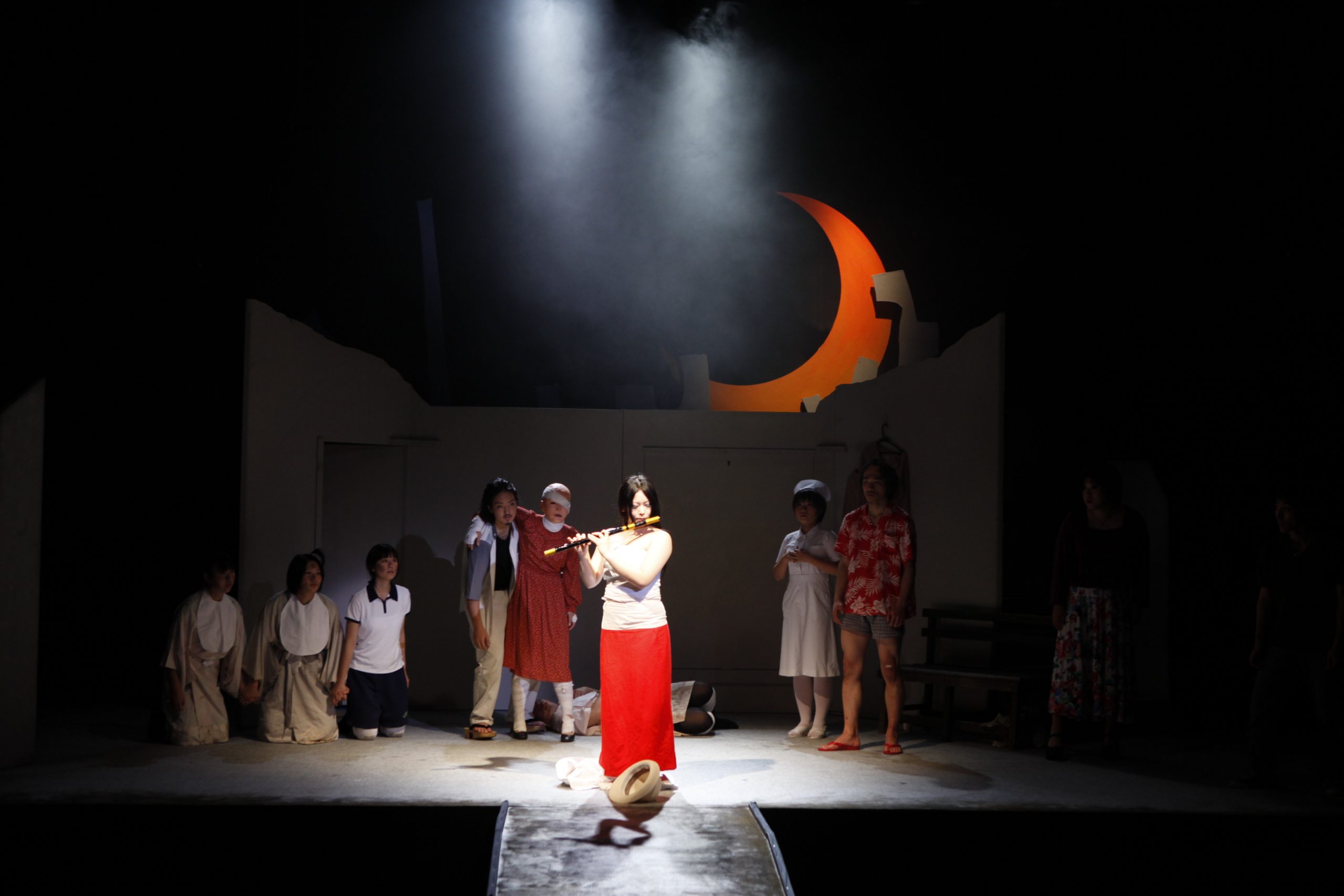
Kinki University’s Koshimaki Osen: Giri Ninjo Irohanihoheto Edition, directed by the author Juro Kara, part of the Theater/University program (F/T09 Autumn). © Jun Ishikawa
-
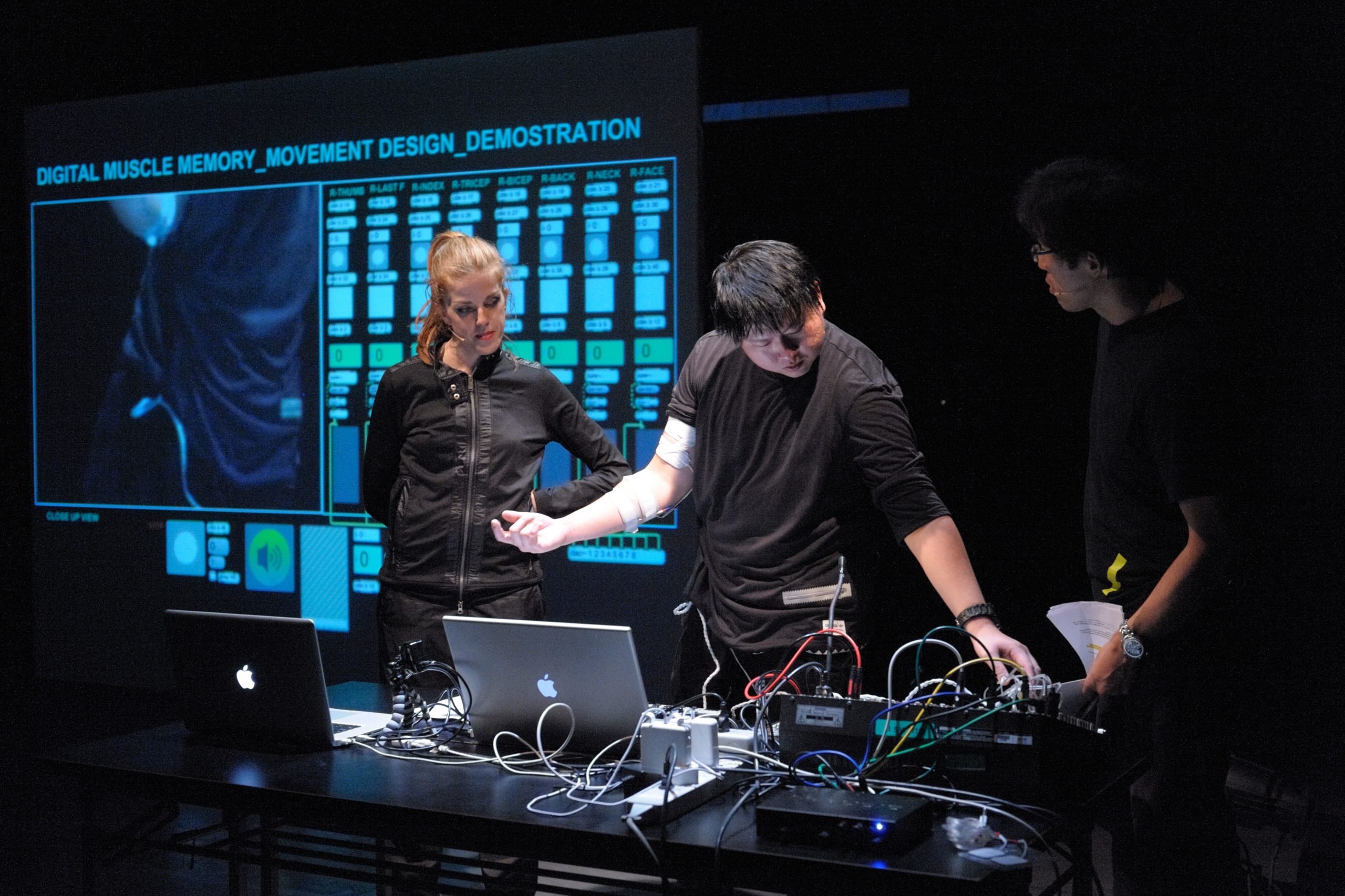
Ka Fai Choy, Notion: Dance Fiction (F/T11) © Kazuyuki Matsumoto
- Whether it was running a critics program or publishing archival documents, I believe that F/T provided quite a comprehensive space as a festival. After F/T, you started your own non-profit organization, Arts Commons Tokyo, and launched Theater Commons Tokyo, which consists of a range of programs such as performances and workshops, in 2017. What was your thinking in terms of aims and the direction of programming at the time?
- As soon as I was no longer under the patronage of a large entity like F/T, I became independent, which also meant that I needed to figure out the finances myself. But when you think about it, that’s exactly the situation that artists face. If I wanted to continue questioning the relationship between art and society, I felt it was necessary to prove that I could realize something on my own, without relying on anyone else. That doesn’t mean completely cutting off ties with public funding and going your own way, but I thought it was essential to find the balance between what is possible within an institutional framework and what is only possible when working independently, in order to survive in the cultural sphere of Asia.
In Japan, we don’t have a stable environment where artists and staff members can throw themselves into the creation process, like at European institutions where the funding, opportunities, and people are systematically concentrated. That’s why I decided to build a curatorial practice in which I ground myself as an independent programmer while also working on institution-led projects when opportunities arise.
I didn’t have jobs lined up in the beginning, though, so I actively worked on programs that would allow me to go deeper into my own interests and help cultivate talent, including Michinoku Art Pilgrims Camp and r:ead (Residency East Asia Dialogue). The former is a project to explore the artistic possibilities after the 2011 earthquake by visiting the affected areas with Norio Akasaka, an ethnographer who proposed the term “Tohoku Studies,” and the latter is a dialogue-centered residency in which artists and curators from Japan, China, South Korea, and Taiwan spend time together.
Neither program had a set goal, but both centered on planning something toward the future through researching the lands and histories of Tohoku or Asia and engaging in dialogue with other participants and guests. I felt that these projects really helped me build my foundation as an independent curator in Asia. Alongside these ventures, I started Theater Commons Tokyo as a place to artistically challenge myself in terms of both my methodologies as an independent programmer and the budgetary constraints.
- Japanese performing arts organizations and institutions are still young and don’t wield significant influence, so people in the field are expected to work independently. However, when one’s activities overlap with social actions, it’s not a simple question of whether you continue to work independently or with public institutions. I feel that this background also led you to your framework of the commons.
- It’s true. I’ve spent my career thinking about the public and grappling with this one or 99 per cent question, but I think the breakthrough has been in how to create the commons. In fact, I do think my curatorial tendencies have changed in the past decade. At Theater Commons Tokyo, especially given the coronavirus pandemic, we’ve proposed new performance formats, whether that be XR works or experiential pieces incorporating elements of therapy and care. I hope to utilize these experiences and plan projects based on the idea that everyone has agency in harnessing their own creativity, not just professional artists.
For example, for Theater Commons Tokyo ’26, Art Translators Collective—a group that has been working with us from the start, but mainly as translators and interpreters—will be participating as artists. The collective’s attempt to expand the act of translation in an AI era potentially lethal to the profession, and share their inquiries with participants precisely embodies Theater Commons Tokyo’s ethos: to use the commons (collective knowledge) of theater to create the commons (collective space) for society of theater. Instead of sticking to the binary of the one or 99 per cent, they offer a space where everyone is part of the one per cent. This idea is something I want to practice more in my own work as a producer.
-
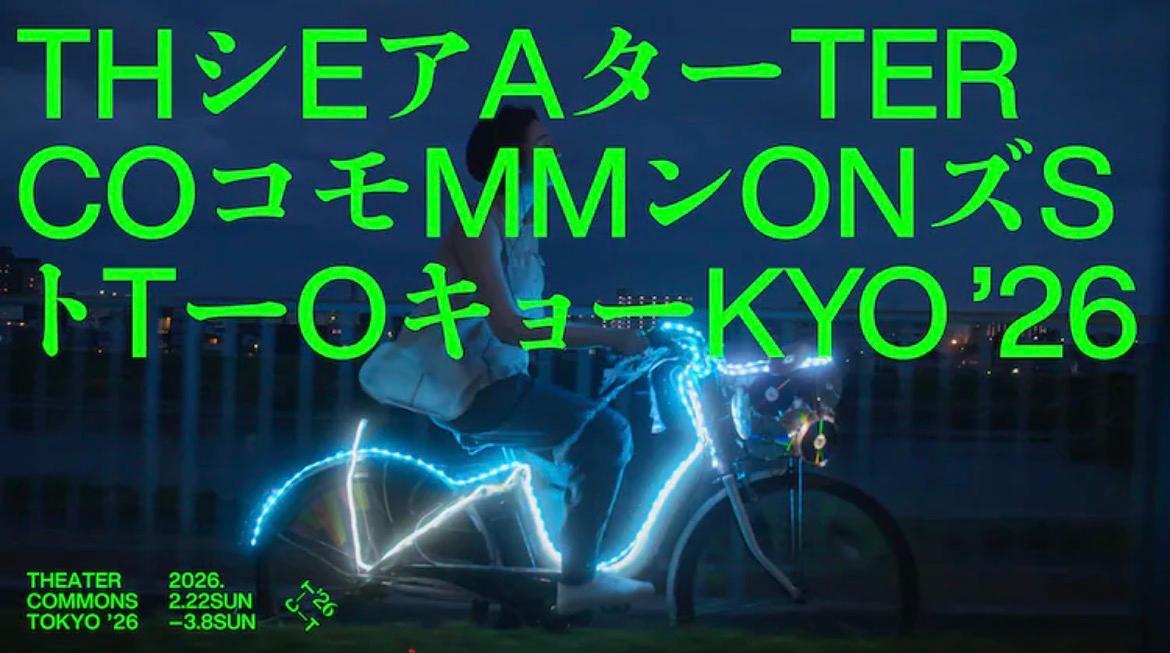
Theater Commons Tokyo 2026: February 22 – March 8, held at various locations across Tokyo.
- Tell us more about your work with institutions as well. Aichi Triennale 2019, for which you served as the performing arts director, garnered much attention for the fact that the participating artists were nearly equally men and women and for the protests and backlash that ensued against the After “Freedom of Expression?” exhibition in the contemporary arts program.9
- In terms of the gender ratio, the list of artists I suggested to artistic director Daisuke Tsuda already consisted of half women, and I felt the outcome was only natural given the rise of the Me Too movement. At the same time, I saw firsthand how—during an emergency involving violent language and fear of physical harm—people who are adept at loudly wielding political language receive more attention and space. Perhaps we would not have been able to resume After “Freedom of Expression?” without the confrontations, but it’s precisely in such emergencies that we should question how we listen to the voices of the disenfranchised. It made me confront the difficulty of maintaining gender equality in exceptional moments when the usual systems fail.
- For Theater der Welt 2023, held at Frankfurt and Offenbach in Germany, you became the first non-Western woman to be appointed as the program director. With many inequalities remaining between the West and elsewhere, what kind of challenges and achievements did you experience?
- I do think that I was able to build a “festival dramaturgy” in Germany by utilizing my experiences producing interdisciplinary works at Theater Commons Tokyo and Aichi Triennale and curating F/T, a city-based festival. At the same time, I saw firsthand how German institutions themselves can embody the Western-centric colonial structure, and how, especially after documenta fifteen10, theater and festival staff members have deeply internalized a sense of self-censorship against any expression or involvement that could be taken as anti-Semitic. This experience further motivated me to do things I could only do in Asia—within the triangular struggle between the public, institutional, and independent realms—once I was back in Japan.
Also, Tadashi Suzuki staged three works, including The Trojan Women, at the second Theater der Welt in Frankfurt in 1985. Forty years after this artist directed a classic Western play using gestures and aesthetics distinct to the East, Satoko Ichihara showed her bold interpretation of the Greek play The Bacchae−Holstein Milk Cows through a queer lens. It was important for me to be able to connect the dots between the theater histories of Japan and the world in this way.
-
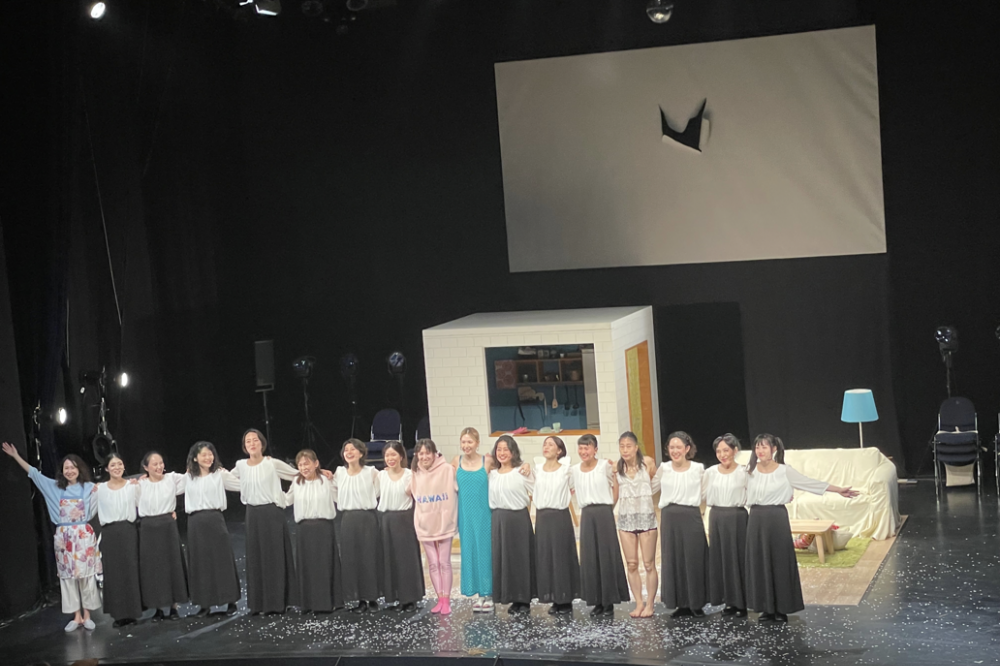
During the curtain call for the first show of The Bacchae−Holstein Milk Cows, which kicked off Theater der Welt 2023. Courtesy of Chiaki Soma
-
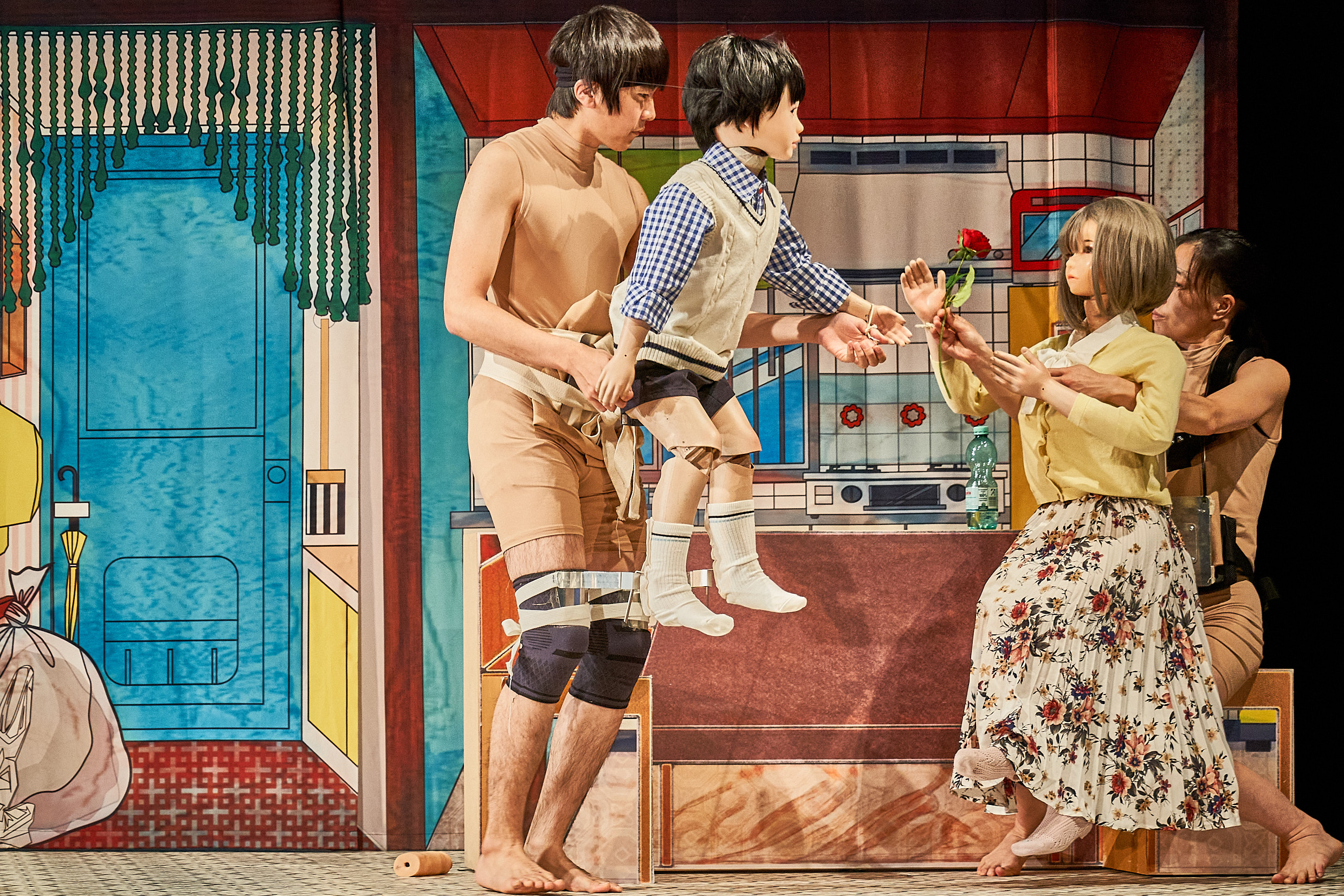
Yoroboshi: The Weakling, saw its world premiere at the aforementioned festival’s closing. © Jörg Baumann
- You will also be the program director for m〜m, the Minato Arts Center, opening on November 2027. What kind of things are you looking forward to working on in that position?
- In ancient Greece, the theater space was considered a communal device, and it was both a right and obligation to participate. If a new public theater is deemed necessary for both the city and people alike, then the community itself should feel enlivened by the active participation of citizens harnessing their creativity. Many people in Japan are highly skilled in their hobbies, from music to dance, so their practical cultural skills should be put to greater use. Through our programming, I hope to promote my belief that the theater is not just a place to watch quality performances, but a space for active participation.
m〜m is also close to Haneda Airport, so we hope to grow a performing arts platform that is connected to and open to Asia. A place that protects each person’s creativity and dignity and allows for everyone to just freely be, like a gym or a beach—that’s the kind of theater m〜m aspires to offer.
-
The Association for Corporate Support of the Arts
The Association for Corporate Support of the Arts is an organization established in 1990 with the aim of creating a supportive environment for arts and culture through corporate sponsorship.
-
Sumiko Kumakura
After working at the Association for Corporate Support of the Arts, Sumiko Kumakura served as a professor at Tokyo University of the Arts until 2025. She has been involved in training professionals in arts management, coordinating community-based art projects and consulting on cultural policy.
-
Taneo Kato
Taneo Kato oversaw corporate mécénat projects at Asahi Breweries for many years. He continues to propose various art projects and build interregional networks.
-
Sachio Ichimura
After serving as a producer for Sankai Juku, Sachio Ichimura went on to program and produce performing arts projects at home and abroad, and manage cultural facilities. He serves as an advisor to the nonprofit organization Art Network Japan.
-
Rabih Mroué
Rabih Mroué is a theater director and actor. Drawing on the history as well as the societal and political conditions of post-civil war Lebanon, he uses diverse forms of media to blur the line between fiction and reality, shedding light on contemporary questions.
-
Nishi-Sugamo Arts Factory
Nishi-Sugamo Arts Factory was a project that repurposed a former junior high school into rehearsal and performance spaces, running from 2004 to 2016. The initiative was co-operated by ANJ and Children meet Artists, a nonprofit organization.
-
Juro Kara
Juro Kara was a playwright, director and actor. Through his work with Jokyo Gekijo (Situation Theatre) and theater troupe Kara-gumi (Kara Group), he was a leading figure in Japan’s Angura (underground) theater movement.
-
Setsuko Yamada
Setsuko Yamada was a dancer and director of the dance company Biwa-kei. After studying improvisational Butoh under Akira Kasai, she became known as one of the leading figures of Japanese contemporary dance.
-
the protests and backlash that ensued against the After “Freedom of Expression?” exhibition in the contemporary arts program
Freedom of Expression? was an exhibition held in 2015 at Gallery Furuto that displayed artworks that were declined, censored, or forcibly withdrawn at places such as public institutions. When Aichi Triennale 2019 exhibited an updated version of the show, After “Freedom of Expression?”, it triggered a wave of protests and threats, which led to its closing after three days (later reopened under a raffle system).
-
documenta fifteen
Documenta is an international art exhibition held every five years in Kassel, Germany. At documenta fifteen, held in 2022, Indonesia artist collective ruangrupa served as artistic director. While the edition garnered high praise for de-centering Western perspectives and featuring practice-based projects that connect art and society, it sparked major controversy over some works that were criticized for containing anti-Semitic expressions.
-
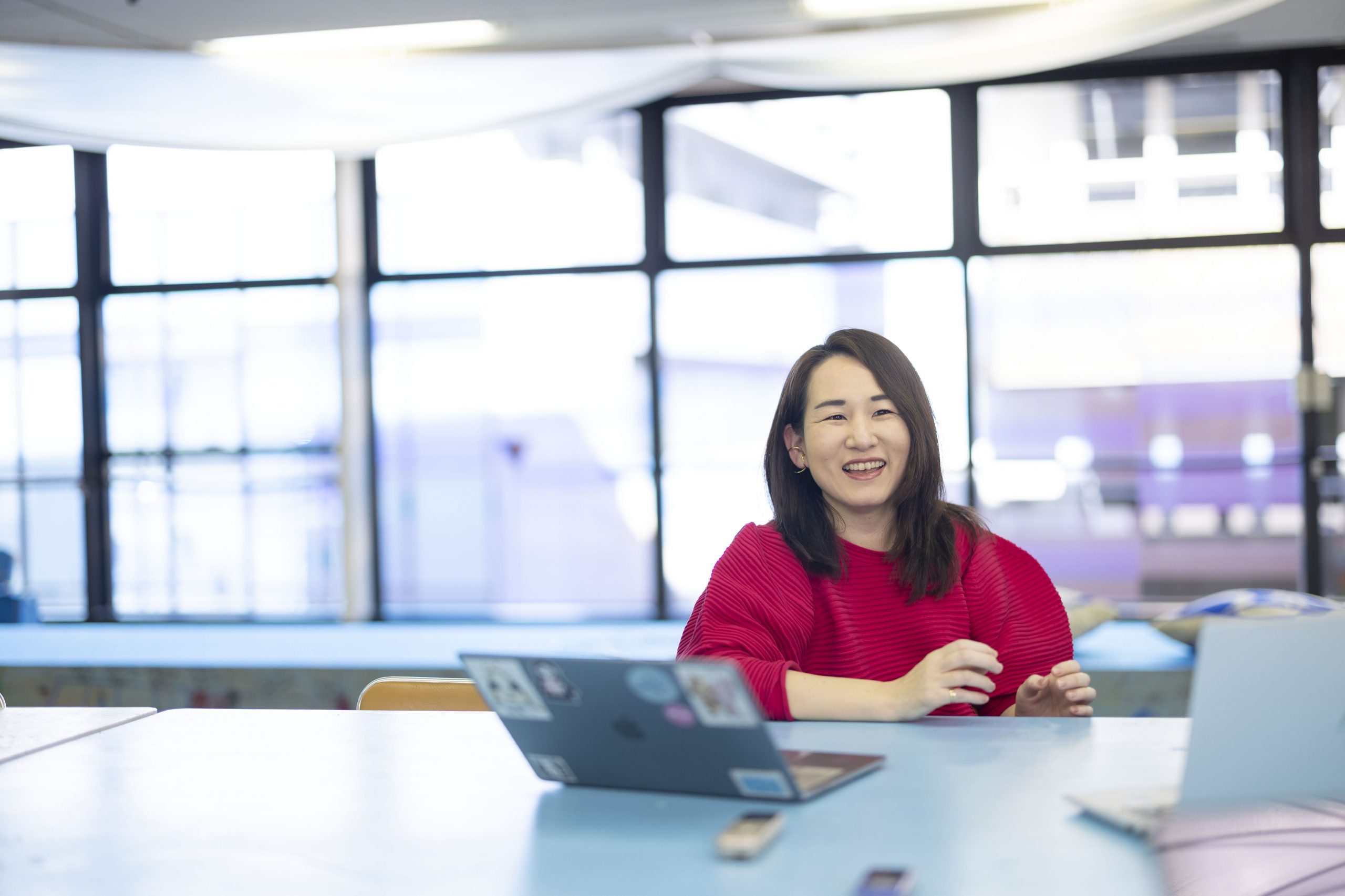
Special Thanks to the Minato Arts Center Preparation Office © Atsuharu Ino